
1-805-484-2992
Quotes - Engineering - SalesAPPLICATIONS
Organized by What the Exchanger Has to Do
Most people arrive describing a job rather than a product. These pages are arranged the same way, by duty, and each one ends at whichever Mueller product actually suits it.
Most people arrive describing a job rather than a product. These pages are arranged the same way, by duty, and each one ends at whichever Mueller product actually suits it.
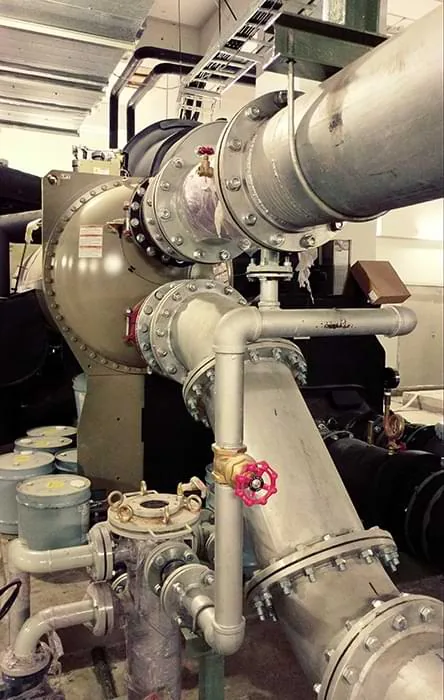
Process Heating
Steam-to-water, glycol loops, product heating and CIP, and how the medium temperature is chosen.
SELECT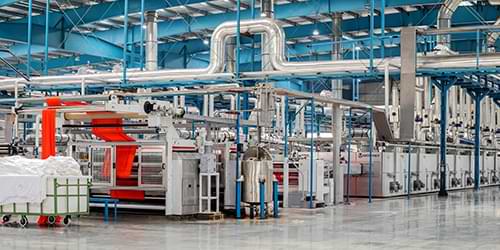
Process Cooling
Tower isolation, free cooling, oil cooling and product chilling, and how fouling drives selection.
SELECT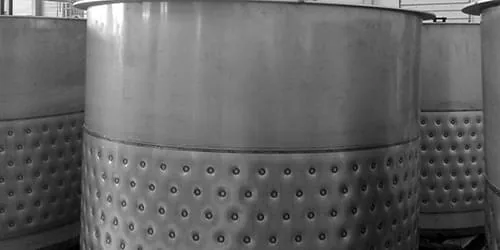
Tank Heating & Cooling
Jacket retrofits, immersion heating, reactor cooling and drum work, all built on Temp-Plate.
SELECT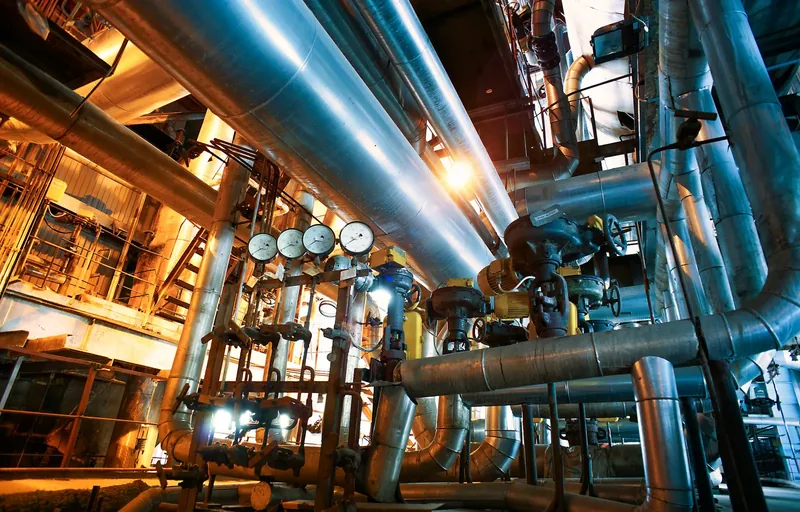
Heat Recovery
Condenser heat, waste streams, boiler blowdown and regeneration, and why approach temperature decides it.
SELECTWorking From the Duty Rather Than the Product
Four Questions That Route Almost Every Inquiry
Can both fluids be pumped through an exchanger, or does the heat have to come to a tank? Does either stream carry solids that would block a narrow channel? How much pressure drop is available on each side? And does the thing being heated or cooled tolerate the surface temperature the medium produces?
Those four answers point at a specific Mueller product with very little ambiguity, and they are worth settling before anyone starts looking at model numbers.
Surface Temperature, Not Medium Temperature
The most common avoidable problem we see on heating duty is a medium hotter than the process needs. Burn-on, scaling and product damage all happen at the wall, not in the bulk fluid, and using high-pressure steam where hot water would do shortens run length between cleans dramatically.
The close approach of a plate pack is what makes a cooler medium viable. It costs a little more surface and saves a great deal of downtime.
Fouling Decides Service Life
On cooling and recovery duty the stream removing or supplying heat is usually the dirtier one, and how you handle that decides how long the exchanger stays useful. A gasketed frame that opens is worth substantially more over a decade than a sealed unit that was cheaper on day one.
Where the stream carries solids a conventional plate cannot pass, the Free-Flow plate and the Temp-Plate bank assembly both exist precisely for that problem.


How we work
Describe the duty in process terms: what is being heated or cooled, where it sits, and what it flows through today. A line on what went wrong with the last unit is often worth more than a data sheet, because it tells us which constraint actually binds. From there we route the inquiry to a product family before anyone talks about models.
The first fork is whether the contents can leave the vessel. If a pump can move the fluid through a frame and back without harming it, a plate pack wins on surface per dollar and on approach. If the batch must stay put, is too thick to pump, or would be damaged by shear, the surface goes into or onto the tank instead.
Pressure drop is what buys turbulence, and turbulence is what buys heat transfer in a plate channel. A generous allowance lets us use fewer, harder-working plates. A tight one forces a larger pack running at lower velocity, which costs more up front and tends to foul sooner, so tell us the real limit of your pumps rather than a comfortable guess.
Start with the duty page, then follow it to either Free-Flow or a Temp-Plate bank. The split is mostly about particle size and how the solids behave: stringy material that bridges a contact point is a different problem from grit that settles out. Tell us what the solids are, roughly how large, and what fraction of the flow they make up.
Scale and burn-on start at the wall, so the wall temperature is what we try to control. If a plate pack can close to within a few degrees, the same duty can often run on hot water or recovered heat instead of high-pressure steam. The extra plates usually cost less than the production lost to cleaning twice as often, and we will lay out both options when it makes sense.
It changes the answer more than most people expect. A recovery unit that sees both streams for only half the year pays back half as fast, and a cooling selection made against a winter tower temperature will miss in July. Give us the operating pattern by season or shift, and we size against the hours that carry the load.