
1-805-484-2992
Quotes - Engineering - SalesWater-Side Economizer
Free Cooling Without the Chillers
When the wet bulb is low enough the cooling tower can meet the load on its own and the chillers can stop. The exchanger is what makes that possible and its approach decides how often.
A water-side economizer places a heat exchanger between the tower water and the chilled water loop. When conditions allow, the tower does all the work and the chillers shut down, removing the largest electrical load in most buildings.
Approach buys hours. Every degree of approach raises the outdoor condition at which free cooling starts. A plate exchanger reaching within two or three degrees delivers far more annual hours than any wider-approach alternative.
Size for the shoulder season. The economizer is not sized on design day; it is sized for the conditions where it will actually run. Getting that wrong produces an exchanger that only works on the coldest week of the year.
Partial free cooling. Even when the tower cannot meet the whole load it can pre-cool the return, reducing chiller work. Designing for partial operation extends the benefit across far more of the year.
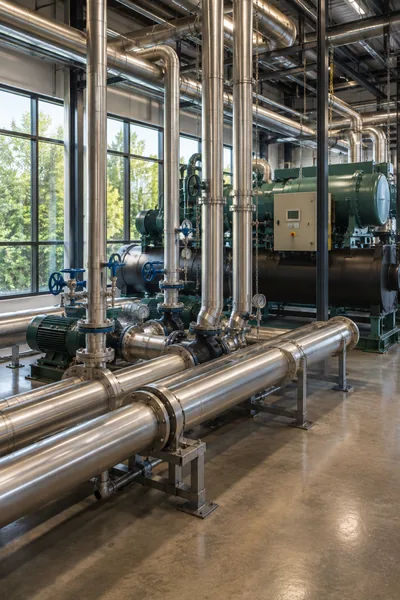
Typical Specification
- Application: Chiller-free and partial free cooling
- Key metric: Approach temperature
- Sizing basis: Shoulder season conditions, not design day
- Partial mode: Pre-cools return water when full free cooling is unavailable
- Tower side: Open water; plate material selected for chemistry
- Chilled side: Closed loop
- Control: Changeover and staging designed with the exchanger
- Footprint: Small; fits existing plant rooms
- Cleaning: Tower side opens for periodic service
- Saving: Chiller electrical load removed during free cooling hours
What makes an economizer earn its free cooling hours
- Approach chosen for shoulder season
- Tower pump head checked first
- Changeover sequence written with the exchanger
Points worth checking
As close as the plate pack can reasonably reach, since that figure moves the free cooling changeover point directly. Going tighter adds plates and pressure drop, so the extra surface has to be weighed against tower and pump energy. Give us the chilled water supply target and the tower leaving temperature you expect at changeover, and we can show the trade both ways.
The tower pump was usually sized for the chiller condensers, not for an exchanger added later, so the available head is fixed before selection starts. A pack that hits a tight approach but needs more head than the pump has will never see its design flow. Measure or calculate the spare head on the tower circuit and include it with the duty, because it often decides the plate count.
The chilled water loop briefly sees two sources, and if valves move to quickly the supply temperature spikes or a chiller trips on low condenser pressure. Staging the transition through partial free cooling smooths it out. The exchanger itself does not mind, but the control sequence should be written knowing its approach so the switching setpoints make sense.
Related
District Energy
District systems live or die on the temperature difference they can maintain between supply and return, and...
+ Learn More
Geothermal & Heat Pump
Ground loops and heat pump systems live on small temperature differences, which makes the exchanger approach...
+ Learn More
Domestic Water Heating
Heating potable water with a non-potable fluid raises a question no thermal calculation answers: what happens...
+ Learn More