
1-805-484-2992
Quotes - Engineering - SalesTemp-Plate Bank Assembly
Parallel Plates for Solids-Bearing Streams
A bank assembly places Temp-Plate panels vertically in parallel, with the medium circulating inside them and product moving through the open spaces between. Those spaces are wide, which is why banks handle whole fruit, vegetables, carcasses, fibrous slurries and other material no plate exchanger will accept.
Hydrocooling. The classic application. Product is flooded or immersed in chilled water that is itself kept cold by the plates, giving rapid temperature pull-down without the product ever touching a heat transfer surface it could foul.
Energy recovery. Banks are also used to recover heat from dirty streams that would foul anything narrower, which is frequently the shortest-payback heat recovery project in a plant precisely because nobody else wanted to put an exchanger in that stream.
Removable plates. On hydrocooling duty the plates are removable, which turns cleaning from an ordeal into a routine task. That matters more than thermal performance on sanitary food duty, because it is what makes the sanitation programme workable.
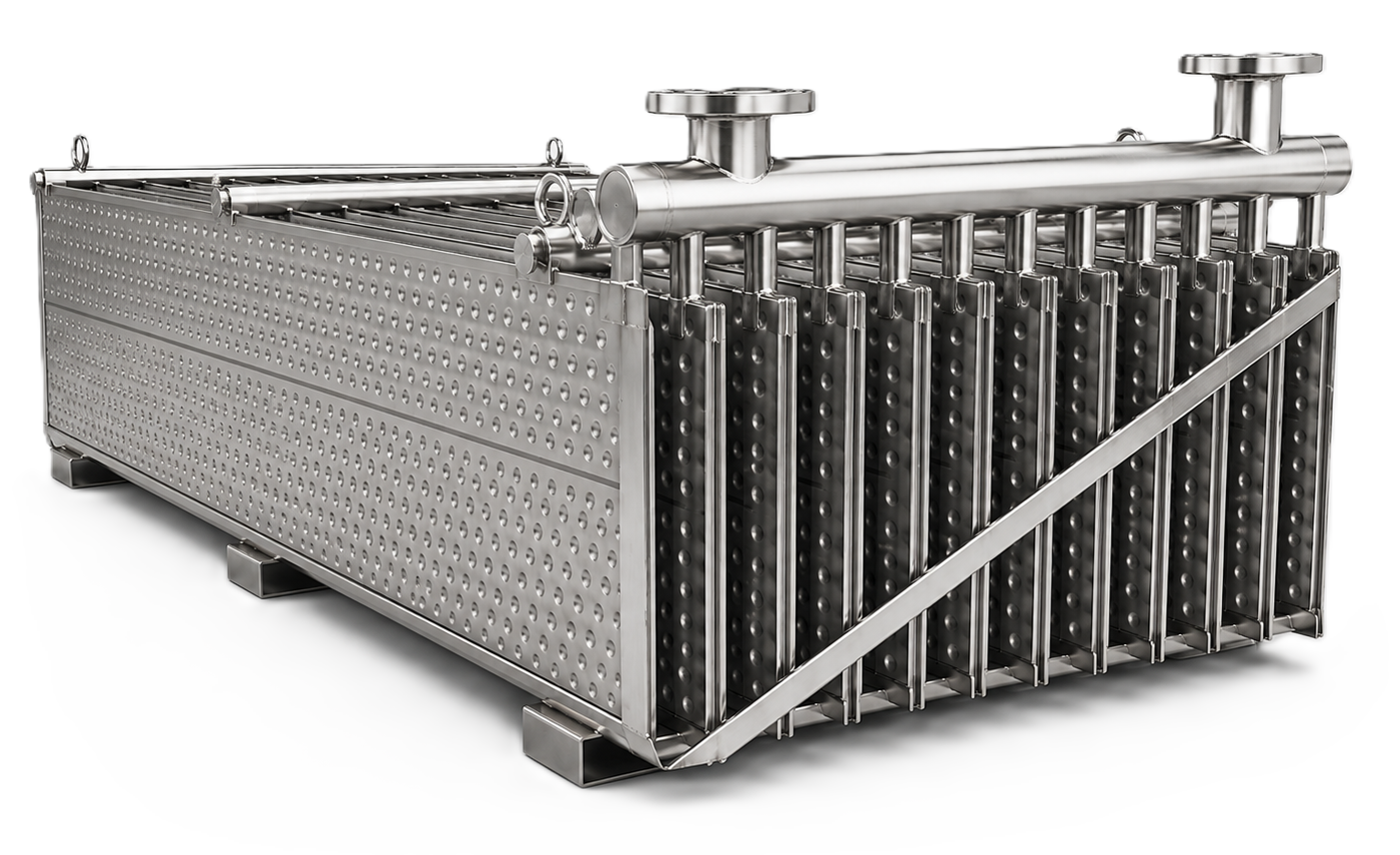
Typical Specification
- Configuration: Parallel inflated plates in a trough, vat or tank
- Product path: Between the plates; wide open spacing
- Media: Chilled water, glycol, refrigerant, steam, hot water
- Plates: Removable on hydrocooling assemblies
- Materials: 304 and 316 stainless; higher alloys available
- Construction: Fully welded panels; no gaskets
- Typical duty: Hydrocooling, produce chilling, energy recovery
- Solids: Handles whole product and heavy fibrous streams
- Cleaning: Plates lift out; open geometry washes down
- Sizing: Plate count and spacing set by product and rate
| PRODUCT | CONSTRUCTION | MATERIALS | SUPPLY |
| Temp-Plate Bank Assembly | Mueller factory built | 304 / 316 stainless | Authorized representative |
Temp-Plate Bank Assembly
When a Bank Beats a Plate Exchanger
The moment the stream carries anything a plate channel would bridge across. Whole or cut produce, poultry, fibrous mash, heavy slurries and effluent all fall on the bank side of that line.
The trade is footprint and surface area. A bank is larger for the same duty because the spacing is wide and the velocity is low. On the streams it suits, there is no alternative that runs at all.
Common FAQs
Flooding or immersing product in chilled water to pull its temperature down quickly. The plates keep the water cold; the product never contacts a heat transfer surface directly, which is what makes it suitable for whole and delicate items.
On hydrocooling bank assemblies, yes, and it is one of the main reasons they are specified. Cleaning a fixed assembly in a food environment is a far harder proposition than lifting plates out and washing them down.
Yes. Running a hot medium through the plates makes the same assembly a heater, and running a cold process stream through the plates while hot effluent passes between them makes it a heat recovery device on a stream too dirty for anything else.
By product type, throughput rate, required temperature change and how much residence time the layout allows. Plate count and spacing both come out of that, and spacing is usually set by the largest item passing through.
Related
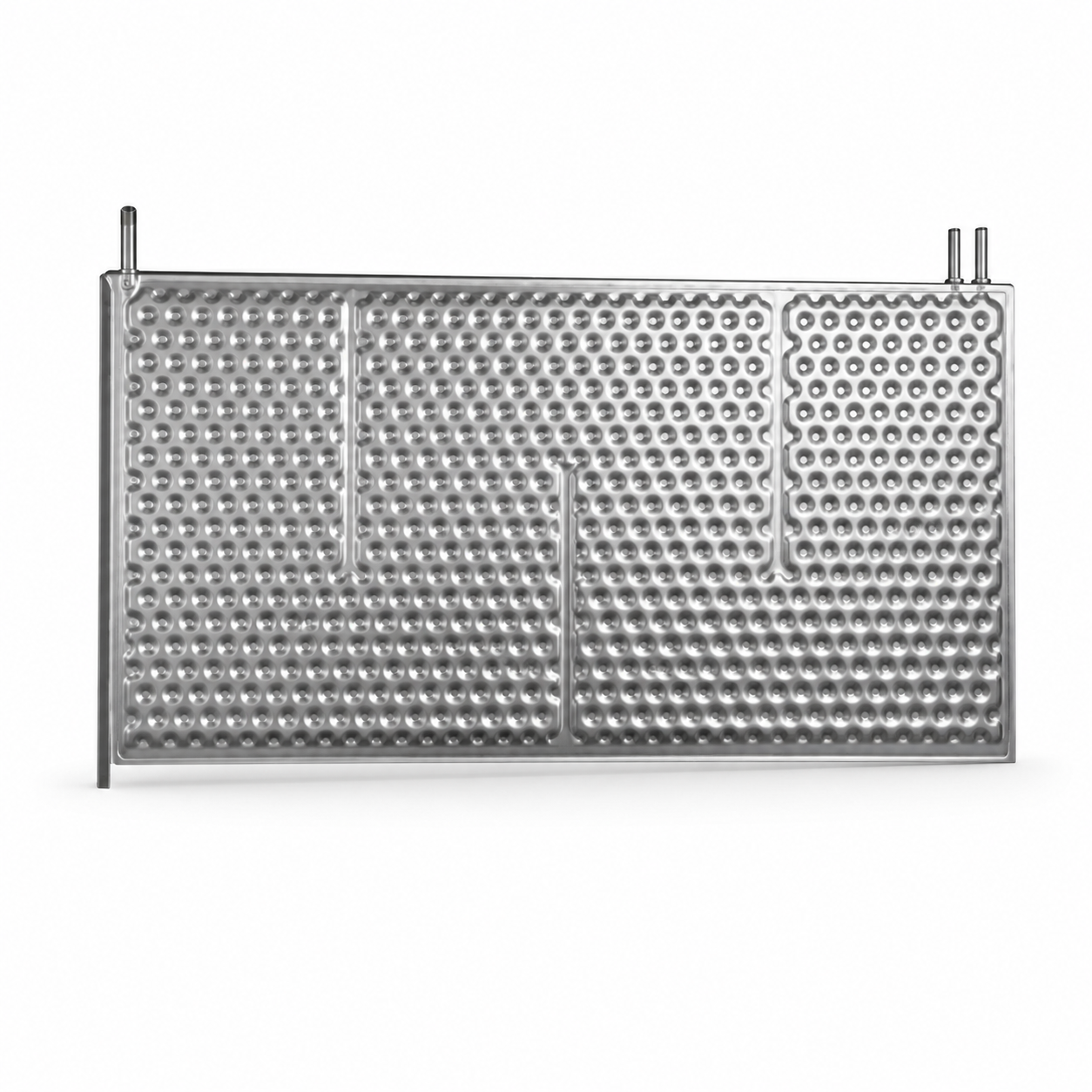
Immersion Assembly
Some fluids cannot be pumped out to an exchanger and back. They are too viscous, too valuable, too abrasive...
+ Learn More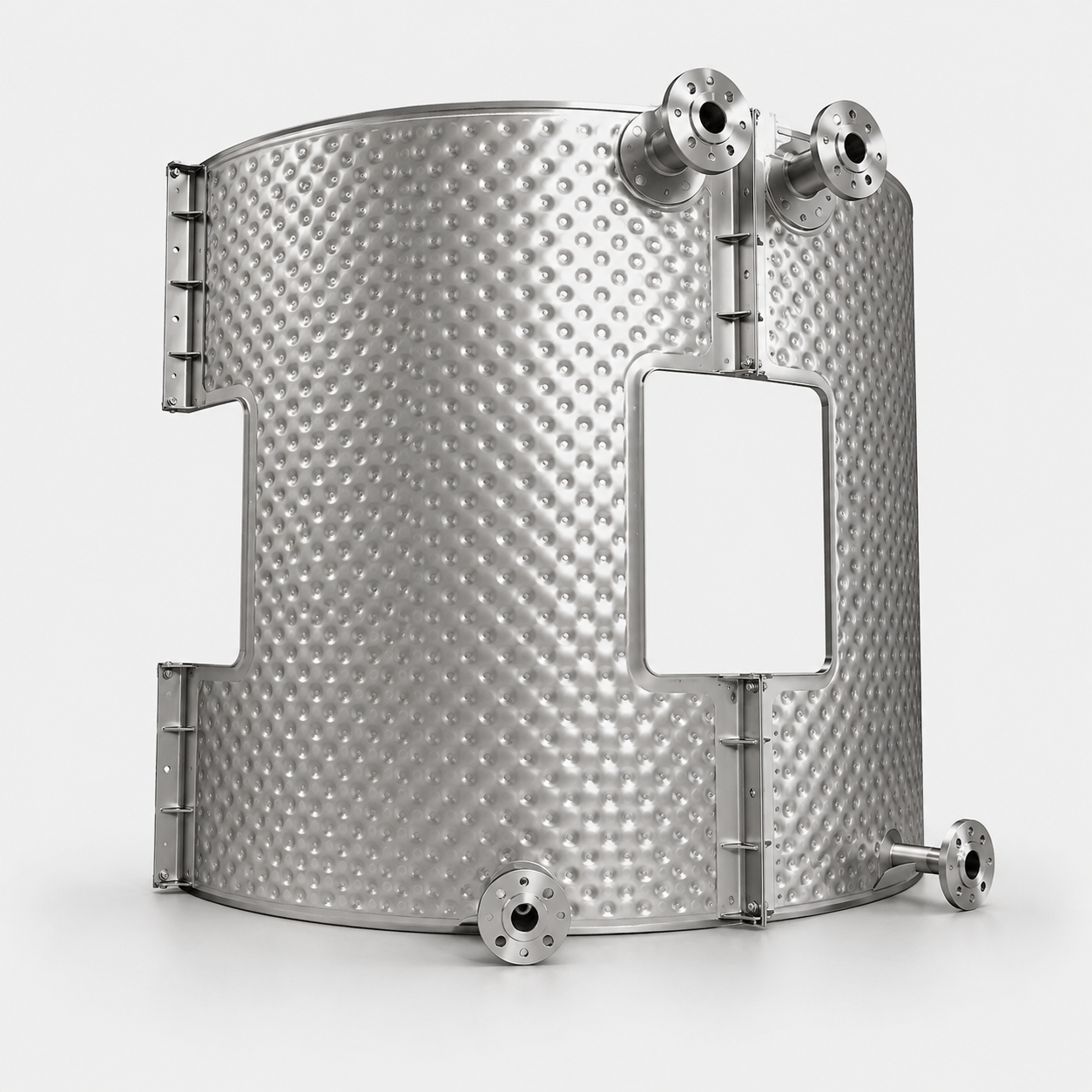
Clamp-On Assembly
If a tank you already own needs heating or cooling it does not have, the usual answer is expensive: replace...
+ Learn More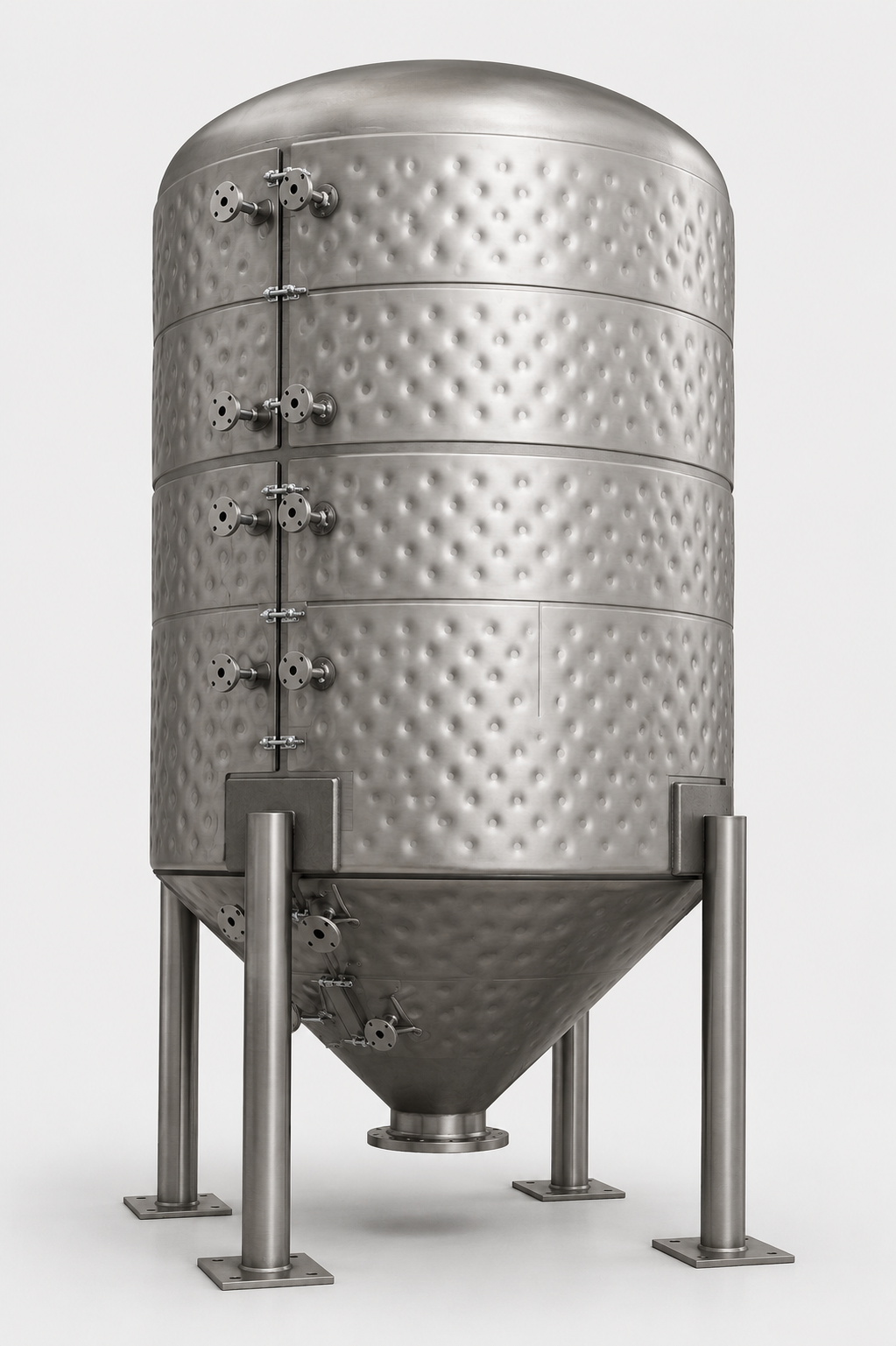
Integral Heat Transfer
Instead of bolting a heat exchanger to your equipment, build the heat transfer into the equipment. That is...
+ Learn More