
1-805-484-2992
Quotes - Engineering - SalesProduct Chilling & Hydrocooling
Rapid Product Temperature Pull-Down
Pulling heat out of product quickly is what preserves quality, and doing it with water rather than air is what makes it fast. Both plate exchangers and Temp-Plate banks have a place here, and they suit different products.
Product chilling covers everything from cooling a pumpable liquid to flooding whole produce with near-freezing water. The dividing line is whether the product can go through an exchanger or whether the water has to come to it.
Pumpable product. A sanitary plate exchanger against chilled water or glycol is the efficient answer. Viscosity rises as the product cools, so the cold end works hardest for the least return and the exchanger is sized against the property profile rather than an average.
Whole or delicate product. Hydrocooling in a Temp-Plate bank floods the product with chilled water while the plates keep the water cold. Product never touches a heat transfer surface, which is what makes it suitable for whole items and anything that would foul a channel.
Making the cold water. Both routes need chilled water, and where near-freezing water is required a falling film chiller makes it directly with no secondary loop and no approach temperature given away.
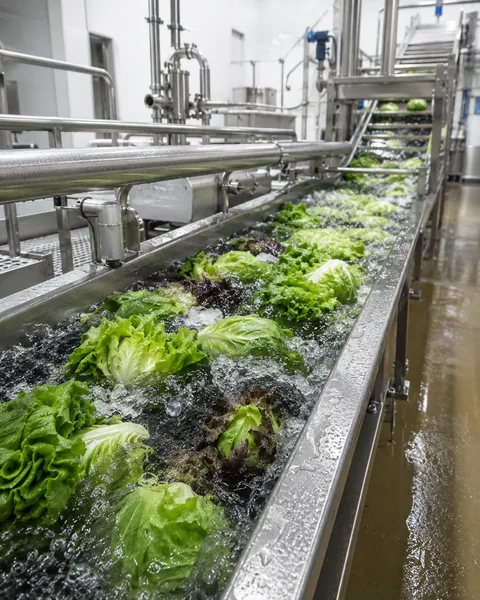
Cooling whole or delicate product by flooding or spraying it with chilled water, which removes heat far faster than air, while plates in the water bath keep the water at temperature.
Points to settle early
Specify the time from arrival temperature to holding temperature, measured at the center or warmest point rather than the surface. Surface temperature drops quickly and gives a false sense of progress. Tell us the product size and the target core temperature, because thick items are limited by conduction inside them, and more cold water will not speed that part up.
Recirculated water collects soil, plant debris and microorganisms from every load, so it needs filtration and a sanitizer held at a measured level. Organic load consumes sanitizer quickly, which is why concentration is checked often during a run rather than once a shift. Tell us the sanitizer you plan to use, since the plates sit in that same water and it can affect their material.
Chilled water gives better heat transfer and is easier to deal with after a leak, so it is the first choice when the product outlet sits comfortably above freezing. Glycol lets the coolant run below freezing, which shrinks the exchanger but raises the risk of freezing product on the cold wall. Propylene glycol is the normal pick anywhere near food.
Produce arrives in peaks, and a hydrocooler sized on the daily average falls behind on the heaviest days. Ice or cold water storage can bank refrigeration overnight and release it during the peak, which keeps the chiller smaller. Give us the heaviest hourly throughput along with the daily total, and how many weeks that peak lasts.
It can, provided the water temperature suits the colder of the two duties and the loads are added at their true overlap. The hydrocooler returns water carrying soil, so it normally stays on it's own loop with the bank, while the plate chiller runs on clean water. Tell us how the two operate across the day before the cold water source is sized.
Control on the product outlet, not on the coolant, whenever quality depends on final temperature. On a plate chiller that means a sensor close to the exchanger outlet with enough straight pipe to read a mixed stream. On a hydrocooler, check the water leaving the bank and spot check product core temperature at discharge, because water temperature alone does not prove the product reached target.
Related
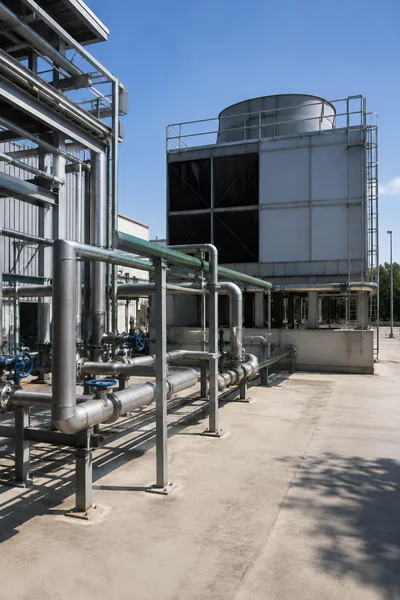
Cooling Tower Isolation
Open cooling tower water is dirty, biologically active and full of dissolved solids. Isolating it from a...
+ Learn More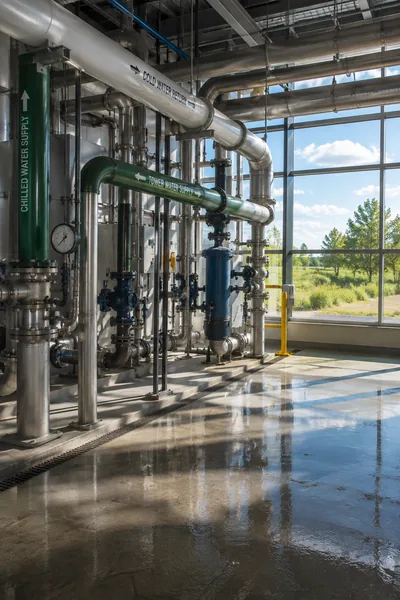
Free Cooling
When the outside air is cold enough, the cooling tower alone can meet the load and the chillers can stop. A...
+ Learn More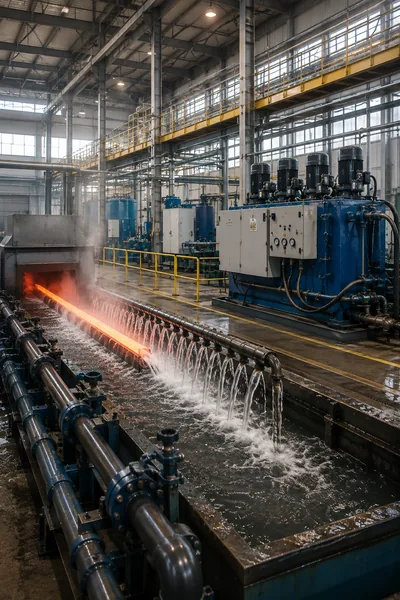
Quench & Hydraulic Oil
Oil is viscous, which makes it a poor heat transfer fluid, and hot oil is a maintenance problem waiting to...
+ Learn More