
1-805-484-2992
Quotes - Engineering - SalesVessel & Reactor Cooling
Removing Reaction Heat
Reaction heat has to leave at the rate it is produced, and the consequence of it not leaving is rarely just a slow batch. Jacket surface, medium temperature and control all belong to the same problem.
Reactor and vessel cooling is a control problem as much as a heat transfer one. Exothermic reactions release heat on their own schedule, and the cooling system has to keep up with the peak rather than the average.
Jacket or immersion. A Temp-Plate jacket keeps the heat transfer surface out of the process, which suits corrosive or product-critical contents. An immersion assembly puts surface inside and transfers more per square foot but has to be compatible with the contents.
Medium temperature and film effects. Very cold medium against a wall can cause the process fluid to freeze or crystallize onto the surface, which then insulates. Controlling medium temperature rather than simply making it as cold as possible is often the better strategy.
Turndown. The same vessel may need heating for one part of the cycle and cooling for another. Designing for both, and for the transition, avoids fitting two systems where one would do.
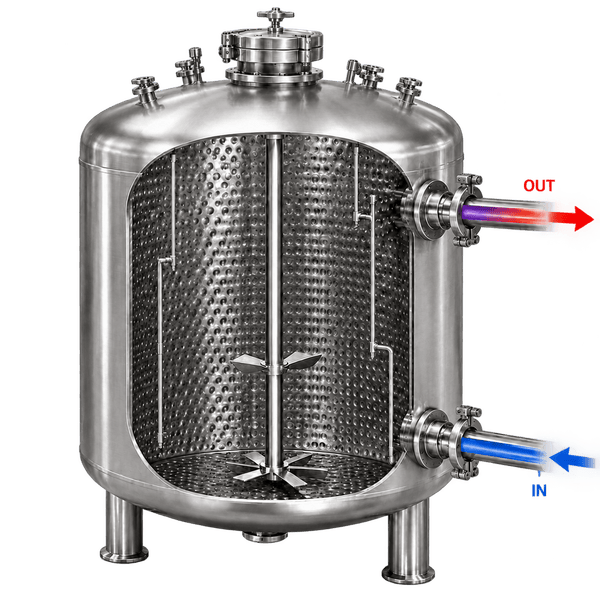
Removing the heat released by an exothermic reaction through a jacket or internal surface fast enough to hold the batch at its target temperature, with the system sized for peak heat release rather than average.
Before the design is fixed
The heat released over the batch, as a curve if possible, along with the batch volume and the temperature the reaction must hold. Calorimetry data from the lab is ideal. Without it, the peak rate has to be estimated conservatively, which usually means more surface than the process really needs.
Strongly, because the film on the process side of the wall is often the largest resistance. A faster or better agitator thins that film and can raise the overall coefficient more than any change to the jacket. Send the agitator type, diameter and speed, and whether it runs during the whole cooling period.
Temperature climbs, the reaction speeds up, and heat release climbs faster again, which is how a runaway starts. The cooling system is one layer of protection, alongside dosing control and relief, not the whole answer. Size the jacket to the peak with margin, and tell us the maximum safe temperature so we can show how close the design runs to it.
Zoning helps when the liquid level changes through the batch, since only wetted panels should take medium. It also lets a lower zone run harder during a peak. The cost is more piping and valves, so it earns its place mainly on vessels with large level swings.
The switch takes as long as the medium in the jacket and piping takes to flush and change temperature. Inflated panels hold little medium, so the change is quicker than with a conventional jacket. Hot medium meeting cold, or steam meeting chilled glycol, needs a purge sequence, so tell us the media and the cycle.
Related
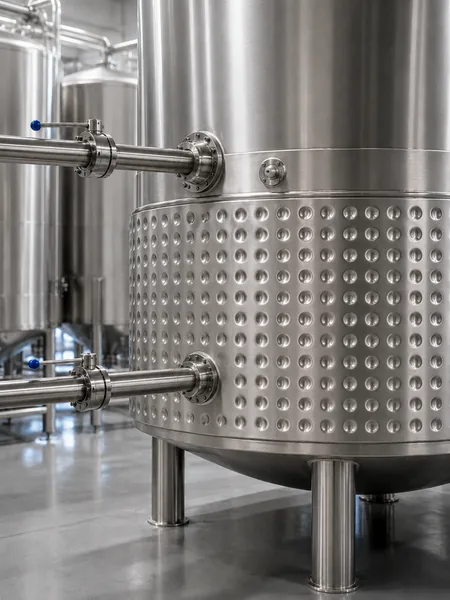
Tank Jacket Retrofit
A tank that needs heating or cooling it does not have usually presents two expensive options: replace it, or...
+ Learn More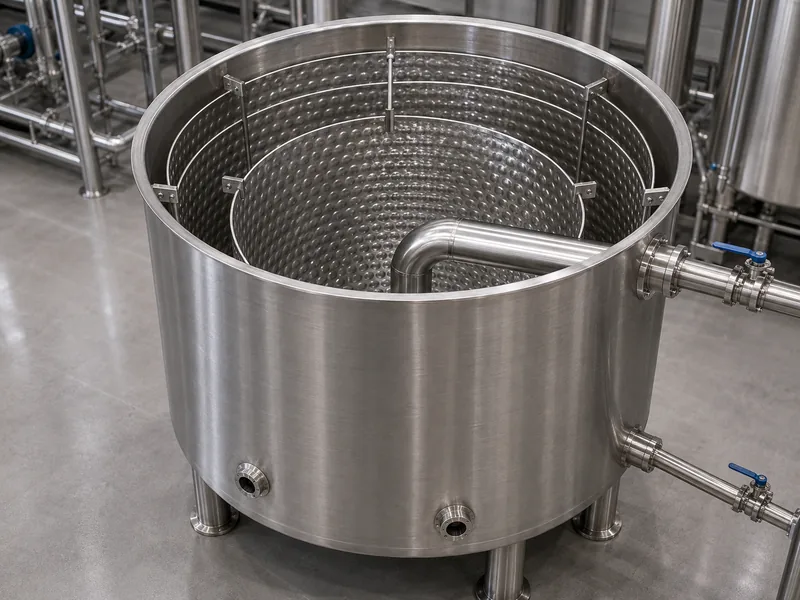
Immersion Tank Heating
Some fluids cannot be pumped out to an exchanger. They are too viscous, too abrasive, too valuable, or the...
+ Learn More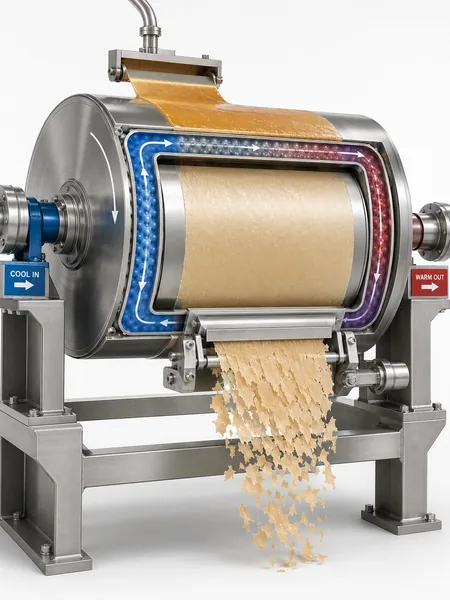
Drum & Roll Cooling
Chill rolls, flaker drums and drying drums all need one thing above everything else: a uniform surface...
+ Learn More