
1-805-484-2992
Quotes - Engineering - SalesReplacement Gaskets
Compound Selection and Supply
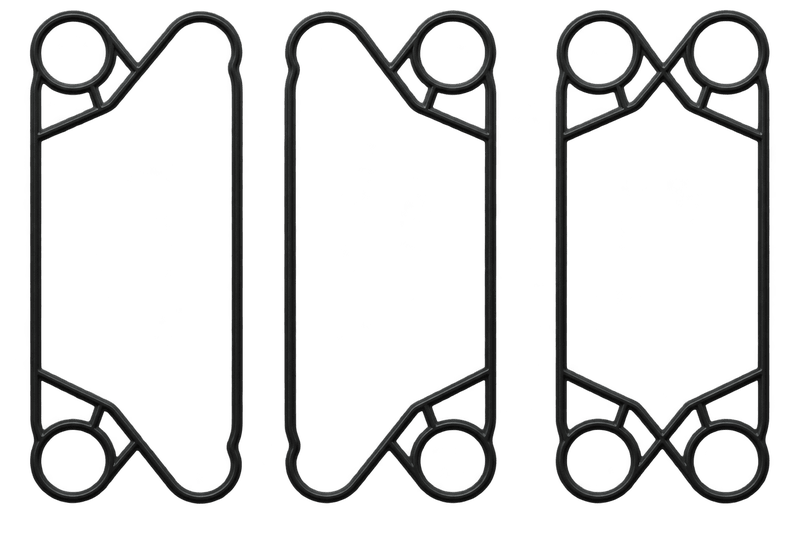
Gaskets are the cheapest part of a plate exchanger and the cause of most of its problems. Getting the compound and the fitting right is nearly all of it.
Five compounds cover the great majority of duty, and choosing between them is a matter of service temperature and chemistry rather than preference.
Compound windows. Nitrile for general water and oil. EPDM for steam, hot water and caustic, and the sanitary default. Silicone for wide temperature range. Viton/FKM for hydrocarbons and many acids but not steam. Butyl for specific chemical duty.
Match the current duty. Order against what the unit does now, not what it did when it was bought. Duties change, and a compound that suited the original service may be wrong for the present one.
Snap-in or glued. Many models use snap-in gaskets, which removes the adhesive step. Where gaskets are glued, the groove must be cleaned back and the adhesive given its cure time before the pack is closed.
Typical Specification
- Nitrile (NBR): General water and oil duty
- EPDM: Steam, hot water, caustic; sanitary default
- Silicone: Wide temperature range
- Viton / FKM: Hydrocarbons and many acids; not steam
- Butyl: Resin cured; specific chemical duty
- Attachment: Snap-in on many models; glued on others
- Identification: By unit serial number
- Storage: Above freezing, out of sunlight, uncompressed
- Policy: Renew whenever the pack is opened
- Spares: Full set held on site recommended
Confirm the duty
Note current temperature, chemistry and cleaning cycle for the unit
Choose the compound
Match nitrile, EPDM, silicone, FKM or butyl to that duty
Prepare the grooves
Clean grooves and give glued gaskets their full cure time
Store the spares
Keep the spare set above freezing, dark and uncompressed
Questions from maintenance teams
Swelling, softening or a sticky surface usually means chemical attack, such as a hydrocarbon reaching EPDM or steam reaching Viton. Hardening and cracking point to heat beyond the compound's range, and a flattened gasket that never springs back means compression set or over-tightening. Send a photograph of a removed gasket with the order, since the failure mode is the best guide to the next compound.
Compounds for food and dairy contact are formulated and documented for that use, and they must stand up to daily caustic and acid washes as well as the product. EPDM is the usual choice, with other compounds considered for fatty or oily products. Tell us the product and the CIP program when ordering so the gaskets carry the right documentation.
Start at the ends and corners, seat the clips into their slots and work inward, pressing rather than pulling the gasket into the groove. Stretching one to make it reach leaves it thin in one place and loose in another. If a gasket seems short, check that it is the right part for that plate position before forcing it.
Usually a gasket slipped out of its groove during assembly, a clip missed it's slot, or a plate went in reversed so the gaskets do not meet. Debris or old adhesive left in a glued groove does the same. Open the pack, check those plates and refit them, rather than tightening past the dimension to stop the weep.
Related
Replacement Plates
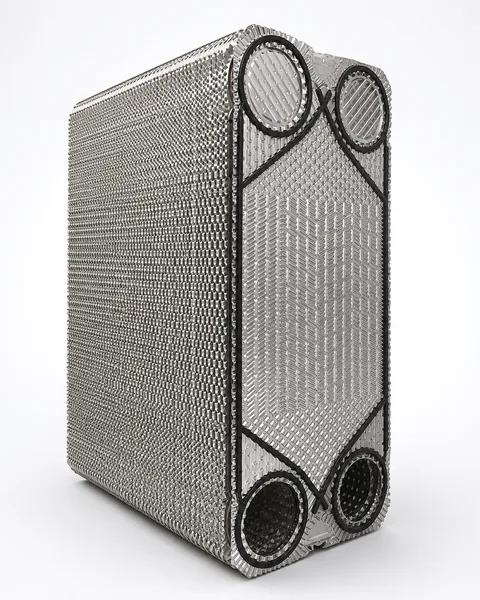
Plates outlast gaskets by a wide margin, so when they need replacing it is usually worth asking why rather...
+ Learn More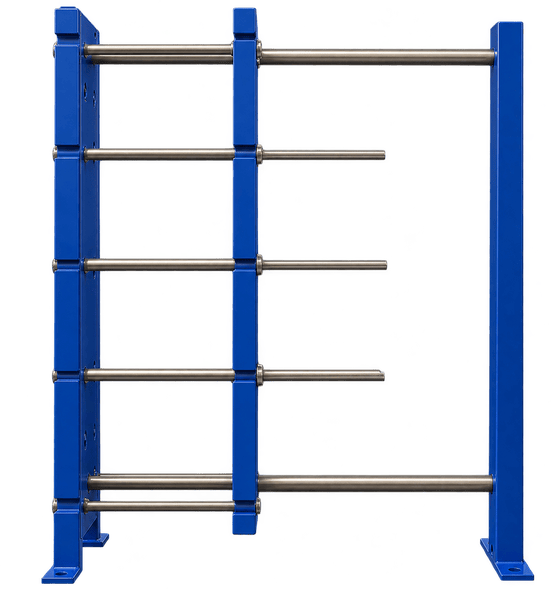
Frames & Hardware
The frame is the part nobody thinks about until a tie bolt seizes or a carrying bar wears through, at which...
+ Learn More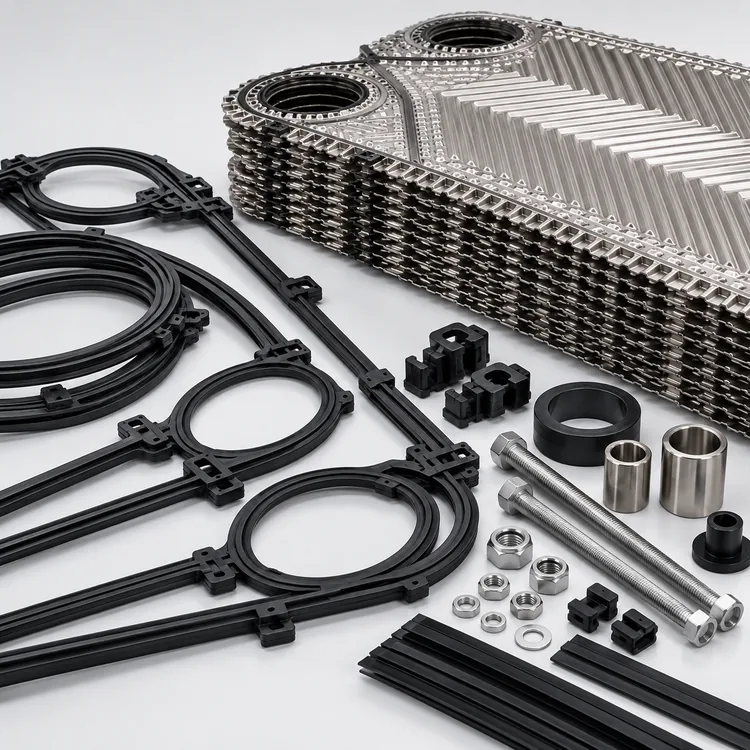
Parts & Gaskets
Genuine plates, gaskets, frames and hardware for the Mueller equipment we supply, identified from your unit rather than from a measurement.
+ Learn More