
1-805-484-2992
Quotes - Engineering - SalesTank Jacket Retrofit
Adding a Jacket to an Existing Vessel
A tank that needs heating or cooling it does not have usually presents two expensive options: replace it, or cut into it. A clamp-on Temp-Plate jacket is the third one.
Clamp-on Temp-Plate panels are formed to the vessel radius, coated with heat transfer mastic and bolted to lugs welded to the outside of the shell. Nothing penetrates the pressure boundary and in many cases the vessel barely comes out of service.
Three-step installation. Align the panel and mark the lug positions, weld the lugs, then mount the panels on the supplied spring-bolt assemblies. Quotations normally include the hardware and factory-applied mastic.
Mastic is not optional. An inflated panel touches a flat wall only at the pillow crowns, and the air between is an excellent insulator. Mastic fills those gaps and turns intermittent contact into a continuous thermal path.
Above 450°F. Pre-applied mastic is available up to about 450°F design temperature. Above that, hardening heat transfer cement is supplied loose for site application.
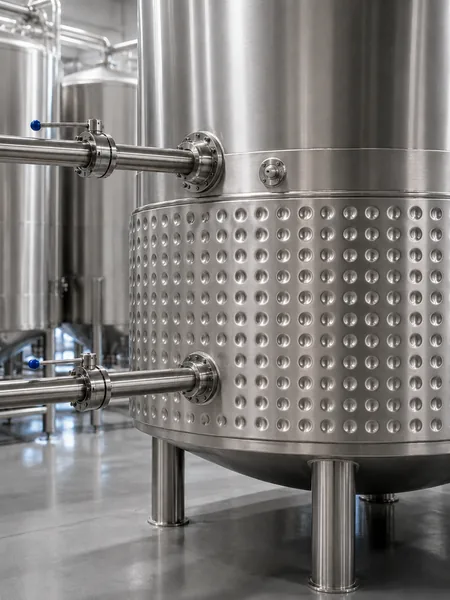
Inflated plate panels formed to a vessel's radius and bolted to lugs on its outer shell over heat transfer mastic, adding heating or cooling surface without cutting the tank's pressure boundary.
Specifying for this duty
The insulation and cladding come off where the panels go, and the jacket is insulated again once it is fitted, because a bare panel gives a large share of its duty to the room. Plan the new cladding around the panel headers and connections so they can still be reached. Tell us the insulation you intend to use and its thickness, and the heat loss is included in the rating.
It needs to fill the gaps between the pillow crowns and the shell without leaving a thick layer, since mastic conducts far worse than steel. Clean, sound shell surface lets the panel seat evenly. Weld spatter, old paint or pitting under a panel create voids, so prepare the area before panels go on.
On almost any heated or chilled tank it does, because the outside face of the panel otherwise loses or gains heat to the room. Insulation over the panels also protects people from hot surfaces and stops condensation on chilled ones. Leave access to the bolts if the panels may be removed later.
Each panel has its own inlet and outlet, usually piped in paralell through headers so every panel sees a similar medium temperture. On steam, condensate must leave from the low point of each panel. Tell us the medium and where the supply and return run so the headers can be laid out to suit.
Panels can be pressed to shape, so heads and cones can often take surface, though the cylindrical shell is the simplest part to cover. Bottom coverage is worth adding where the tank often runs at low level. Send the head type and dimensions with the shell drawing.
Per square foot it is somewhat slower, because the mastic layer and shell wall sit between the medium and the contents. That gap is usually made up with more panel area or a warmer medium. In exchange you avoid cutting the vessel, and in most retrofits that trade is the whole reason for choosing it.
Related
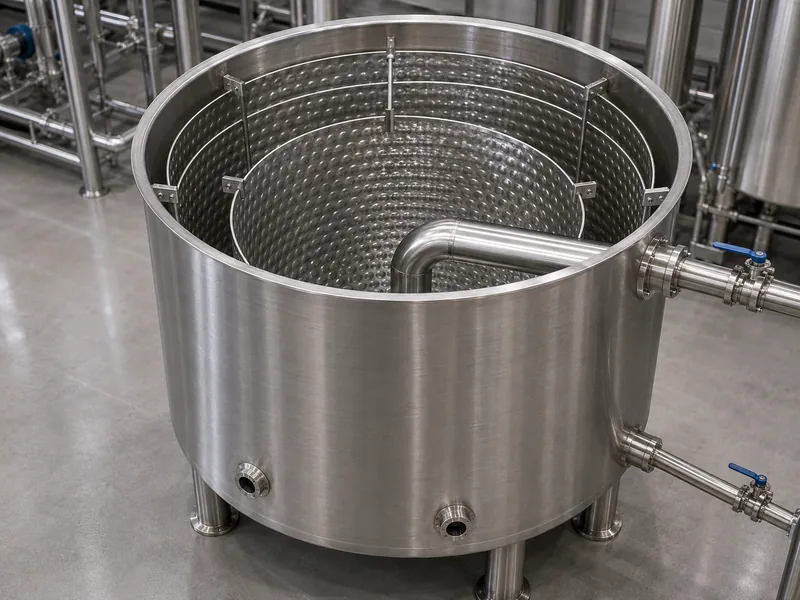
Immersion Tank Heating
Some fluids cannot be pumped out to an exchanger. They are too viscous, too abrasive, too valuable, or the...
+ Learn More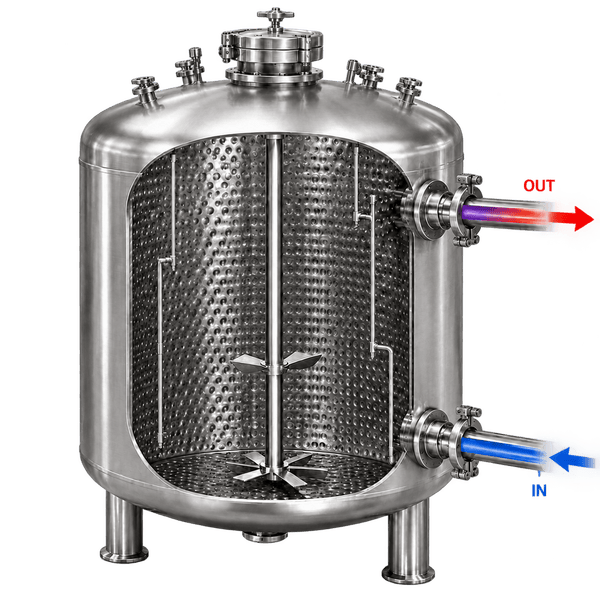
Vessel & Reactor Cooling
Reaction heat has to leave at the rate it is produced, and the consequence of it not leaving is rarely just a...
+ Learn More
Drum & Roll Cooling
Chill rolls, flaker drums and drying drums all need one thing above everything else: a uniform surface...
+ Learn More