
1-805-484-2992
Quotes - Engineering - SalesSERVICE & SUPPORT
Plate Exchanger Service
The advantage of a gasketed plate pack is that it opens. That advantage only pays off if opening it is a planned, routine operation rather than an emergency.
Service on a plate exchanger divides into four tasks: renewing gaskets, cleaning plates, expanding the pack when duty grows, and testing to confirm integrity afterward. Each one is straightforward when planned and disruptive when it happens unexpectedly. Trending approach temperature or the overall coefficient tells you when a unit needs attention far more reliably than a fixed calendar does.




What We Do
Regasketing
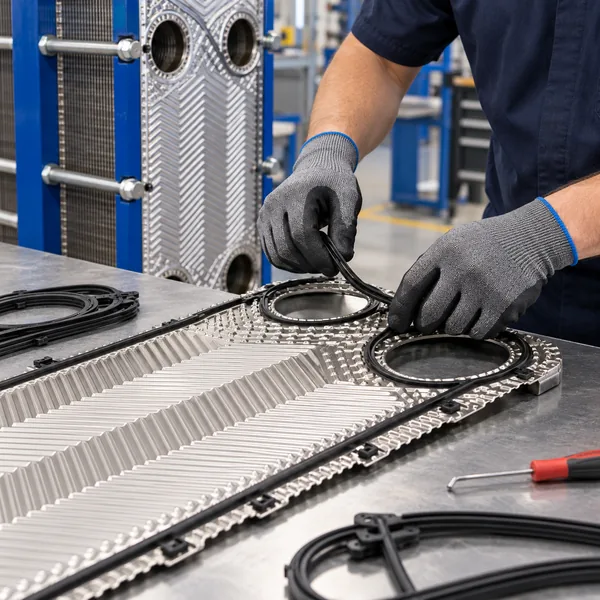
Gaskets are the shortest-lived component in a plate exchanger and the cheapest to renew. Doing it properly is...
+ Learn More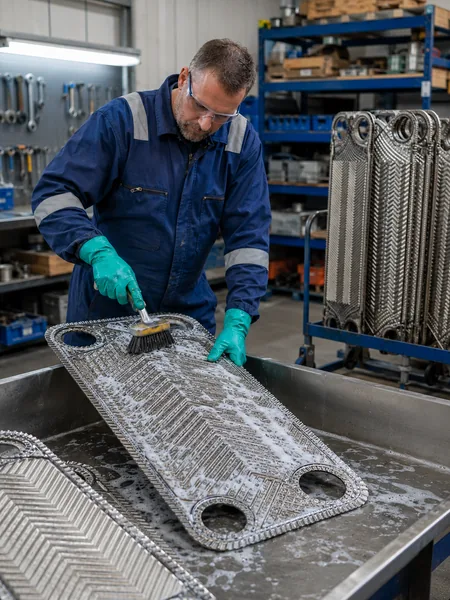
Plate Cleaning
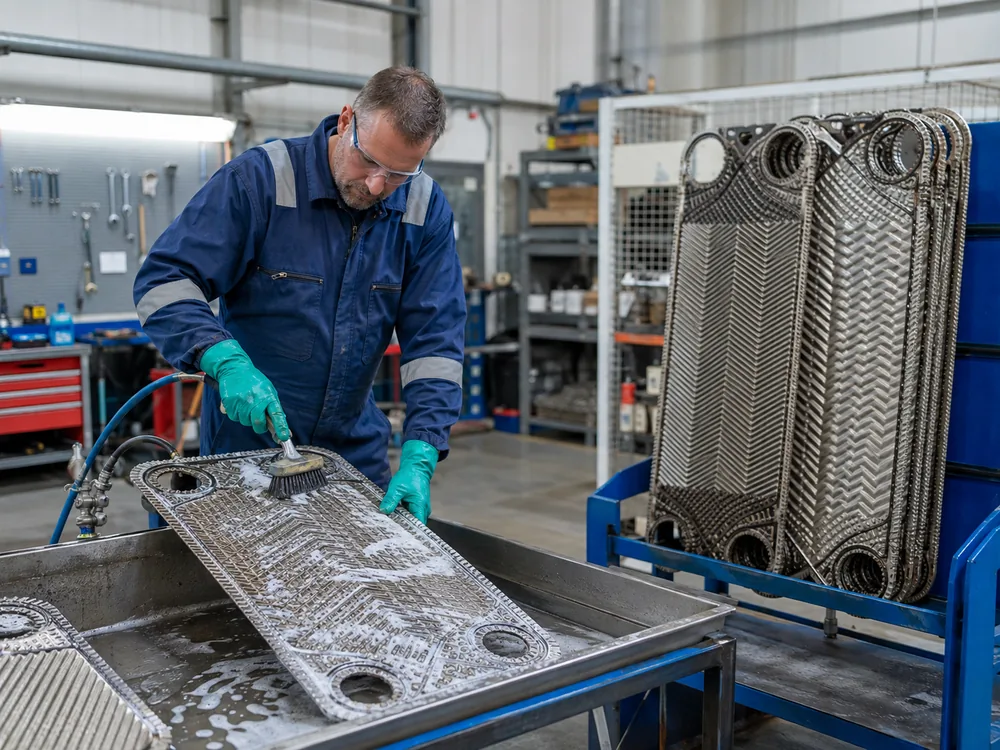
Fouled plates lose duty gradually and quietly. Cleaning them restores it, and how you clean depends entirely...
+ Learn More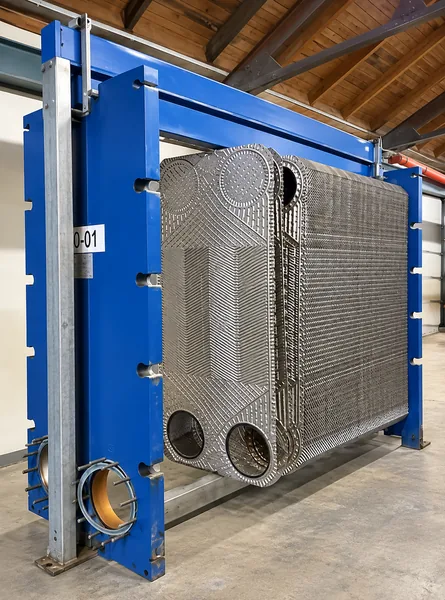
Plate Pack Expansion
Adding plates to an existing frame is the cheapest capacity increase available, and it is only possible if...
+ Learn MoreOwner questions
Watch the pattern over time. Fouling shows as a slow rise in pressure drop and a gradual loss of duty over weeks. An external leak is visible at the pack edge, while a cross-circuit leak appears as contamination, a level change or pressures that equalize between sides. A sudden step change in performance usually points to flow, valves or trapped air rather than the plates.
Many plants regasket and clean their own units, and the pack is designed for it. The crew needs space to slide the movable frame, a way to support plates as they come out, the pack dimension from the unit documentation and a hydrostatic test setup for afterward. On a first attempt, allow extra time and keep plates in order as they come off the bars.
Gaskets on hand before the frame is loosened, since you will need them regardless. Allow time to inspect and clean each plate, for adhesive cure if the gaskets are glued, and for a pressure test before restart. Keep plate spares available on critical duty, because a cracked plate found mid-job otherwise turns a planned stop into a wait for parts.
The dimension controls how far each gasket is compressed, and that compression is what seals the channel. Torque on a tie bolt varies with thread condition and lubrication, so two bolts at equal torque can leave the pack out of square. Tighten in stages across opposite bolts, measure at several points around the frame and stop at the dimension.
When cleaning no longer brings the approach back to its clean baseline, or when the interval between cleanings keeps shrinking. That usually means the duty has outgrown the surface, a plate material is corroding, or hardened gaskets are letting flow bypass inside the pack. Each points to a different job, so bring the trend data when you talk to us.
Reversing flow can dislodge fibers, shells or debris caught at the inlet port, where they collect against the distribution area. It does little for scale or biological film bonded to the plate, which needs chemistry or a manual clean. If debris keeps coming back, a strainer upstream is the lasting fix and costs far less than repeated flushing.