
1-805-484-2992
Quotes - Engineering - Sales3x5 Falling Film Chiller
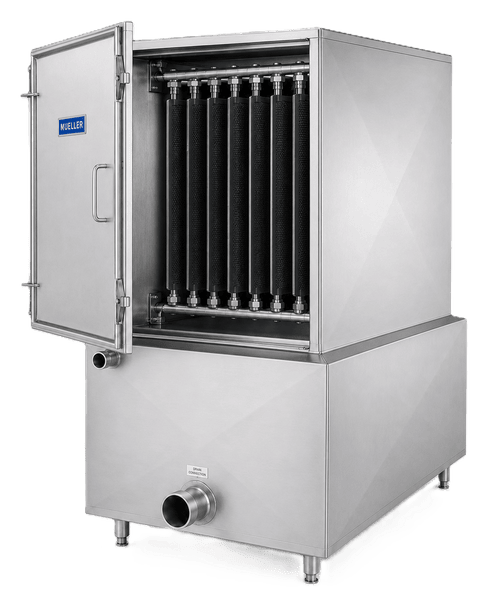
Compact Evaporator Format
The smaller of the two evaporator plate formats, and the one that covers most bakery, brewery and mid-size produce duty in sensible capacity steps.
3x5 refers to the nominal evaporator plate dimension. Cabinets are built with a plate count chosen to meet the required capacity, typically from four plates up to the cabinet maximum.
Capacity comes from plate count. The cabinet holds a number of evaporator plates and capacity scales with them, which makes the range easy to step through and easy to expand within the cabinet size where headroom was allowed at purchase.
Refrigeration side. The chiller is an evaporator, so it is matched to a condensing arrangement and a refrigerant. Suction conditions, refrigerant type and the control arrangement all need to be settled alongside the water-side duty.
Water side. Flow rate, inlet temperature and required outlet temperature set the duty. Tell us whether the water contacts product, because it changes the sanitation specification and sometimes the materials.
Typical Specification
- Evaporator plates: 3x5 Temp-Plate format
- Cabinet: Fully enclosed
- Plate count: Selected to meet the required capacity
- Freeze protection: Temp-Plate evaporator design prevents freeze-up
- Secondary exchanger: Not required
- Tank: Integral or tankless
- Materials: Stainless steel construction
- Cleaning: Plates and distribution accessible
- Water duty: Flow, inlet and outlet temperature
- Refrigerant: Matched to the condensing arrangement
| PRODUCT | CONSTRUCTION | MATERIALS | SUPPLY |
| 3x5 Falling Film Chiller | Mueller factory built | 304 / 316 stainless | New equipment |
Request a QuoteInstall the 3x5 with the condensing side close and every plate reachable, since suction losses and sanitation both start at placement.
3x5 cabinet: installation note
3x5 Falling Film Chiller
Sizing the Cabinet
Plate count is the variable. Specify the capacity you need today and tell us wether it is likely to grow, because a cabinet with room for additional plates costs very little extra now and saves buying a second unit later.
The water-side duty and the refrigeration-side conditions have to be settled together. A chiller sized on water duty alone can be mismatched to the condensing capacity available.
Installation questions
Leave room to open the cabinet and reach every plate and the distribution pan, because sanitation is done from there. Do not box the unit into a corner where only one side opens. Allow a clear path for hoses and a wash cart, and keep the electrical panel on a side that stays dry during washdown.
As close as the plant layout allows. Long suction lines lose pressure and capacity, and on halocarbon systems they make oil return harder. If the condensing equiptment must be remote, tell us the line length and elevation difference so the piping and the expected capacity reflect the real installation.
A pump draws from the integral tank and sends water to the process, and the warm return goes back to the distribution pan at the top. Size the return line generously so it flows by gravity without backing up. Put the pump suction low in the tank with enough submergence to avoid drawing air at peak flow.
Plan for one. The tank needs an overflow route, the unit is drained for sanitation, and washdown water has to leave the area quickly. A drain sited under the cabinet edge keeps standing water away from the floor, which matters for both hygiene and slip risk in a food plant.
That works if the cabinet was ordered with open plate positions and the rest of the installation was sized for the final count. Pipe the water return, the refrigerant headers and the valves for the eventual capacity on day one. Otherwise the plates go in easily but the refrigeration side cannot feed them.
Related
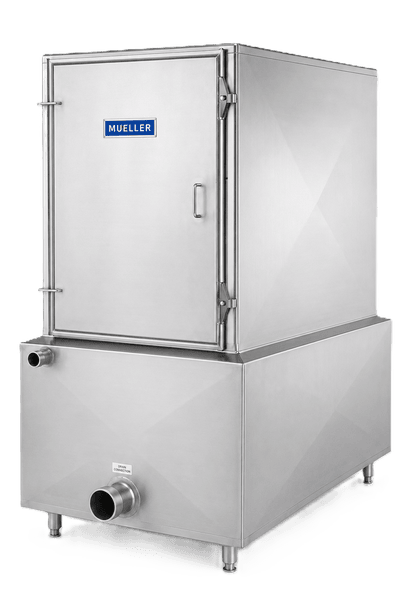
3x3 Falling Film Chiller
The smallest cabinet in the range, and the one that fits where floor space decided the specification: a...
+ Learn More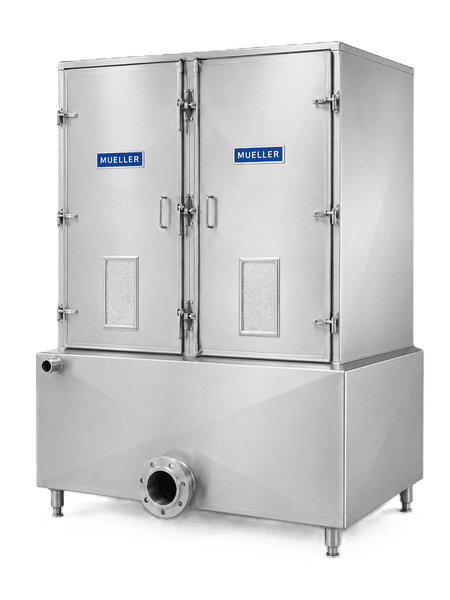
4x8 Falling Film Chiller
The larger evaporator plate format, for duties where a 3x5 cabinet would need more plates than it can hold or...
+ Learn More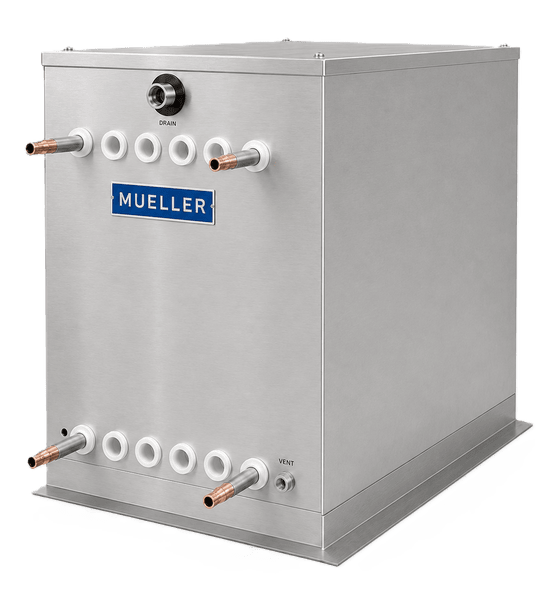
Tankless Chillers
If the plant already has chilled water storage, an integral sump is a tank you are buying twice. Tankless...
+ Learn More