
1-805-484-2992
Quotes - Engineering - SalesProduct & Ingredient Heating
Heating Product Without Damaging It
Heating the product itself is a different problem from heating a utility. The stream is valuable, often viscous, frequently shear sensitive, and it will burn onto any surface hotter than it should be.
Product heating covers sauces, purees, syrups, protein solutions, dairy streams, plant-based beverages and ingredient water. The thermal duty is usually easy; everything around it is not.
Burn-on dominates. Product against a wall well above its bulk temperature denatures or caramelizes and adheres. That deposit insulates, the wall runs hotter, and the problem accelerates. Run length collapses and cleaning gets more aggressive.
Approach temperature is the lever. A plate pack reaches within a few degrees, so a much lower-temperature medium still delivers the duty. Hot water at a controlled temperature instead of high-pressure steam is frequently the single change that doubles run time.
Particulates and viscosity. Where the product carries pulp, fiber or inclusions, a Free-Flow plate handles it and a conventional plate will block. Where it is very viscous, the low-velocity turbulence of a plate pack is an advantage rather than a limitation.
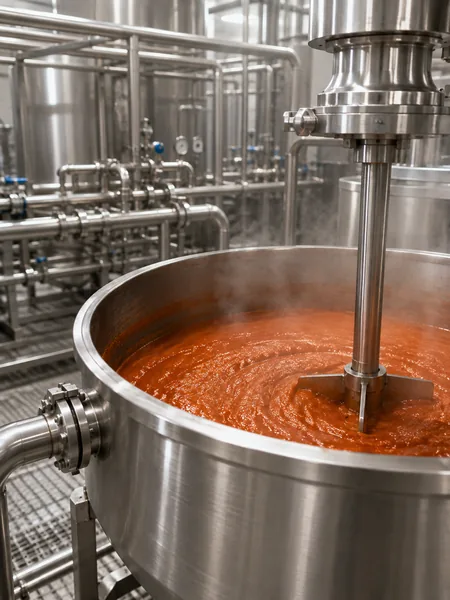
Raising the temperature of a food or ingredient stream itself, where the limit is usually the wall temperature the product can tolerate before it scorches or sticks, rather than the heat load.
Common design questions
That depends on the product, and the most reliable answer comes from your own run history or a bench test. Proteins and sugars tend to set the lowest limits. We design to hold the wall within a chosen margin of the product temperature, then work back to the medium temperature that produces it, so give us any temperature where you have seen deposit start.
Counter-current gives the closest approach and the most heat per plate, so it is the default. Co-current puts the hottest medium against the coldest product, which keeps the wall cooler where the product leaves at its peak temperature. On very burn-sensitive product we sometimes trade a little surface for that protection.
Particles that must arrive whole need a low-shear pump and wide channels, so a Free-Flow plate paired with a positive displacement pump is the usual start. Inclusions that are allowed to break are less demanding. Tell us the largest particle size and how fragile it is, because that decides gap and pass arrangement before thermal sizing begins.
It can, if the selection is made against the hardest product in the range rather than the most common one. Viscosity, burn-on temperature and particles may each come from a different product, so we check every recipe. List the products with their flows and temperatures, and note which one runs longest.
Burn-on is the usual cause, since deposit narrows the channels at the same time it insulates the wall. A slow rise across a shift is normal and sets the cleaning interval, while a sudden jump often points to a blockage at a port. Trending product side pressure drop is the cheapest early warning you can install on a product heater.
Some starches and protein blends gain viscosity as they heat, which reverses the usual pattern and loads the hot end with the highest pressure drop. The pass arrangement is then set to keep velocity up where the product thickens. Send viscosity data across the full heating range, or a sample, so we do not size against a curve that bends the wrong way.
Related
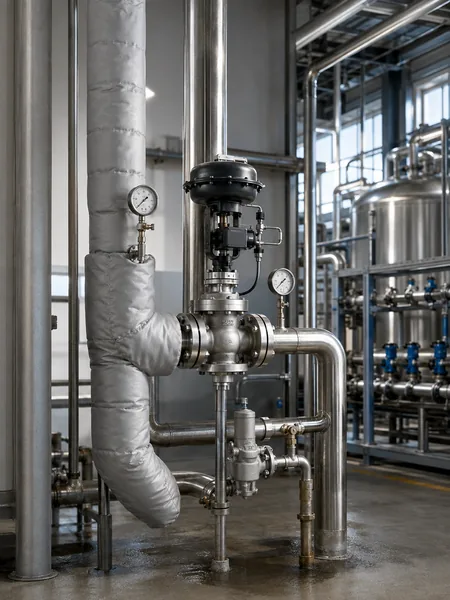
Steam-to-Water Heating
Steam on one side, water on the other, and a temperature difference large enough that the exchanger selection...
+ Learn More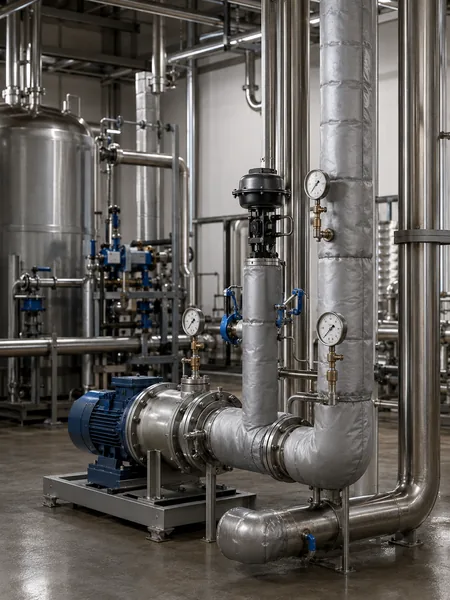
Hot Water & Glycol
Closed loop, liquid to liquid, modest temperature difference. The design is undemanding until glycol enters...
+ Learn More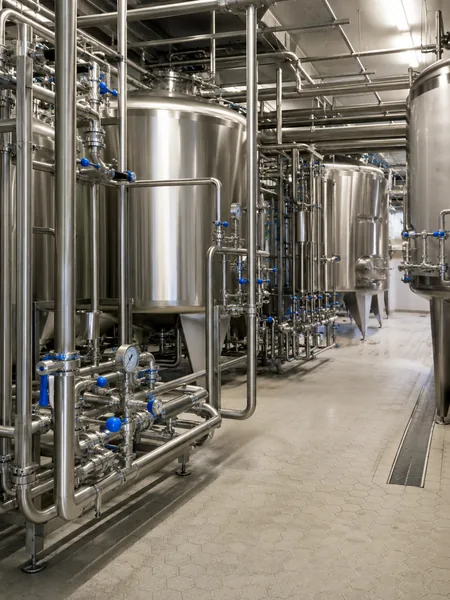
CIP Solution Heating
A CIP heater has to bring aggressive chemistry to setpoint quickly and then be cleaned itself. It is one of...
+ Learn More