
1-805-484-2992
Quotes - Engineering - SalesCondenser Heat Recovery
Turning Rejected Heat Into Hot Water
Every refrigeration system in the plant is rejecting heat to atmosphere continuously, and every hot water system is buying energy to make heat. Connecting the two is among the shortest paybacks available.
A refrigeration system rejects everything it removes from the product plus the compressor work. On a dairy, a cold store or a food plant that is a substantial and completely predictable quantity of heat leaving through the condenser.
Where it goes instead. Pre-heating water on its way to the hot water system, warming washdown water, or supplying a process that needs modest-temperature heat. The temperature available is limited by condensing conditions, so the sink has to be one that can use warm rather than hot water.
Separation matters. Where recovered heat enters potable water, the arrangement must guarantee that refrigerant and potable water never share a single barrier. Double-wall construction is the usual answer.
On the farm. The Mueller Fre-Heater is a packaged version of exactly this for dairy refrigeration, recovering compressor heat into farm hot water automatically.
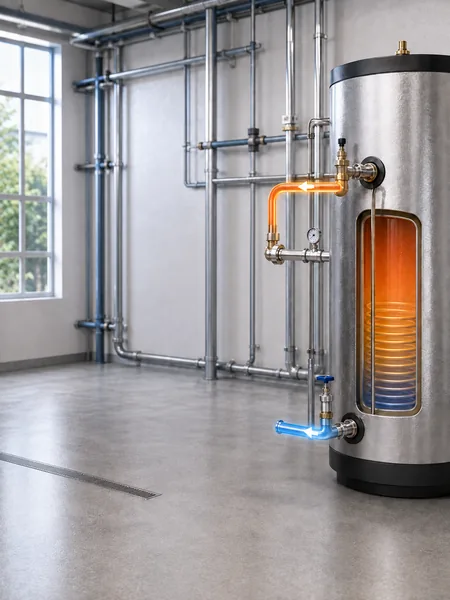
Capturing heat that a refrigeration system would otherwise reject through its condenser and using it to warm water or another low-temperature process, with the recoverable temperature set by the system's condensing conditions.
Questions engineers ask
It usually sits in the discharge line ahead of the main condenser, so it takes the superheat and some of the condensing heat first. The main condenser then trims whatever the water side cannot absorb, which keeps head pressure under control when hot water demand is low. Placing it after the condenser leaves very little worth recovering.
Once the water stops taking heat, the recovery exchanger stops condensing and the main condenser has to carry the full load again. The refrigeration controls must allow for that swing so the compressor does not see a pressure spike. We size the recovery unit with the condenser control strategy in view, which is why we ask how your condensers are controlled today.
It rules out copper anywhere in contact with the refrigerant, since ammonia attacks it, so copper brazed units are off the table. Stainless or nickel construction is the starting point. Tell us the refrigerant, the discharge pressure and temperature, and whether the recovered heat goes anywhere potable, because each of those narrows the choice.
Related
Waste Heat Recovery
The largest untapped energy in most plants is in streams nobody wants to touch: warm effluent, dirty process...
+ Learn More
Boiler Blowdown Recovery
Continuous blowdown carries heat out of the boiler by design, hour after hour, and on most sites it goes to...
+ Learn More
Regeneration & Interchange
Regeneration is heat recovery inside a single process: the hot stream leaving heats the cold stream entering...
+ Learn More