
1-805-484-2992
Quotes - Engineering - SalesFree Cooling & Water-Side Economizer
Chiller-Free Cooling Hours
When the outside air is cold enough, the cooling tower alone can meet the load and the chillers can stop. A plate exchanger is what makes that transfer possible, and its approach temperature decides how many hours a year you get.
A water-side economizer runs tower water through a heat exchanger against the chilled water loop. When the wet bulb is low enough, the tower does all the work and the chiller shuts down entirely, which removes the single largest electrical load in most buildings.
Approach temperature buys hours. Every degree of approach in the exchanger raises the outdoor condition at which free cooling becomes possible. A plate exchanger reaching within two or three degrees delivers far more free cooling hours per year than any wider-approach alternative.
Sizing for the shoulder season. The economizer is not sized for design day; it is sized for the conditions where it will actually run. Getting that wrong means an exchanger that only works on the coldest week of the year.
Partial free cooling. Even when the tower cannot meet the whole load, it can pre-cool the return water and reduce chiller work. Designing for partial operation extends the benefit across a much larger part of the year.
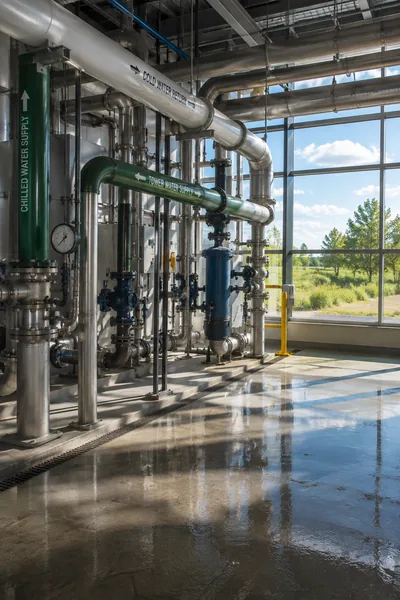
A heat exchanger that lets cooling tower water carry the chilled water load directly when outdoor wet bulb conditions allow, so the chillers can reduce output or shut down entirely.
What to know before sizing
Give the supply temperature the loop actually runs at in the shoulder months, not the summer design figure. Many buildings can reset chilled water upward in cooler weather, and every degree of reset brings free cooling on at a warmer outdoor condition. If your controls allow a reset, tell us the range so we can size for the warmer setpoint.
Series piping, with the exchanger upstream of the chiller on the return, allows partial free cooling because the tower pre-cools water that the chiller then finishes. Parallel piping is simpler but only switches over when the tower can carry everything. Most new designs favor the series arrangement for the extra hours it captures.
The tower is asked to make the coldest water it can, which means fans at full speed and setpoints well below normal condenser water operation. In freezing climates that brings basin heating, fan cycling and bypass control into play. Check that the tower controls can move into that mode cleanly, or the exchanger will never see the cold water it was sized for.
The economizer sits in both the tower and chilled water circuits, so its pressure drop lands on pumps that were often selected without it. Trading a little approach for lower drop can avoid a pump upgrade on a retrofit. Send the available head on each side, and we balance approach against drop rather than chasing the tightest approach at any cost.
Related
Cooling Tower Isolation
Open cooling tower water is dirty, biologically active and full of dissolved solids. Isolating it from a...
+ Learn More
Quench & Hydraulic Oil
Oil is viscous, which makes it a poor heat transfer fluid, and hot oil is a maintenance problem waiting to...
+ Learn More
Product Chilling
Pulling heat out of product quickly is what preserves quality, and doing it with water rather than air is...
+ Learn More