
1-805-484-2992
Quotes - Engineering - SalesInstallation & Startup
Getting It Right From the Start
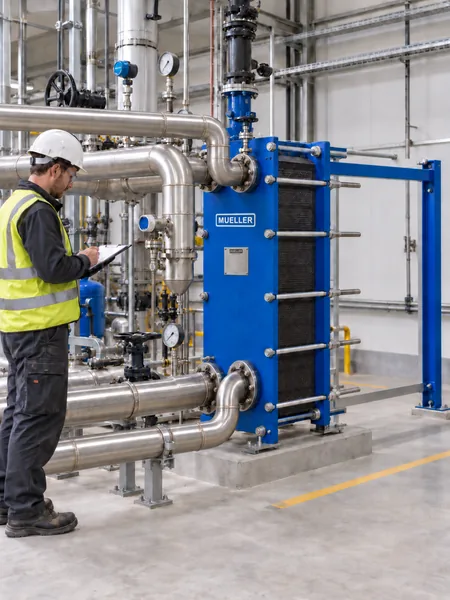
Most early plate exchanger problems are installation problems, and almost all of them are avoidable with an hour of planning before the unit arrives.
A plate exchanger needs clearance, support and correct connection orientation, and it needs to be started up in a way that does not shock it.
Clearance to open. The movable end frame slides back, and plates come out sideways. Leaving that space clear is the single most commonly forgotten item, and discovering it after the unit is piped in is expensive.
Connections and orientation. Ports are specific to each side and each pass arrangement. Connecting a unit backwards is easy and produces a unit that appears to underperform for no visible reason.
Startup. Bring both sides up gradually and avoid admitting hot fluid to a cold unit at full rate. Thermal shock and pressure surge both damage gaskets and can distort plates.
First service. Check the pack dimension after the unit has been through a few thermal cycles. Some settling is normal and a small adjustment early prevents a weep later.
Typical Specification
- Clearance: Space to slide the movable frame and remove plates
- Support: Level foundation, frame supported as designed
- Connections: Port assignment and orientation confirmed
- Startup: Both sides brought up gradually
- Avoid: Thermal shock and pressure surge
- Venting: Air removed from both circuits before operation
- Pack dimension: Checked after initial thermal cycling
- Instrumentation: Temperature and pressure points for trending
- Baseline: Performance recorded when clean
- Documentation: Nameplate details recorded for future parts
Plan the clearance
Keep sliding room for the movable frame and plate removal
Set and connect
Level the frame, confirm port assignment, support pipework independently
Vent and start
Purge air from both circuits, then bring flows up gradually
Check and record
Recheck pack dimension after thermal cycles and log clean performance
Questions on the work
A level, rigid pad that carries the full weight of the unit when flooded, with supports where the frame was designed to bear. A frame sitting out of level twists slightly, and that shows up later as uneven gasket compression and a leak at one corner. Anchor it before piping is connected, and support the pipe runs independently so the nozzles are not carrying them.
Fill each circuit slowly from the low connection with the high point vents open, and keep going untill a steady stream of liquid runs from every vent. Air trapped in the upper channels blanks off surface, so the unit looks undersized from day one. Vent again once the unit reaches temperture, because dissolved air comes out of solution as the fluid warms.
In most installations the colder side is established first at reduced flow, then the hot side is opened slowly. That order keeps a cold pack from meeting full hot flow on one side only, which is the condition that stresses gaskets and plates. Open valves gradually on each side to avoid a pressure surge, and follow the unit documentation if it calls for a different sequence.
Related
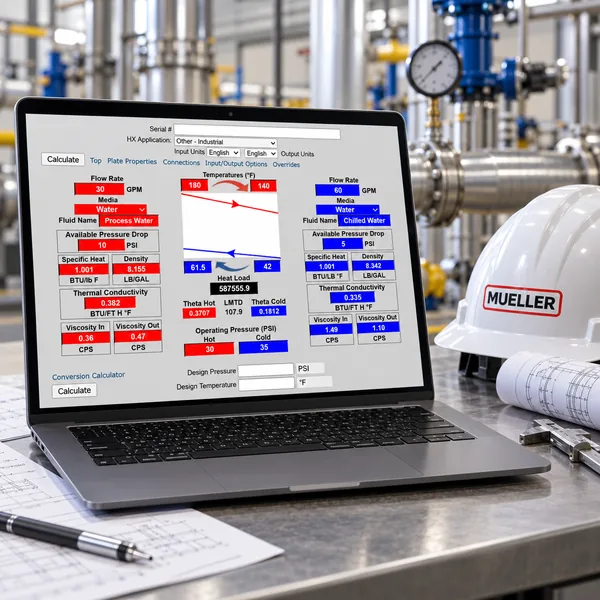
Thermal Sizing
Sizing is where the difference between a unit that works for a decade and one that disappoints in a season is...
+ Learn More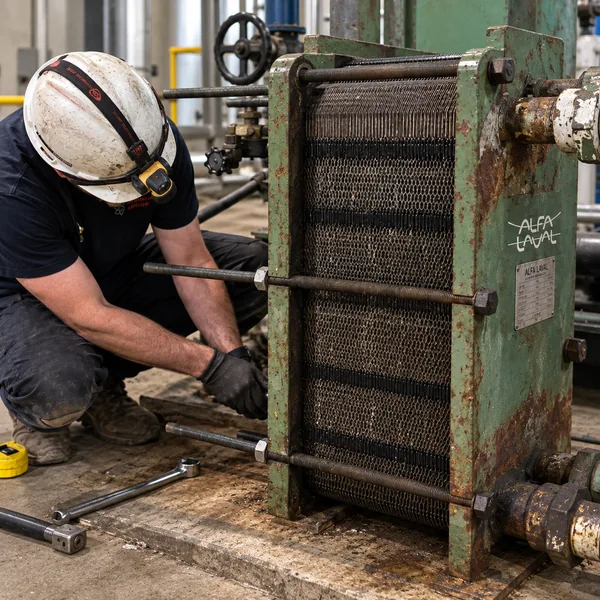
Replacing Another Brand
Replacing a competitor's plate exchanger does not have to mean new concrete and new pipework. Custom frames...
+ Learn More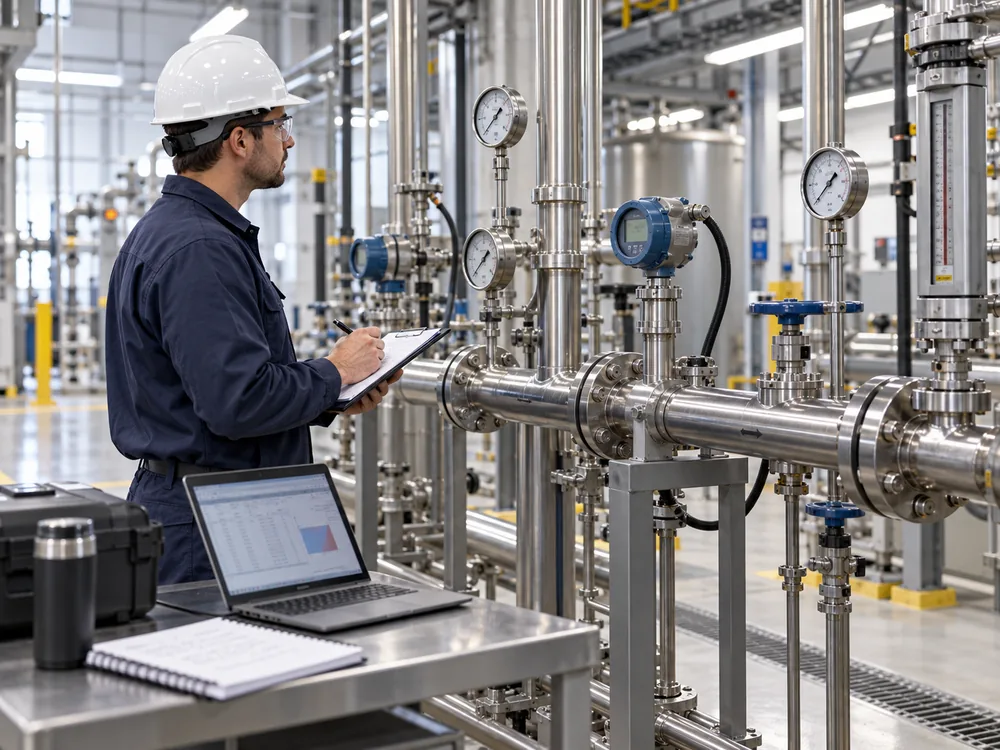
Engineering & Selection
Every unit we quote is rated against your actual conditions before it is priced, so the selection is settled before the number is.
+ Learn More