
1-805-484-2992
Quotes - Engineering - SalesBoiler Blowdown Recovery
Recovering Heat You Are Throwing Away
Continuous blowdown carries heat out of the boiler by design, hour after hour, and on most sites it goes to drain. It is a small exchanger with an unusually short payback.
Boilers blow down continuously to control dissolved solids. That water leaves at boiler pressure and temperature and it is discarded. Putting a small exchanger between the blowdown and the incoming make-up water recovers most of the heat for essentially no operating cost.
Flash comes first. Hot blowdown released to lower pressure flashes into steam. A flash vessel recovers that low-pressure steam before the liquid reaches the exchanger, and sizing the exchanger for the liquid that actually arrives is what makes the numbers work.
Small unit, continuous duty. The flow is modest but it runs whenever the boiler runs, which is what produces the payback. Projects that look marginal on flow rate frequently look excellent on annual hours.
Materials. Blowdown is concentrated boiler water and it is chemically aggressive. Plate material and gasket compound are chosen against that concentration rather than against feedwater.
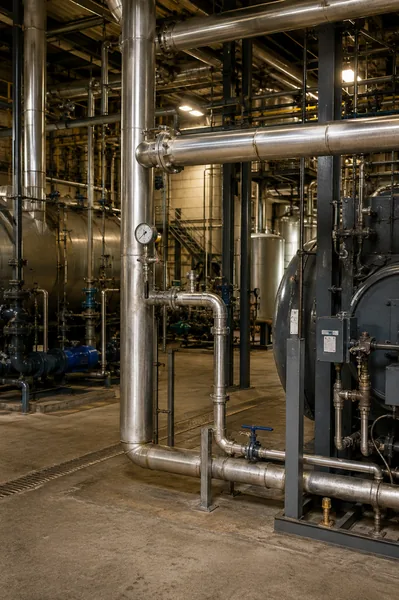
Recovering heat from water continuously drained from a boiler to limit dissolved solids, usually by flashing part of it to low-pressure steam and passing the remaining hot liquid through an exchanger that preheats incoming make-up water.
Practical questions
The rate stays where the water chemistry puts it. Recovery takes the cost out of each gallon discharged, which removes the temptation to cut blowdown and let dissolved solids climb. Once the heat is no longer wasted, operators tend to hold the correct rate instead of the cheapest one, and the boiler is better for it.
It can leave close to the temperature of the incoming make-up water, if the exchanger has enough surface and the flows are reasonably balanced. That matters twice: it maximizes the heat returned, and many sewer authorities limit discharge temperature, so cooler drain water can remove the need for tempering with cold water. Send us the make-up temperature and any discharge limit you work to.
Flow on the blowdown side simply stops, and the make-up side usually does the same, so the exchanger idles with both sides full. The concern is corrosion or deposit while it sits still, which a drain-down or a short flush on restart handles. On a plant with frequent boiler cycling, tell us the pattern so materials and drains are chosen with idle time in mind.
Bottom blowdown comes in short, violent bursts that carry sludge, and it is rarely worth chasing. The continuous surface blowdown is steady, relatively clean and running all day, which is where the recoverable heat sits. Most schemes recover the continuous stream and leave intermittent bottom blowdown going to its own blowdown tank as before.
Send the boiler operating pressure, the treatment program and the cycles of concentration you run. Those set the temperture at the exchanger inlet and the pH and solids the plates and gaskets will face. With that in hand we choose the alloy and compound against the concentrated water rather than guessing from feedwater figures.
Related
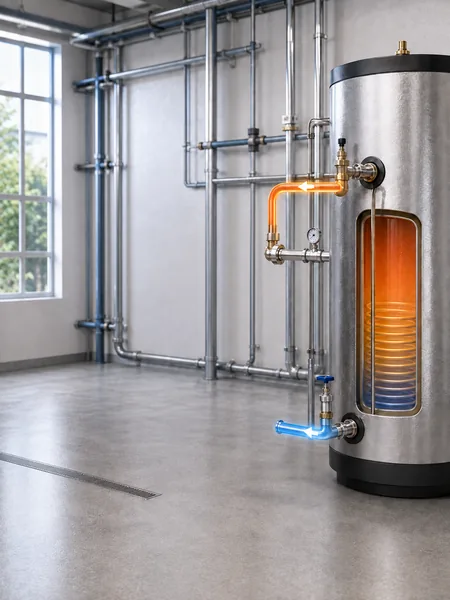
Condenser Heat Recovery
Every refrigeration system in the plant is rejecting heat to atmosphere continuously, and every hot water...
+ Learn More
Waste Heat Recovery
The largest untapped energy in most plants is in streams nobody wants to touch: warm effluent, dirty process...
+ Learn More
Regeneration & Interchange
Regeneration is heat recovery inside a single process: the hot stream leaving heats the cold stream entering...
+ Learn More