
1-805-484-2992
Quotes - Engineering - SalesFood Processing
Sauces, Purees, Oils and Prepared Foods
Food streams are the hardest sanitary duty because so many of them are viscous, particulate-bearing or both, and every one of them fouls if the surface is hotter than it should be.
Food processing spans sauces and purees, edible oils, starches and sweeteners, prepared meals, protein solutions and plant-based products. What they share is difficulty: high viscosity, particulates and a strong tendency to burn on.
Free-Flow for solids. Anything carrying pulp, fiber, seeds or inclusions needs the open channel. A conventional plate pack will bridge and block, sometimes on the first run.
Hydrocooling for whole product. Where the product cannot go through an exchanger at all, a Temp-Plate bank floods it with chilled water instead, and the plates lift out for cleaning.
Surface temperature discipline. Using a cooler medium with more surface is almost always the right answer on food duty. It costs exchanger and saves cleaning downtime, and downtime is the expensive item.
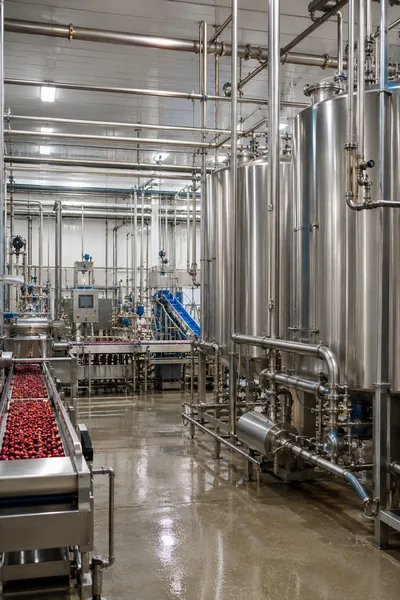
Typical Specification
- Typical products: Sauces, purees, oils, starches, sweeteners, proteins
- Particulates: Free-Flow plate to around 3/8 inch
- Whole product: Temp-Plate bank assembly for hydrocooling
- Viscous streams: Plate turbulence at low velocity
- Fouling mechanism: Burn-on at the heating surface
- Medium strategy: Lower temperature, more surface
- Product contact: Type 316 stainless
- Cleaning: CIP and manual inspection
- Chilled water: Falling film chiller supply
- Allergen changeover: Frame opens for verification
Lower the medium temperature, add surface, cut downtime
- Free-Flow plate for pulp and seeds
- Temp-Plate bank for whole product
- Open the frame for allergen checks
Questions engineers raise
The largest particle dimension, its shape, how much of the stream it makes up by volume, and whether it is fibrous or firm. Fibers tend to wrap at the port while firm pieces bridge across the channel, and each needs a different margin. Say too whether the pieces must come through intact, because that changes the velocity we can allow.
Oils carry less heat per degree and turn thick as they cool, so flow can slip toward laminar and the coefficient drops at the cold end. The gasket compound also has to resist fats and oils without swelling. Send the oil type and its full temperature range rather than a single design point.
Hot water, held as cool as the duty allows, rather than steam. Steam condenses at a fixed temperature and puts the hottest possible wall against the product, while a hot water set lets you trim the medium down and add plates instead. Tell us the product's scorch point if you know it and the heat-up range.
Peak product throughput, its field temperature and the temperature it has to reach, plus the heat the water picks up from the room and the conveyor. Size on the heaviest harvest day, not the average week. Give us product type, tons per hour at peak and the target core temperature, and the bank is laid out to hold the water cold.
More than any water duty, and what your pump can deliver decides it. Viscous product loses pressure quickly in narrow channels, and if the allowance is to tight the selection spreads across many parallel plates where velocity collapses and burn-on follows. Send the pump curve or allowable drop with viscosity at the coolest point in the circuit.
Related
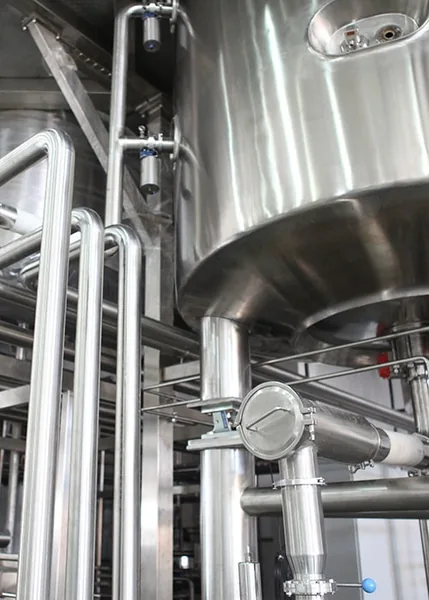
Dairy Processing
Milk, cream, whey and cultured products all foul heat transfer surfaces in the same way, and all of them are...
+ Learn More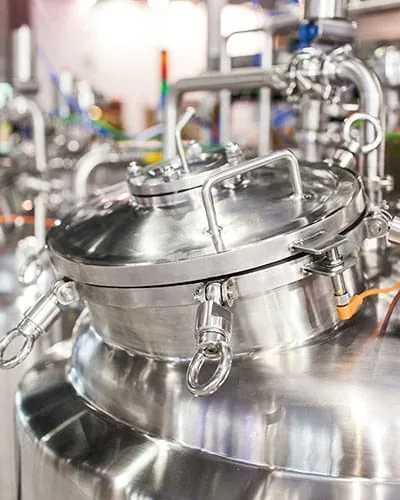
Brewing & Beverage
Wort cooling is the duty every brewery notices, but the cold liquor supply behind it is usually what limits...
+ Learn More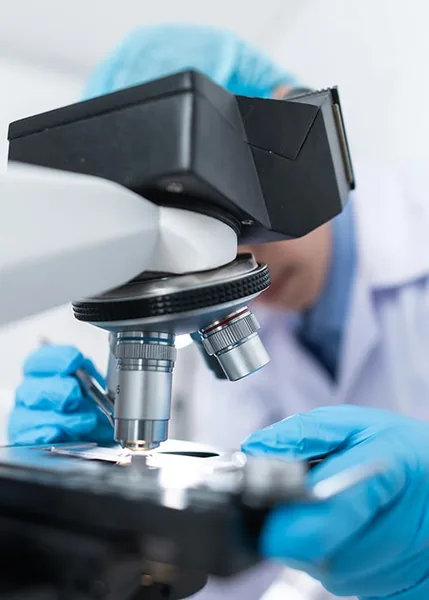
Pharmaceutical & Biotech
Pharmaceutical duty is thermally undemanding and administratively exacting. The equipment has to be...
+ Learn More