
1-805-484-2992
Quotes - Engineering - SalesRegeneration & Interchange
Recovering Within the Process Itself
Regeneration is heat recovery inside a single process: the hot stream leaving heats the cold stream entering. On pasteurizing duty it is where the operating cost of the whole system is decided.
A regeneration section interchanges outgoing hot product against incoming cold product. The heat never leaves the process, so both the heating and the cooling duties fall, often by a large fraction.
Regeneration efficiency. How much is recovered depends directly on approach temperature, which is why plate exchangers dominate this duty. A closer approach is worth real energy on every hour of operation.
The pressure differential rule. On pasteurizing duty, pressure on the pasteurized side must exceed pressure on the raw side at all times, so any leak flows the safe direction. That is a regulatory requirement and it shapes pump placement across the whole system.
Sections in one frame. Regeneration, heating and cooling commonly share a single frame separated by connector grids, which saves space, piping and cost against three separate exchangers.
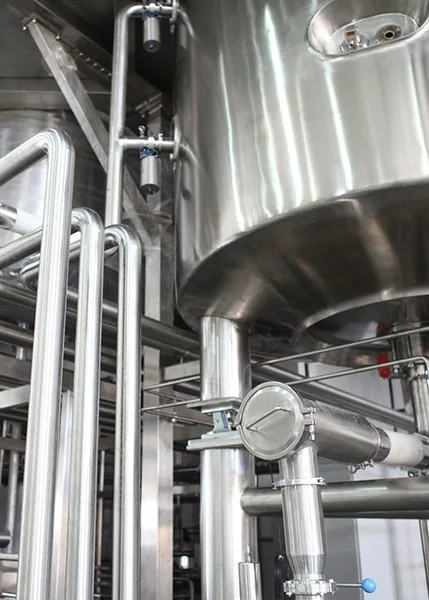
Heat interchange within one process, where the hot stream leaving the system warms the cold stream entering it, so the same heat serves both the heating and cooling duties and both loads fall.
Sizing questions
Run the energy cost at several efficiency levels against the extra plates each one needs. Higher regeneration cuts both heating and cooling load, but each added point takes more surface than the last, and the product spends longer in the exchanger and sees more pressure drop. The right point is usually where the marginal plate stops paying inside your payback window.
Viscosity on the raw side is highest at the cold inlet, so pressure drop in the regeneration section climbs fast as plates are added in series. Because the pasteurized side must stay above the raw side, any extra drop feeds straight into the pump and pressure arrangement. On thick products the practical regeneration figure is often set by pressure limits rather than by energy.
At startup there is no hot product leaving yet, so the heating section has to carry the full rise untill the loop fills. On a flow diversion, product returns to the balance tank and the regeneration section sees altered flows on both sides. Size the heating section and its controls for those transients, not just for steady running with regeneration fully established.
Direct product-to-product gives the best recovery, since there is only one approach between the streams. A water intermediate loop costs a second approach but keeps raw and pasteurized product apart entirely, which some processors prefer where cross contamination would be serious. Tell us which arrangement your regulatory plan expects before the plates are sized.
Related
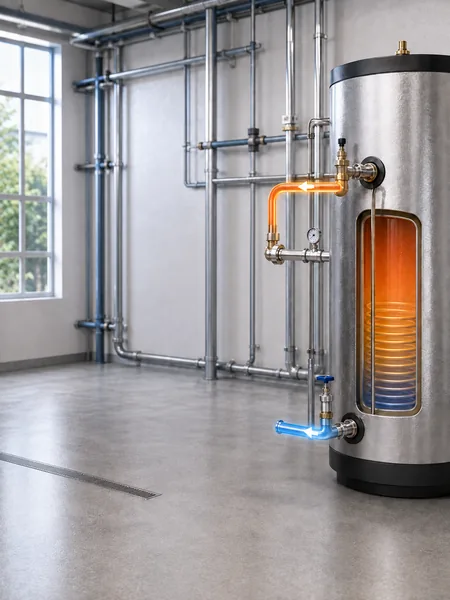
Condenser Heat Recovery
Every refrigeration system in the plant is rejecting heat to atmosphere continuously, and every hot water...
+ Learn More
Waste Heat Recovery
The largest untapped energy in most plants is in streams nobody wants to touch: warm effluent, dirty process...
+ Learn More
Boiler Blowdown Recovery
Continuous blowdown carries heat out of the boiler by design, hour after hour, and on most sites it goes to...
+ Learn More