
1-805-484-2992
Quotes - Engineering - SalesReplacing Another Brand
Drop-In Frame Replacement
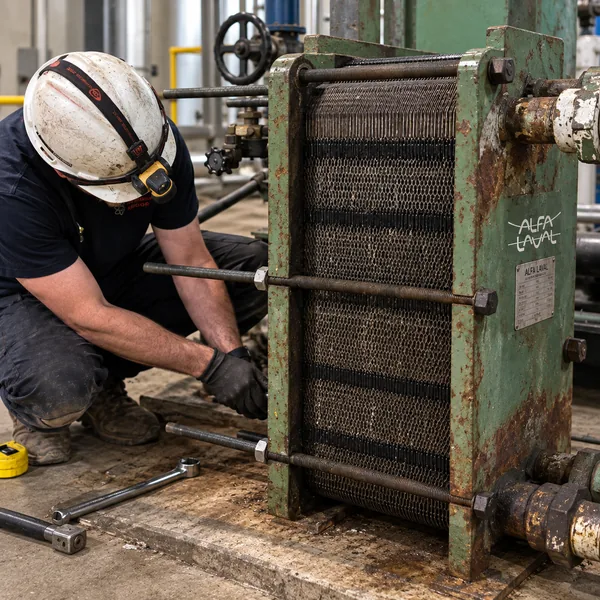
Replacing a competitor's plate exchanger does not have to mean new concrete and new pipework. Custom frames can be built to land where the old one sat.
Where an existing plate exchanger is beyond economic repair, a Mueller unit can frequently be built to occupy the same footprint and connect to the same pipework.
What that saves. Foundation work, piping modification and the downtime that goes with both. On a live plant that is usually a larger cost than the exchanger itself.
What we need. The existing footprint and mounting arrangement, connection sizes and locations, the duty, and photographs. The old unit's nameplate helps if it is still legible.
Improve while you are there. Replacement is the natural moment to correct a material that was marginal, add expansion room the original lacked, or change a connection arrangement that never suited the pipework.
Typical Specification
- Approach: Custom frame to existing footprint
- Saves: Foundation and piping modification, and downtime
- Required: Footprint, mounting, connection sizes and locations
- Helpful: Existing nameplate and photographs
- Duty: Re-rated rather than copied
- Material: Reviewed against actual service
- Expansion: Room added where the original had none
- Connections: Style and orientation adjusted if needed
- Verification: Dimensions confirmed before fabrication
- Outcome: Drop-in replacement with no civil work
Survey the old unit
Record footprint, anchor pattern, nozzle sizes and positions
Rate the duty
Rate against current conditions instead of copying the old sheet
Approve the drawing
Confirm dimensions, materials and connections before fabrication begins
Swap and test
Set on the existing pad, connect and pressure test
Replacement questions
Precise at the anchor bolts and nozzle centerlines, since those are what the new frame must land on. Measure the bolt pattern, nozzle positions from a common datum, nozzle heights above the pad, and flange size and rating. Photographs with a tape in view help us catch anything ambiguous, and we confirm the dimensions with you on a drawing before fabrication starts.
Not necessarily, and sometimes that is the point. A new plate selection rated against the current duty may run at a different velocity, and the pumps in the system have to deliver it. Send the pump curves or the measured pressure across the old unit, so the replacement is rated to what the system can actually push.
Moving them to the fixed end means the pipework no longer has to come apart every time the pack opens. That may need a short spool or a rerouted elbow, but the saving shows at every service afterward. Tell us which connections must stay exactly where they are and we will lay out the frame around them.
In most cases it should. Because the new frame is built to measured dimensions, the old unit only comes out once the replacement is on site and checked against the drawing. That limits the outage to removal, setting, connection and a pressure test, and it avoids running the process with no exchanger while parts are made.
Only after looking at how the old parts actually aged. Pitting, hard or swollen gaskets, and erosion at the inlet each tell you the original choice was marginal for the stream. Send photographs of a few used plates and a removed gasket with the measurements, since they are better evidence than the original data sheet.
Related
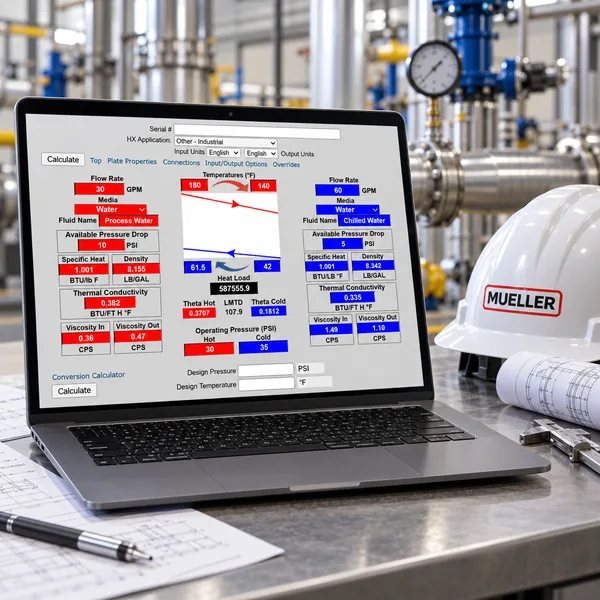
Thermal Sizing
Sizing is where the difference between a unit that works for a decade and one that disappoints in a season is...
+ Learn More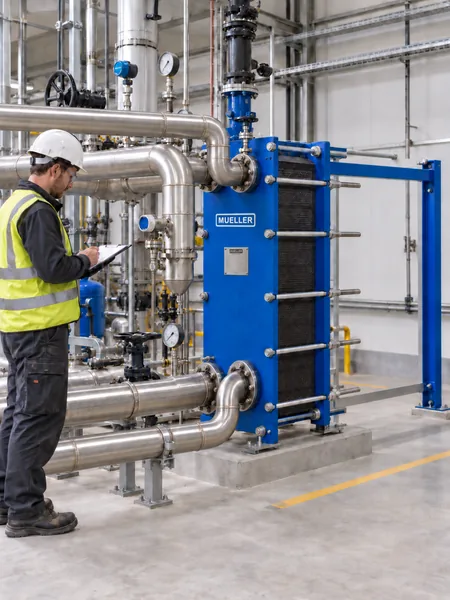
Installation & Startup
Most early plate exchanger problems are installation problems, and almost all of them are avoidable with an...
+ Learn More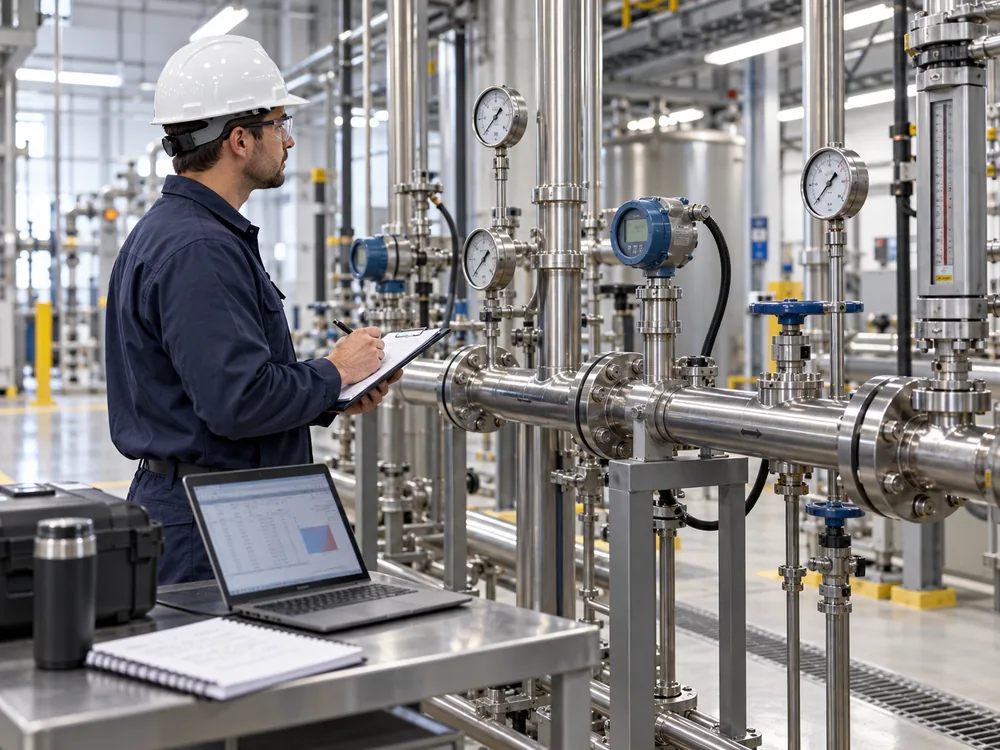
Engineering & Selection
Every unit we quote is rated against your actual conditions before it is priced, so the selection is settled before the number is.
+ Learn More