
1-805-484-2992
Quotes - Engineering - SalesSmall Temperature Differences, Difficult Streams
Heat recovery projects live or die on approach temperature. Recovering heat means moving it from something slightly warmer to something slightly cooler, and how close the exchanger gets decides whether the numbers work at all.
Recovery duty combines the two things that make an exchanger hard. The temperature difference is small, so a close approach is not a refinement but the whole project; and the warm stream is usually one nobody else wanted to touch, so it has to keep flowing without blocking.
- Condenser heat recovery. Every refrigeration system rejects heat continuously while every hot water system buys it. Connecting the two is among the shortest paybacks available.
- Waste heat recovery. Warm effluent, dirty process water and contaminated condensate hold the largest untapped energy on most sites, and need an exchanger that does not block.
- Boiler blowdown. Continuous blowdown carries heat out of the boiler by design, hour after hour, and on most sites it goes to drain. A small exchanger with an unusually short payback.
- Regeneration and interchange. Heat recovery inside a single process: the hot stream leaving heats the cold stream entering. On pasteurizing duty it decides the operating cost of the whole system.
- Fre-Heater. Cooling milk produces heat that normally leaves through the condenser into the yard. A Fre-Heater puts it into hot water you were going to pay to make anyway.
- Two or three degrees is the project. A plate pack reaches within two to three degrees, and on recovery duty that closeness is usually the difference between a scheme that pays and one that does not.


What Decides the Selection
The temperature difference available, which on recovery duty is usually small. The cleanliness of the source stream, which is usually worse than the sink. Available pressure drop. And how much of the year the two streams actually coincide, because a recovery exchanger that only runs half the time pays back in twice the time.
Why Mueller Suits Recovery Duty
A plate pack reaches within two to three degrees, and on recovery duty that closeness is the whole project. Where the source stream is dirty, a Free-Flow plate or a Temp-Plate bank recovers heat from streams nobody else would put an exchanger in, which is frequently where the largest untapped energy sits.
Heat Recovery
Condenser Heat Recovery
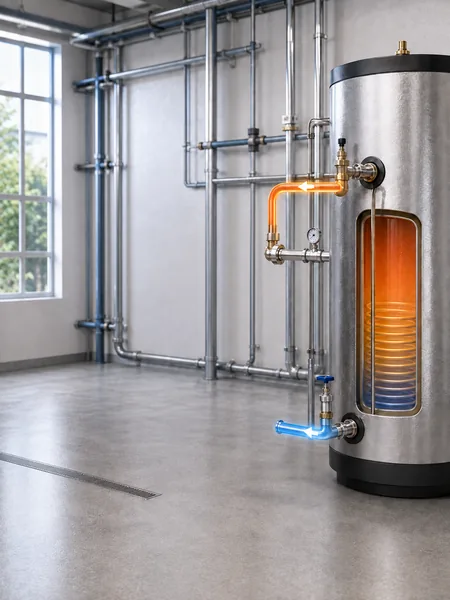
Every refrigeration system in the plant is rejecting heat to atmosphere continuously, and every hot water...
+ Learn More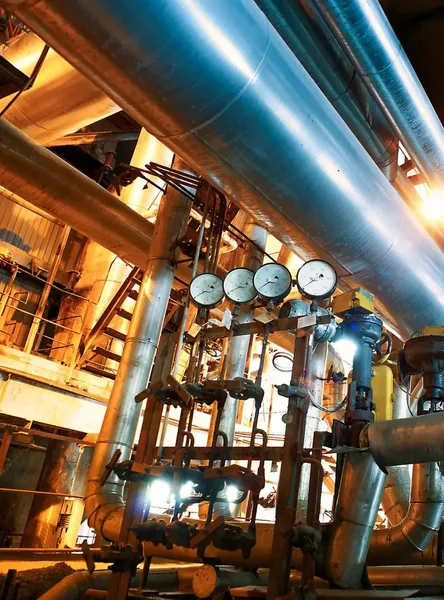
Waste Heat Recovery
The largest untapped energy in most plants is in streams nobody wants to touch: warm effluent, dirty process...
+ Learn More
Boiler Blowdown Recovery
Continuous blowdown carries heat out of the boiler by design, hour after hour, and on most sites it goes to...
+ Learn MoreQuestions on this duty
Close enough that the exchanger does not eat the temperature difference you are trying to recover. On many recovery jobs the two streams start only a handful of degrees apart, so every degree of approach is a large share of the prize. We usually run the numbers at a few approach points and let the payback curve show where extra plates stop earning.
Then the exchanger alone cannot help, and the project becomes a storage question. A buffer tank on the sink side can hold recovered heat from one shift for use in the next, at the cost of tank losses and extra pumping. Tell us the timing of both streams, because a mismatch of a few hours is often solvable and one of a whole season usually is not.
Condenser heat into water that is already being heated, and continuous boiler blowdown, are the two that most often come back quickest. Both sources run whenever the plant runs, and both tend to have a sink sitting nearby. Waste effluent projects can be larger, but they carry more cleaning cost and need a plate or bank that copes with the solids.
With a gasketed frame you can, provided the frame is ordered long enough to take the extra plates. That makes it a sensible route when the recoverable load is uncertain or the plant is still growing. Ask for spare frame capacity at the quote stage, since a frame that is already full has to be replaced rather than extended.
The source stream nearly always fouls faster than the sink, and its condition sets the cleaning interval. A selection that looks efficient on clean fluids can lose much of it's duty within weeks on a fouling effluent. We pick the plate type and channel gap for the dirty stream first, then check that the clean side still gets the approach it needs.