
1-805-484-2992
Quotes - Engineering - SalesTemp-Plate Clamp-On Assembly
Adding a Jacket Without Cutting the Vessel
Clamp-on Temp-Plate panels are curved to the vessel radius, coated with heat transfer mastic on the tank-facing side, and held against the shell by spring-bolt assemblies anchored to lugs welded to the outside of the tank. The vessel's pressure boundary is never breached.
Installation is three steps. With the protective covering still on, align the panel and mark the lug positions. Remove the panel and weld the mounting lugs in place. Peel the covering and mount the panels using the supplied spring-bolt assemblies. Quotations normally include all the hardware and factory-applied mastic.
Mastic and temperature. Pre-applied mastic is available for design temperatures up to about 450°F. Above that, hardening heat transfer cement is supplied loose for application on site. The mastic matters more than people expect: it closes the air gaps between the inflated pillows and the vessel wall, and without it the panel touches only at the pillow crowns.
Materials. Panels are normally 304 or 316 stainless or carbon steel. If the vessel is an unusual alloy, the tank mounting lugs can be supplied in that alloy for welding compatibility while the panels stay in a more economical material.
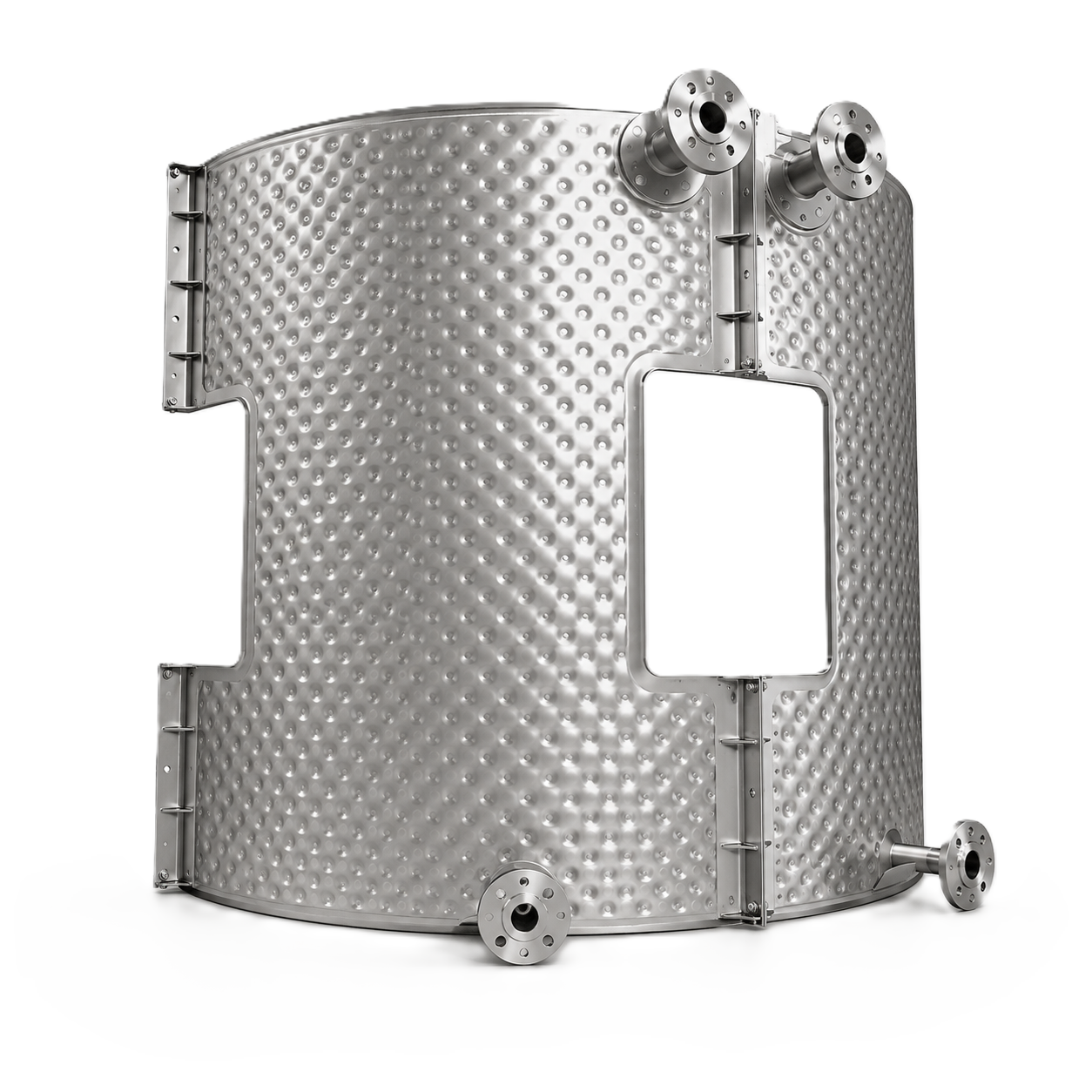
Typical Specification
- Panel type: Double embossed recommended for clamp-on
- Panel materials: 304 and 316 stainless, carbon steel
- Mounting lugs: Matched to the vessel alloy for weld compatibility
- Attachment: Spring-bolt assemblies, supplied with the panels
- Mastic: Factory applied up to approximately 450°F design
- Above 450°F: Hardening heat transfer cement supplied loose
- Panel size: Up to approximately 60 x 240 inches per panel
- Downtime: Minimal; the vessel is not cut or opened
- Vessel types: Storage tanks, silos, reactors, process vessels
- Media: Steam, hot water, hot oil, glycol, chilled water
| PRODUCT | CONSTRUCTION | MATERIALS | SUPPLY |
| Temp-Plate Clamp-On Assembly | Mueller factory built | 304 / 316 stainless | Authorized representative |
Temp-Plate Clamp-On Assembly
Why the Mastic Matters
An inflated panel touches a flat vessel wall only where the pillows are highest. The air in the gaps between is an excellent insulator, and without something to displace it the panel transfers a fraction of what the calculation predicts.
Heat transfer mastic fills those gaps and turns intermittent contact into a continuous thermal path. It is the single detail most often skipped on field-built jackets and the reason they underperform.
Retrofit Economics
The comparison is rarely against another jacket. It is against replacing a vessel or living without the capability. Against either, a clamp-on jacket usually wins comfortably, and it can often be installed during a normal maintenance window rather than a shutdown.
Because panels are bolted rather than welded, they can also be removed later if the vessel is repurposed.
Common FAQs
Usually only briefly, and in some cases not at all. Lugs are welded to the outside of the shell, which depending on your process and jurisdiction may be possible with the vessel in service. The pressure boundary itself is never cut.
It fills the air gaps between the inflated pillow pattern and the vessel wall. Without it the panel contacts the tank only at the pillow crowns and the effective heat transfer falls dramatically. It is applied at the factory for designs up to about 450°F.
Yes. The mounting lugs are supplied in an alloy compatible with your vessel for welding, while the panels themselves can be a more economical stainless or carbon steel, since they are not in contact with the process.
Spring-bolt assemblies anchored to the welded lugs. The spring maintains contact pressure as the vessel and panel expand and contract at different rates, which a rigid bolt would not.
Yes. Because they are bolted rather than welded, panels can be taken off if the vessel is repurposed or if the jacket needs relocating, leaving only the lugs behind.
Related
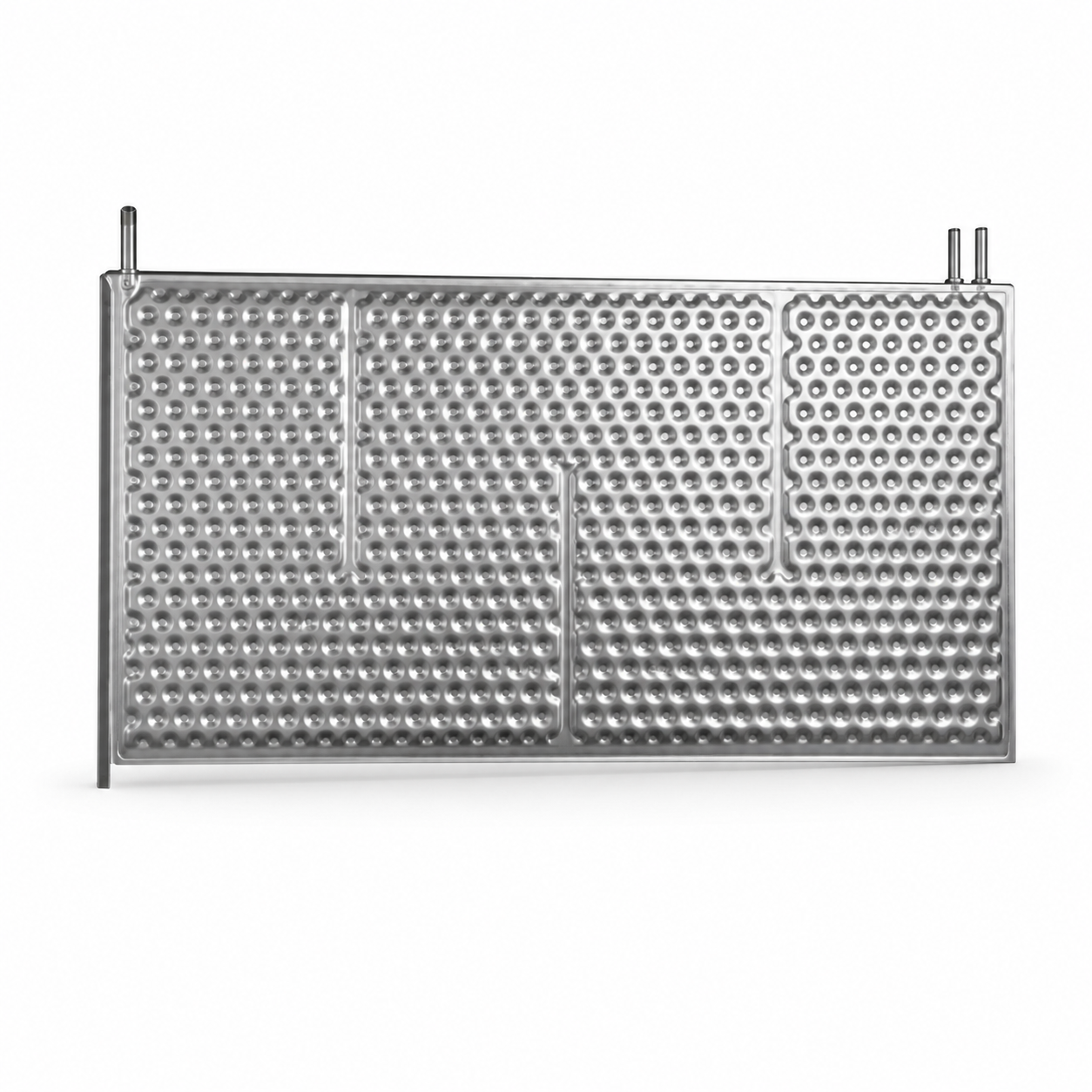
Immersion Assembly
Some fluids cannot be pumped out to an exchanger and back. They are too viscous, too valuable, too abrasive...
+ Learn More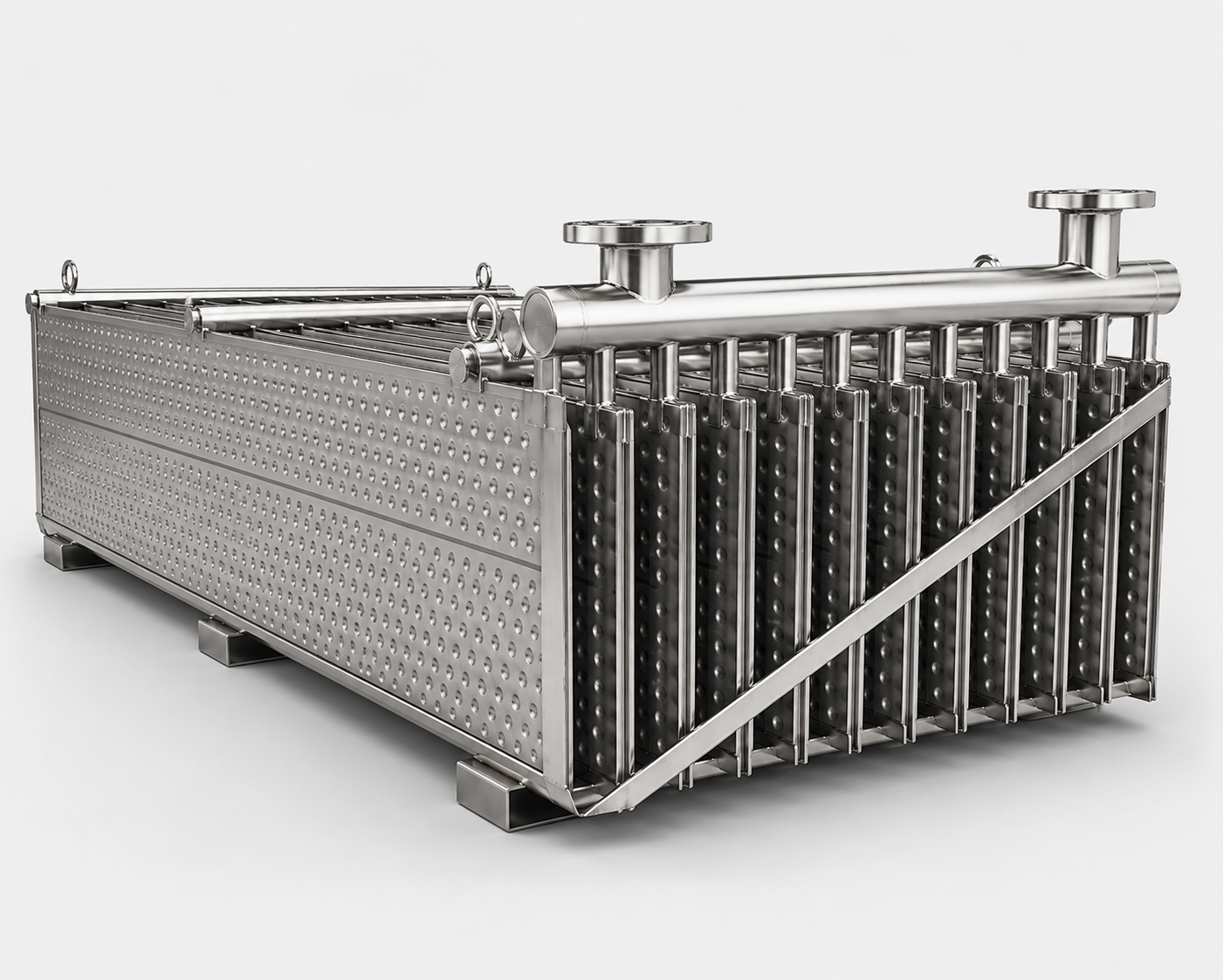
Bank Assembly
A bank is a set of inflated plates hung in parallel with product flowing between them. It gives you very fast...
+ Learn More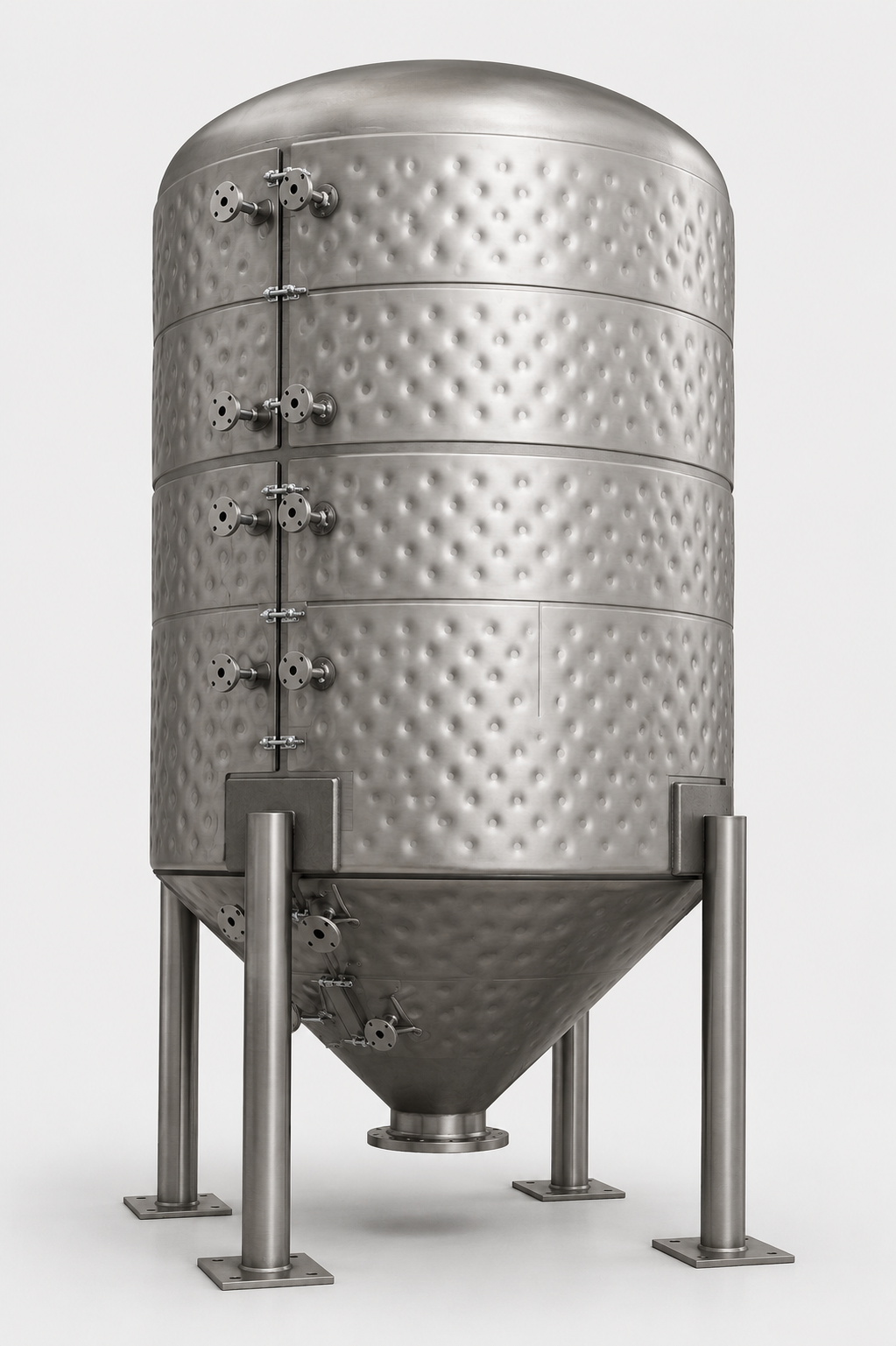
Integral Heat Transfer
Instead of bolting a heat exchanger to your equipment, build the heat transfer into the equipment. That is...
+ Learn More