
1-805-484-2992
Quotes - Engineering - SalesMARKETS SERVED
HVAC & Building Systems
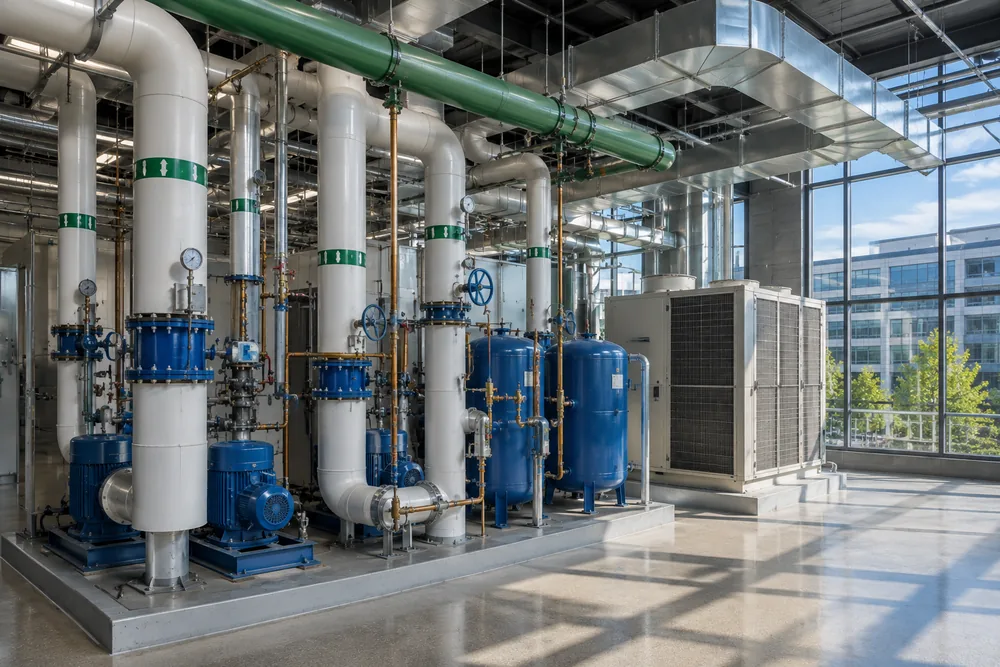
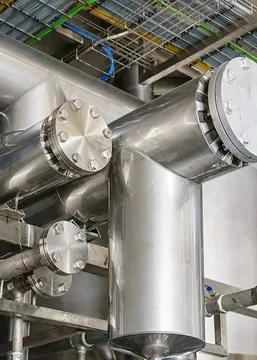
In a building, a heat exchanger almost always exists to separate one water loop from another. What varies is why the separation is needed, and how much approach temperature you can afford to give up for it.
Cooling tower isolation, free cooling, thermal storage separation, geothermal and heat pump loops, domestic water heating and condenser heat recovery are all the same problem wearing different clothes. A plate exchanger is the standard answer because it reaches within a few degrees, occupies very little plant room space, and can be opened when the open-loop side eventually fouls.
- Close approach. Two to three degrees is achievable, and in a building that approach is what converts into free cooling hours and heat pump performance.
- Small plant rooms. One fifth to one half the floor space of equivalent duty equipment, and it is serviced in the space it occupies.
- Expandable. Add plates as the building load grows rather than replacing the exchanger.
- Openable. The open-loop side will foul eventually, and being able to open the pack is what determines service life.
- Double-wall for potable. Where a non-potable fluid heats domestic water, double-wall plates put a vented gap in the leak path.
- Brazed for small duties. Compact sealed units for terminal equipment and small clean loops where a frame would be overkill.
HVAC & Building Systems
Approach Temperature Is Worth Operating Hours
On a water-side economizer, every degree of approach in the exchanger raises the outdoor condition at which free cooling becomes possible. That is not a refinement; it is a direct conversion into hours per year that the chillers stay off.
The same logic applies to heat pump loops and thermal storage. Approach temperature is the number worth paying for in building systems.
Related
District Energy
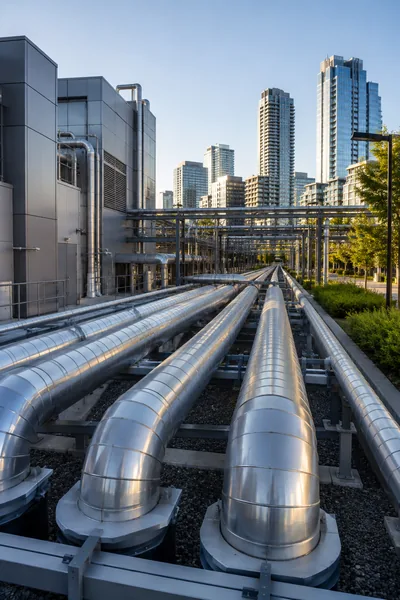
District systems live or die on the temperature difference they can maintain between supply and return, and...
+ Learn More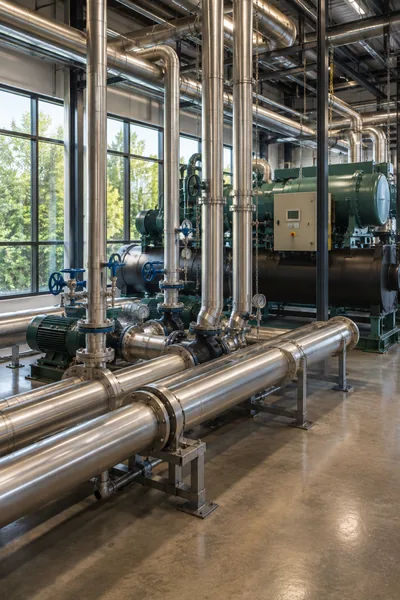
Water-Side Economizer
When the wet bulb is low enough the cooling tower can meet the load on its own and the chillers can stop. The...
+ Learn More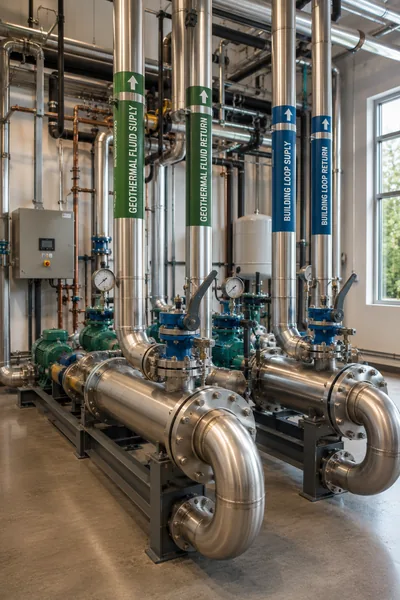
Geothermal & Heat Pump
Ground loops and heat pump systems live on small temperature differences, which makes the exchanger approach...
+ Learn More