
1-805-484-2992
Quotes - Engineering - SalesNickel Brazed Plate
For Ammonia and Copper-Aggressive Fluids
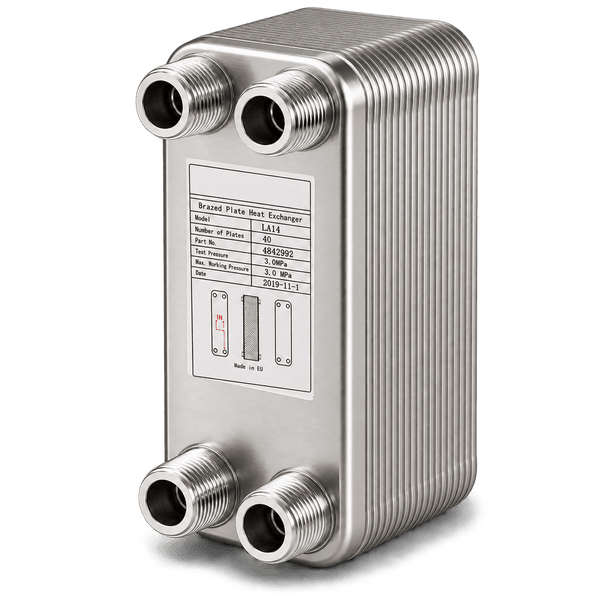
Nickel brazing exists for one main reason: ammonia destroys copper. Where the fluid rules out a copper brazed unit, nickel gives you the same compact sealed construction in a compatible material.
Nickel brazed units are built the same way as copper brazed ones, with 316 stainless plates vacuum brazed into a sealed block, but with nickel filler in place of copper. Construction, pressure capability and compactness are comparable.
Ammonia refrigeration. The principal application. Ammonia is an excellent refrigerant and an aggressive attacker of copper, so any brazed exchanger in an ammonia circuit must be nickel brazed. Evaporators and condensers on small and mid-size ammonia systems commonly use them.
Chemical duty. Some amines, certain process fluids and specific water chemistries also argue against copper. Where the fluid analysis is uncertain, nickel is the conservative choice.
Cost. Nickel brazing costs more than copper. Specifying it where copper would be perfectly adequate is a common way to spend money for no benefit, so it is worth confirming the fluid rather than defaulting to it.
Typical Specification
- Plates: Type 316 stainless
- Braze material: Nickel
- Construction: Vacuum brazed monolithic block
- Primary application: Ammonia refrigeration
- Also used for: Amines and copper-aggressive process fluids
- Gaskets: None
- Pressure: High; model dependent
- Cost: Higher than copper brazed
- Cleaning: Chemical circulation only
- Alternative: Semi-welded Accu-Therm for larger ammonia duty
| PRODUCT | CONSTRUCTION | MATERIALS | SUPPLY |
| Nickel Brazed Plate | Mueller factory built | 304 / 316 stainless | New equipment |
Request a QuoteSpecify nickel because the fluid demands it, then size the unit exactly as you would a copper brazed one.
Nickel braze: sizing note
Nickel Brazed Plate
Brazed or Semi-Welded for Ammonia?
For smaller ammonia duties a nickel brazed unit is compact, sealed and economical. As capacity grows, a semi-welded Accu-Therm becomes the better proposition because the water side can be opened and cleaned.
The crossover depends on the duty and on how dirty the secondary fluid is. Tell us both and we will show you where the line falls for your system.
Sizing questions
In practice it does not. Thermal performance comes from the plate pattern and channel geometry, which are the same, so a selection made for copper braze carries straight across. What changes is the price, which is why the braze metal should be settled by the fluid before the plate count is fixed.
The ammonia saturation temperature, whether the evaporator is fed by flooded, recirculated or direct expansion, and the superheat you expect if it is direct expansion. On the secondary side, give the fluid, flow and temperatures. Oil carryover matters on ammonia, so tell us how the system drains oil from its evaporators.
The limit is usually the secondary fluid rather than the ammonia. A brazed block cannot be opened, so once the water or glycol side is large enough or dirty enough that cleaning becomes routine, a semi-welded Accu-Therm pays back its higher cost. Send both duties and the secondary water quality and we will show where the crossover falls.
It is the conservative choice, but not always the economical one. On a single small unit the added cost maybe trivial compared with a failed copper block, so nickel is reasonable. On a project with many units, an analysis of the actual fluid often shows copper is fine and saves real money.
Related
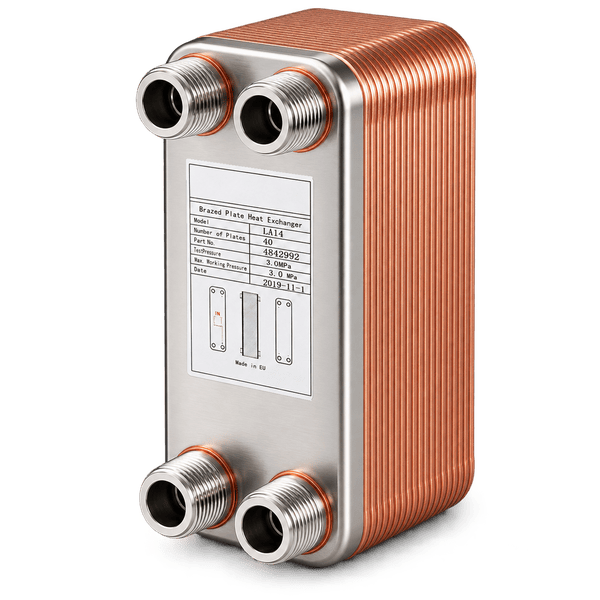
Copper Brazed Plate
Copper brazing is the default, and for the great majority of duties it is also the right answer. It is...
+ Learn More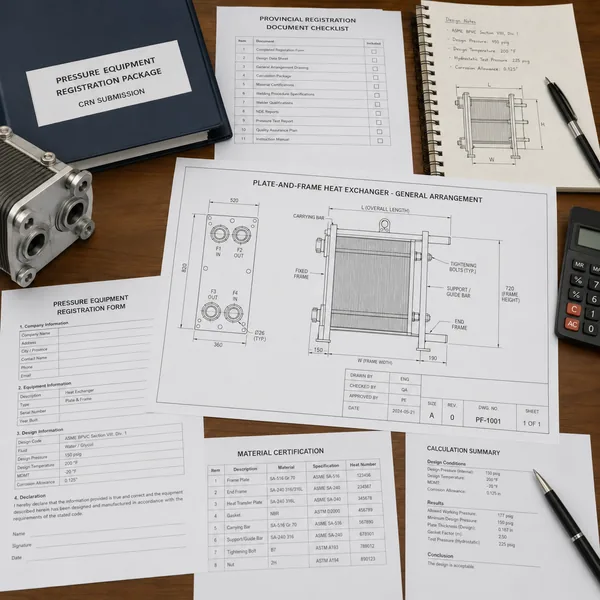
Sizing & Selection
Brazed plate units are cheap enough that people buy them from a table. That works until it does not, and when...
+ Learn More
Brazed Plate
Vacuum brazed 316 stainless with no gaskets, for clean duty where compactness and pressure matter.
+ Learn More