
1-805-484-2992
Quotes - Engineering - SalesFre-Heater Heat Recovery
Free Hot Water From Milk Cooling
Cooling milk produces heat, and on most farms that heat goes out through the condenser into the yard. A Fre-Heater intercepts it and puts it into your hot water instead, which you were going to pay to make anyway.
The refrigeration system that cools your milk rejects every bit of that heat plus the compressor work. A Fre-Heater sits in the discharge line and transfers a large share of it into potable water on its way to the hot water heater, which arrives already warm.
Two models. The Model D and the Model DE cover different capacities and installation arrangements. Which one suits depends on the size of the refrigeration system, the hot water demand and how the plumbing is laid out.
What it is worth. Farm hot water is used constantly for parlor washing, CIP of the tank and the pipeline, and general cleaning. Recovering heat that is otherwise thrown away typically covers a meaningful share of that load, and the more milk you cool the more hot water you get.
It works with pre-cooling, not against it. Pre-cooling reduces the refrigeration load, which reduces the heat available for recovery. The two are still complementary: pre-cooling saves electricity directly, and the Fre-Heater recovers what the compressor still has to do.
Typical Specification. Models: Model D and Model DE Source: Refrigeration system discharge heat Output: Pre-heated potable water to the hot water heater Typical use: Parlor wash, tank and pipeline CIP, general farm hot water Interaction: Complements pre-cooling rather than competing with it Installation: Plumbed between refrigeration and hot water system Separation: Refrigerant and potable water kept separate Sizing: Matched to refrigeration capacity and hot water demand Operation: Automatic; no operator intervention Benefit: Reduces water heating cost on every cooling cycle
Sizing Against Demand, Not Just Supply. A Fre-Heater can only deliver what the refrigeration system rejects, and you can only use what your hot water demand absorbs. Matching the two is the sizing exercise.
Tell us the refrigeration capacity, the daily hot water usage and the incoming water temperature, and the recommendation follows. On farms where hot water demand is small relative to milk volume, the payback is driven by usage rather than by available heat.
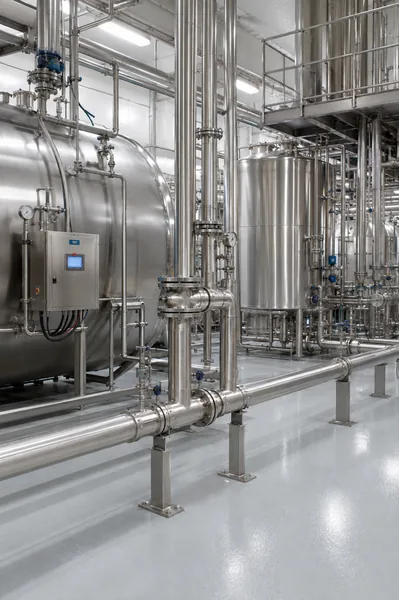
A packaged heat recovery unit for dairy refrigeration that takes heat from the compressor discharge line and uses it to preheat potable water before it reaches the farm's water heater, keeping refrigerant and water separate.
Before you request a quote
Gather the refrigeration capacity serving the milk tank, the gallons of hot water used each day, and the incoming water temperature in winter. Add how many milkings a day the system runs, because heat is only available while the compressor is on. With those figures the sizing is quick, and the answer rests on your own farm rather then a typical one.
Distance matters because both the refrigerant lines and the water lines lose heat and add pressure drop as they get longer. A layout where the condensing unit and water heater sit in the same room makes for a short, simple install. If they are far apart, tell us the run lengths and whether the lines pass through cold space, since that can steer the model and the location.
The extra heat simply leaves through the condenser as it did before, and nothing is harmed. The payback, though, depends on the water you actually use, so a large unit on a small demand does not earn more. Size toward the demand side, and look at whether other warm water uses, such as a second wash area, could draw from it.
Very little day to day, since it runs automatically whenever the compressor does. The water side sees farm well water, so where the supply is hard, scale on the water passages is the thing to watch, and a softener upstream protects it. A recovery temperature that falls slowly over months is the usual sign the water side wants attention.
Related
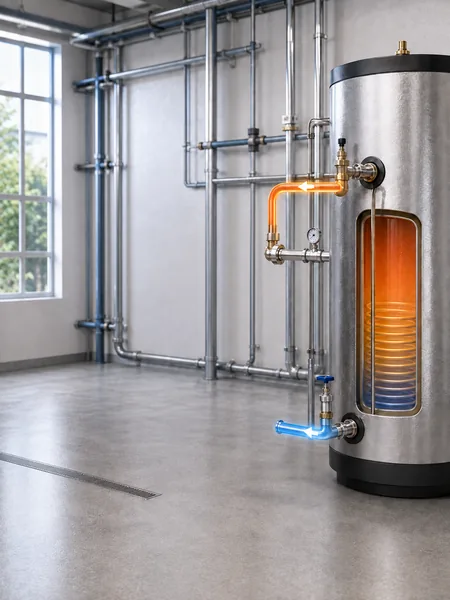
Condenser Heat Recovery
Every refrigeration system in the plant is rejecting heat to atmosphere continuously, and every hot water...
+ Learn More
Waste Heat Recovery
The largest untapped energy in most plants is in streams nobody wants to touch: warm effluent, dirty process...
+ Learn More
Boiler Blowdown Recovery
Continuous blowdown carries heat out of the boiler by design, hour after hour, and on most sites it goes to...
+ Learn More