
1-805-484-2992
Quotes - Engineering - SalesPlate Cleaning
Restoring Heat Transfer Surface
Fouled plates lose duty gradually and quietly. Cleaning them restores it, and how you clean depends entirely on what is on them.
Cleaning divides into chemical circulation with the pack closed and manual cleaning with the pack open. The first is faster and the second is more thorough.
Clean-in-place. Circulating a suitable cleaning solution handles most routine fouling without opening the unit. The chemistry must suit both the deposit and the plate and gasket materials, and that is where most CIP failures originate.
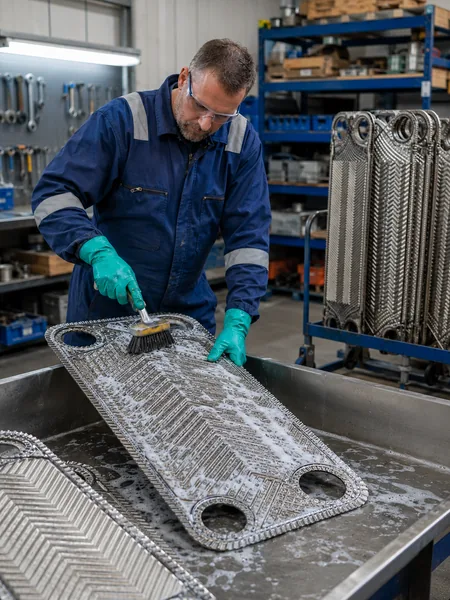
Manual cleaning. Opening the frame lets each plate be cleaned individually and inspected at the same time. On heavy scaling or biological fouling this is much more effective, and it is the only way to confirm plate condition.
What not to use. Chlorine-bearing cleaners on stainless plates risk pitting and stress corrosion cracking. Abrasive tools damage the plate surface and make future fouling worse.
Typical Specification
- Chemical cleaning: Circulated with the pack closed
- Manual cleaning: Frame opened, plates cleaned individually
- Chemistry: Matched to deposit, plate and gasket materials
- Avoid: Chlorine-bearing cleaners on stainless plates
- Avoid: Abrasive tools that damage the plate surface
- Inspection: Performed at the same time as manual cleaning
- Indicator: Approach temperature or overall coefficient trend
- Gaskets: Renewed whenever the pack is opened
- Frequency: Condition based
- Records: Cleaning intervals logged to establish a baseline
Trend the performance
Watch approach temperature or coefficient for the cleaning trigger
Pick the method
Circulate chemistry closed, or open the frame for heavy deposits
Clean gently
Use chemistry and tools that spare plates and gaskets
Inspect and log
Check plates while open and record the interval
Service questions
Mineral scale from hard water dissolves in an acid wash, while protein, fat and biofilm respond to an alkaline detergent, often followed by an acid rinse. Order matters on mixed deposits, since an organic layer can shield the scale beneath it. Before switching cleaners, check them against both the gasket compound and the plate alloy, because a product that removes the deposit can still attack either one.
Use soft nylon brushes and a low pressure water rinse, and lay the plate flat on a support rather than working on it while it hangs. Wire brushes, steel wool and scrapers cut the surface and leave sites where deposits grip faster next time. High pressure water aimed at the gasket can lift it from the groove, so keep the spray on the heat transfer area.
Cleaning depends on chemistry, temperature, time and shear at the plate surface, and shear comes from velocity. A cleaning pump smaller than the process pump leaves the far channels barely touched and their deposits intact. Plan the CIP circuit to match or excede process flow through the pack, and watch the outlet temperature during the wash to confirm the whole pack is reached.
Many plants do exactly that on critical duty, holding a second plate set so the frame closes again quickly. The removed plates are then cleaned, inspected, regasketed and stored ready for the next swap. A spare set must match the frame's pattern sequence, so order it against the serial number rather than by plate size.
Usually something in the cleaning is roughening the surface or leaving residue, such as abrasive tools, a chemistry that etches the plate, or incomplete rinsing. It can also mean the deposit is never fully removed, so each cycle starts from a thicker base. Compare the approach temperature right after each service, and if it stops returning to the baseline, open the pack and look.
Related
Regasketing
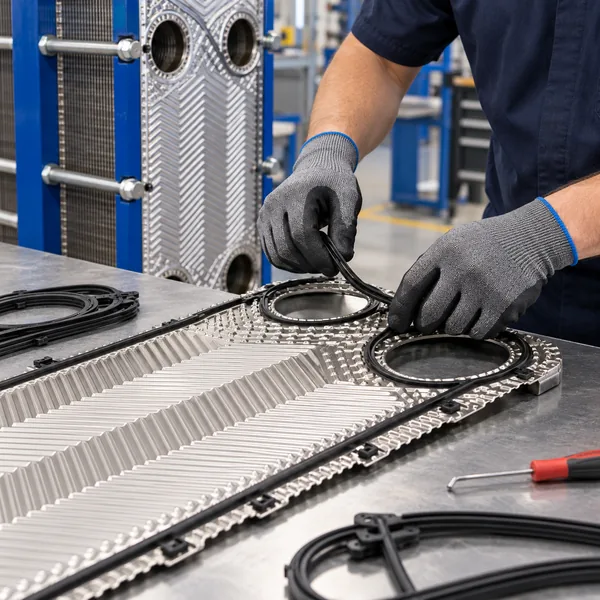
Gaskets are the shortest-lived component in a plate exchanger and the cheapest to renew. Doing it properly is...
+ Learn More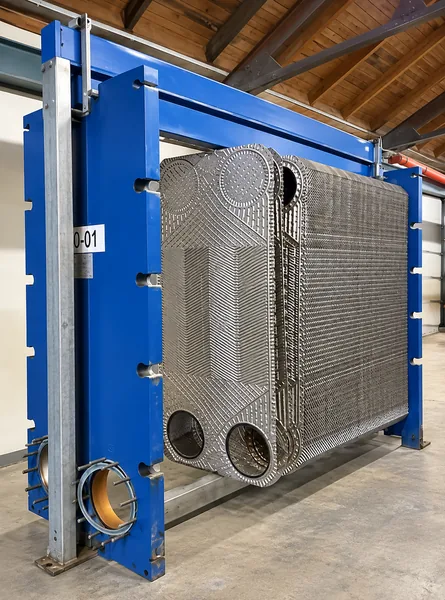
Plate Pack Expansion
Adding plates to an existing frame is the cheapest capacity increase available, and it is only possible if...
+ Learn More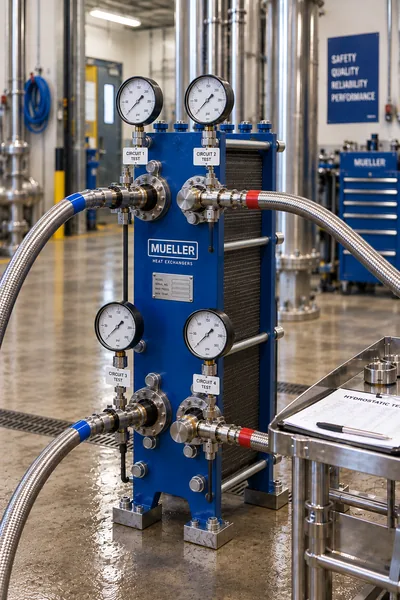
Leak Testing & Inspection
A pressure test after reassembly costs an hour. Finding a misplaced gasket by putting product through the...
+ Learn More