
1-805-484-2992
Quotes - Engineering - SalesCooling Tower Isolation
Separating Open Tower Water From a Clean Loop
Open cooling tower water is dirty, biologically active and full of dissolved solids. Isolating it from a clean closed loop is one of the most common and most worthwhile heat exchanger duties in any plant.
An isolation exchanger puts a barrier between open tower water and a closed process loop. The tower still rejects the heat, but the fouling, the biology and the dissolved solids stay on the tower side.
What it protects. Chillers, process equipment and instrumentation that would otherwise see tower water directly. Cleaning one isolation exchanger is far cheaper than cleaning every piece of equipment downstream of it.
Approach temperature is the cost. Isolation inserts an extra temperature approach into the system, and that approach directly reduces how cold the closed loop can get. A plate exchanger keeps that penalty to a few degrees, which is why it is the standard choice for this duty.
Cleaning. The tower side will foul. Specifying a frame that opens easily, with adequate access around it, is what makes the periodic clean a routine job rather than a project.
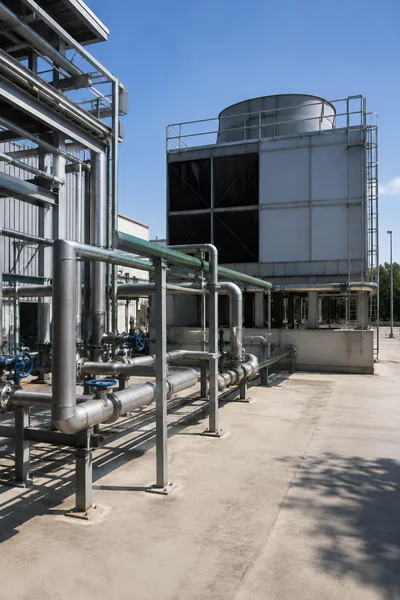
Placing a heat exchanger between open cooling tower water and a closed process or chiller loop, so the tower still rejects the heat while its dirt, biology and dissolved solids stay on one cleanable surface.
Operating questions
Four temperatures and two pressure drops tell you almost everything. Inlet and outlet on each side give the approach, and a tower side pressure drop that rises while flow holds steady points to deposit in the channels. Log them weekly from day one, because a clean baseline is what turns later readings into a decision rather than a guess.
In almost every case, since tower basins collect leaves, scale flakes and debris that lodge at the plate ports. A strainer finer than the narrowest gap in the plate channel stops most of that before it arrives. Fit it with differential pressure gauges or a switch and clean it on reading, because a blocked strainer starves the exchanger just as surely as fouled plates.
The closed side needs a corrosion inhibitor and a sealed system even though it never sees tower water. Without them, oxygen entering through make-up and air vents produces corrosion products that settle on the plates from the clean side. Keep the loop topped up through a proper fill station and test the inhibitor on a schedule.
Circulating a cleaning solution through the tower side alone is common, and the closed loop can stay filled and isolated while it happens. Opening the frame is different, because loosening the pack releases both sides, so plan a full drain for a mechanical clean. Recheck the pack tightening dimension when it closes again, since the wrong length either leaks or crushes gaskets.
A tower running at low load in winter can deliver water cold enough to freeze in a stagnant plate channel, especially if a valve cuts the flow back. Keep a minimum flow through the tower side, or drain it when the system is down. Ice in a plate pack distorts plates and can split gaskets, and the damage often shows only at the next startup.
Related
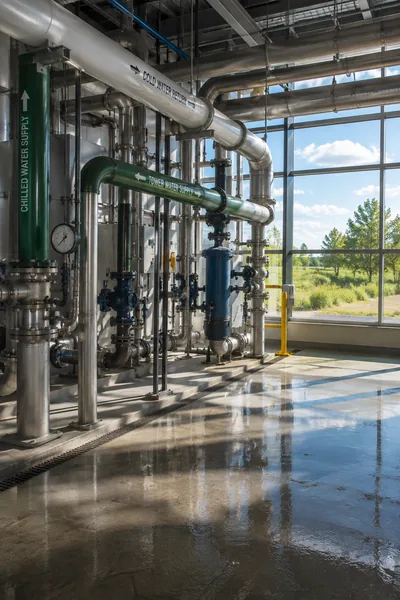
Free Cooling
When the outside air is cold enough, the cooling tower alone can meet the load and the chillers can stop. A...
+ Learn More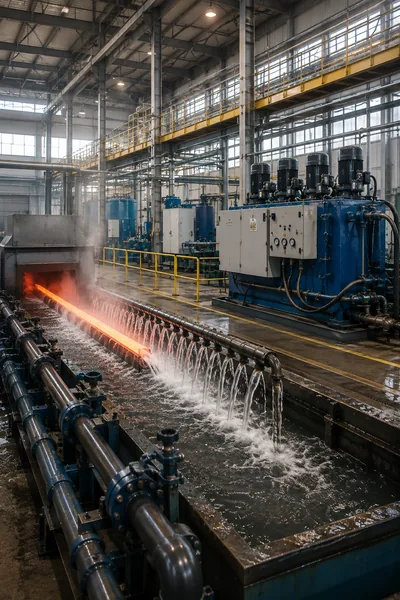
Quench & Hydraulic Oil
Oil is viscous, which makes it a poor heat transfer fluid, and hot oil is a maintenence problem waiting to...
+ Learn More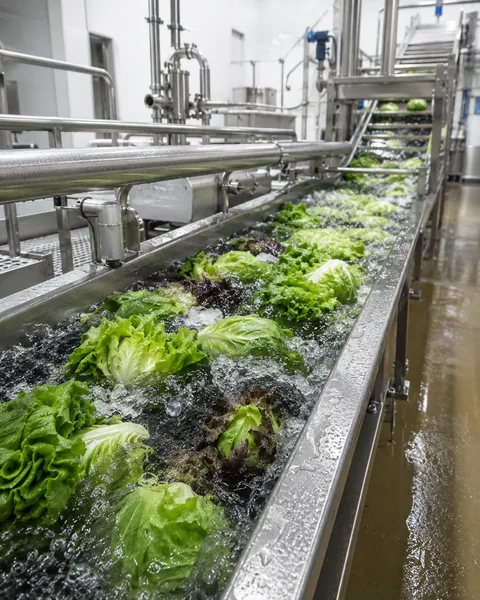
Product Chilling
Pulling heat out of product quickly is what preserves quality, and doing it with water rather than air is...
+ Learn More