
1-805-484-2992
Quotes - Engineering - SalesAmmonia Systems
Semi-Welded and Nickel Brazed Construction
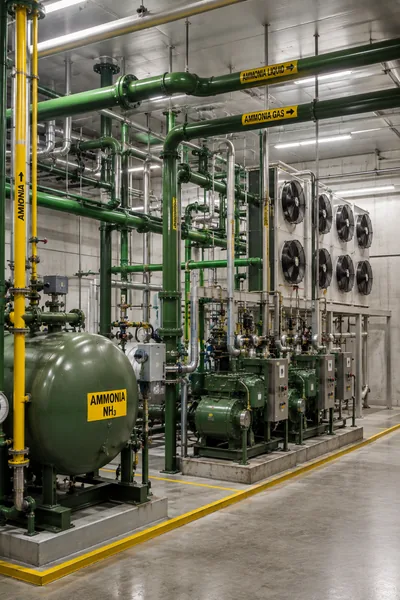
Ammonia is an excellent refrigerant and an aggressive attacker of copper and most elastomers. Every construction decision in an ammonia system follows from that one fact.
Ammonia systems need heat exchangers whose refrigerant-side construction excludes copper and gaskets entirely.
Semi-welded packs. Two plates laser welded into a cassette contain the ammonia; conventional gaskets between cassettes carry the water or glycol. The refrigerant never touches an elastomer and the secondary side still opens for cleaning.
Nickel brazed units. For smaller duties, a nickel brazed unit gives compact sealed construction with no copper anywhere. It cannot be opened, so the secondary fluid must be clean.
System context. Suction and discharge conditions, oil management, relief arrangements and the secondary fluid all belong in the same conversation as the exchanger selection.
Typical Specification
- Refrigerant: Ammonia
- Large duty construction: Semi-welded plate cassettes
- Small duty construction: Nickel brazed plate
- Copper: Excluded throughout
- Gaskets: Secondary side only
- Serviceability: Water or glycol side opens on semi-welded units
- Duty types: Evaporating, condensing, solution chilling
- Connections: Studded port, flanged, ferrule or stub end
- Expansion: Cassettes added within the frame
- System inputs: Suction and discharge conditions, secondary fluid
Keep ammonia away from copper and elastomers
- Semi-welded cassettes for large duties
- Nickel brazed for compact sealed units
- Clean secondary fluid on brazed units
Engineering questions
It changes the design considerably. A flooded evaporator on a surge drum needs low refrigerant-side pressure drop and a vapor outlet sized for thermosyphon return. Direct expansion depends on liquid being shared evenly across every channel. Tell us the feed method, the surge drum height above the unit and the suction conditions.
Mineral oil does not mix with ammonia and is heavier, so it settles at the lowest point of the refrigerant side. Left there, it coats the surface and erodes capacity a little at a time. Pipe a drain or oil return from the bottom of the unit and include it in your oil management routine from the first day.
Clean ones: treated closed-loop glycol or filtered water that will not foul a channel you can never open. Freezing is the other risk. Ice on the secondary side can split a brazed channel, so protect the unit with a low temperature cutout and a flow switch that stops the refrigerant feed when flow is lost.
Related
Glycol & Secondary Loops
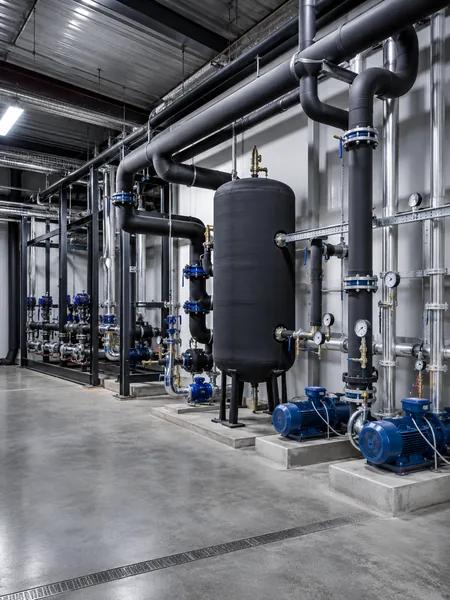
A secondary loop keeps the refrigerant charge small and confined to the plant room, at the cost of an extra...
+ Learn More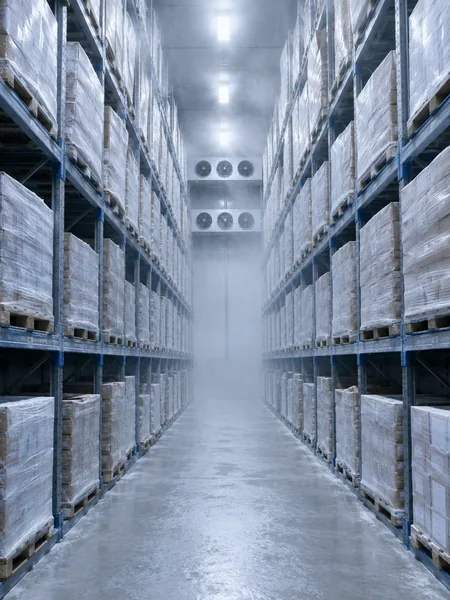
Cold Storage
Cold storage and distribution facilities run continuously, which means small efficiency differences compound...
+ Learn More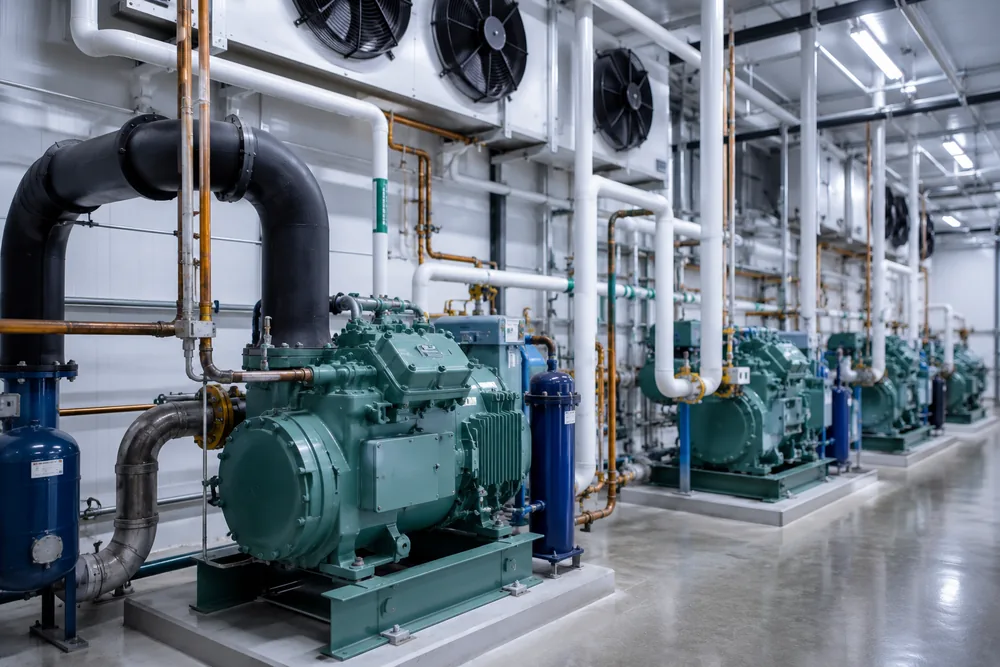
Refrigeration
Ammonia, glycol and secondary loop duty, where refrigerant compatibility drives the construction.
+ Learn More