
1-805-484-2992
Quotes - Engineering - SalesGlycol & Secondary Loops
Secondary Refrigeration Interfaces
A secondary loop keeps the refrigerant charge small and confined to the plant room, at the cost of an extra temperature approach and a fluid that is harder to pump than water.
Secondary loops circulate glycol or brine between the refrigeration plant and the process, so the primary refrigerant stays in one place.
The approach penalty. Every exchanger between the refrigerant and the process consumes temperature difference. Keeping that penalty small is what makes a secondary loop viable, and it is where a plate pack earns its place.
Glycol properties. Thicker than water, worse at conducting heat, and holding less of it per degree — and every one of those three moves the wrong way as the loop gets colder. The exchanger must be sized on the actual fluid at the actual temperature.
Concentration discipline. Every point of glycol above the freeze protection requirement costs heat transfer and pumping power. Set it to what is needed and monitor it, because it drifts with make-up.
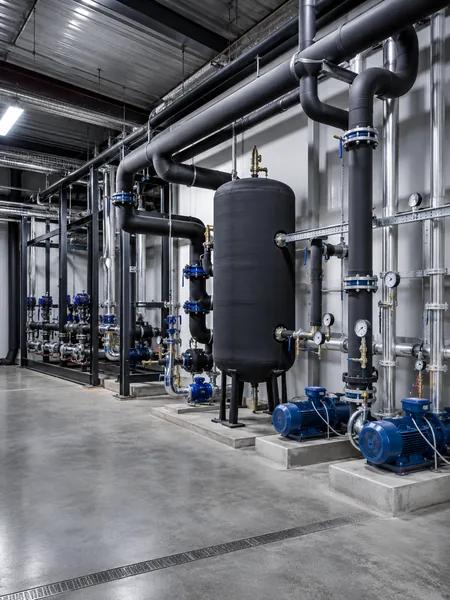
Typical Specification
- Loop fluid: Glycol, brine or other secondary refrigerant
- Purpose: Keeps primary refrigerant charge confined
- Cost: Additional temperature approach
- Sizing basis: Actual fluid properties at operating temperature
- Concentration: Minimum required for freeze protection
- Viscosity: Rises sharply as temperature falls
- Interface: Plate exchanger between primary and secondary
- Materials: Stainless standard
- Alternative: Falling film chiller where cold water suffices
- Monitoring: Glycol concentration checked periodically
Size on cold glycol, not on water
- Use the minimum concentration needed
- Recheck concentration after every make-up
- Consider cold water instead of glycol
Questions from this industry
It does. Propylene glycol is more viscous than ethylene at the same temperture and concentration, which lowers the coefficient and raises pressure drop, so the same duty needs more surface. Food plants usually choose propylene for its lower toxicity. Tell us which fluid and concentration the loop runs before selection starts.
As the loop gets colder the glycol thickens, and flow can slip from turbulent into the transitional range where the coefficient falls steeply. The symptom is an approach that widens on cold days or at low load. Plate corrugations hold turbulence at lower flow than a smooth tube, but the unit still has to be sized at the coldest operating point.
The secondary side can freeze in the exchanger, where the wall is coldest, and ice expanding in a plate channel will deform or split it. Inhibitors also thin out as water is added, so corrosion rises at the same time. Check the loop with a refractometer after every make-up and compare it with the freeze protection you specified.
Related
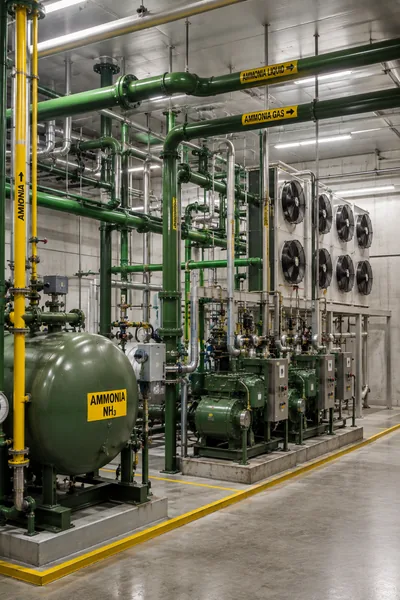
Ammonia Systems
Ammonia is an excellent refrigerant and an aggressive attacker of copper and most elastomers. Every...
+ Learn More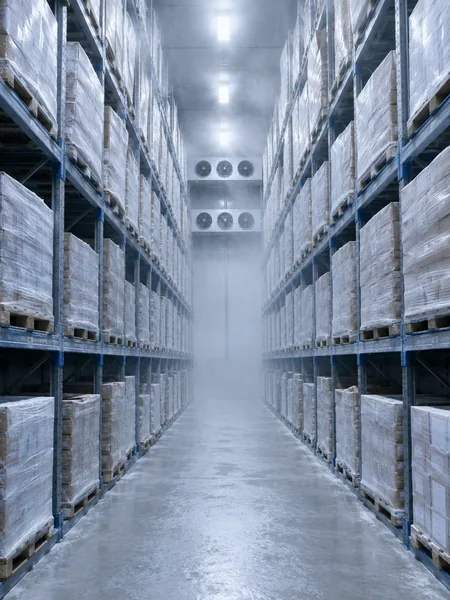
Cold Storage
Cold storage and distribution facilities run continuously, which means small efficiency differences compound...
+ Learn More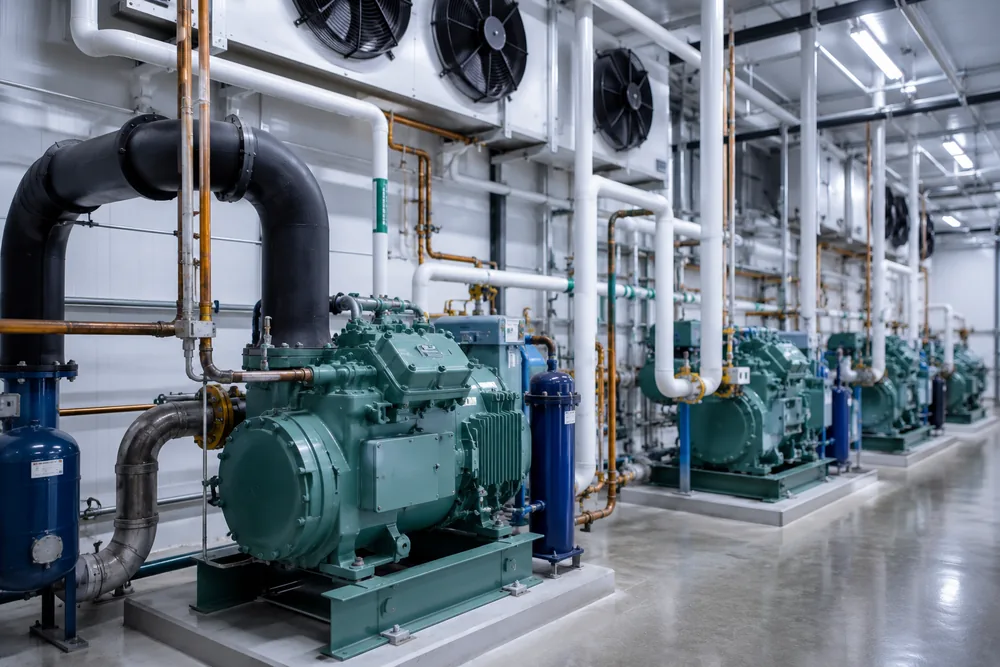
Refrigeration
Ammonia, glycol and secondary loop duty, where refrigerant compatibility drives the construction.
+ Learn More