
1-805-484-2992
Quotes - Engineering - SalesReplacement Plates
Genuine Mueller Plates
Plates outlast gaskets by a wide margin, so when they need replacing it is usually worth asking why rather than simply ordering the same thing again.
Plates are replaced because of pitting, cracking, erosion or accumulated mechanical damage rather than because of age.
Diagnose before ordering. Pitting suggests the material is unsuited to the service. Erosion at the inlet suggests velocity or entrained solids. Cracking at the port suggests over-compression or cycling. Each has a different remedy.
Material upgrade. Replacement is the natural point to change plate material if the original was marginal. Titanium for chlorides, higher alloys for acids, and the fit stays identical.
Pattern matters. Plates come in several corrugation patterns and a pack may mix them deliberately. Replacing a plate with the wrong pattern changes the thermal and hydraulic behavior of the whole unit.
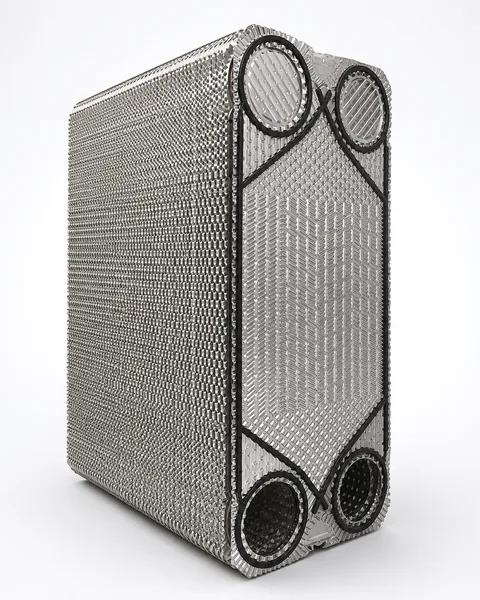
Typical Specification
- Materials: 304, 316 stainless, titanium, Hastelloy, Incoloy
- Patterns: Seven corrugation styles
- Identification: By unit serial number
- Common causes: Pitting, erosion, port cracking, mechanical damage
- Pitting: Indicates material unsuited to the service
- Erosion: Indicates velocity or entrained solids
- Upgrade: Material change at replacement keeps the same fit
- Mixed packs: Original pattern sequence must be preserved
- Gaskets: Full set recommended when plates are changed
- Testing: Pressure test after reassembly
Diagnose the cause
Read pitting, erosion or port cracking before ordering anything
Confirm the pattern
Serial number fixes the material and corrugation sequence
Fit in sequence
Hang each plate in its original position and orientation
Test the pack
Fit fresh gaskets, tighten to dimension, then pressure test
Practical questions
At minimum the damaged plate and any neighbor that shows the same damage. Look at where the failed plates sit in the pack. A cluster near the inlet points to a flow or solids problem that will claim the next plates too, while scattered pitting suggests the alloy is wrong and a full material change deserves a price.
The serial number gives the pack's pattern sequence, and on the plate itself the clearest clue is the chevron angle of the corrugations. If a plate carries a stamped marking near the hanger, include a close photograph of it. Do not judge by the look of the herringbone alone, since two patterns can look nearly identical side by side.
Number the plates with a marker as they come off the carrying bar, and note which way each one faces. Alternate plates are rotated, so a plate hung the wrong way around breaks the channel arrangement. Put each new plate in the exact position and orientation of the one it replaces, then check the pack edge for a regular honeycomb pattern before tightening.
Generally not. Plates are thin pressed sheet, and a weld distorts both the corrugation and the gasket groove, so the repaired plate either leaks or crowds the channel next to it. Take the cracked plate out, replace it, and examine the plates around it for the stress or cycling that caused the crack.
Erosion concentrated at the inlet port and distribution area means velocity or particles, and new plates in the same position will wear the same way. Before ordering, look for a missing or damaged strainer upstream and check wether flow has risen since the unit was rated. Sometimes the answer is more plates to bring velocity down rather than identical replacements.
It still applies when the plate count has not changed and the full gasket set is renewed. If you have added or removed plates, the dimension changes with the count and has to be recalculated. Measure at every tie bolt position as you close, because a new plate beside a worn one can hide a pack that is drifting out of square.
Related
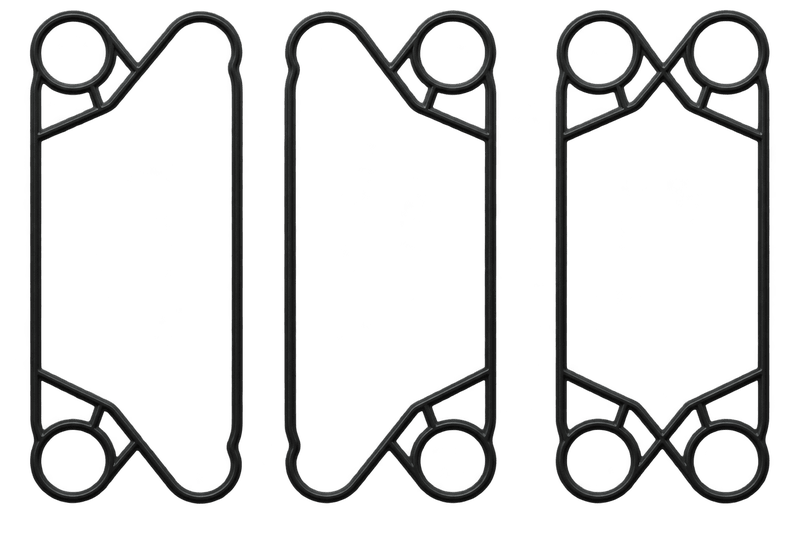
Replacement Gaskets
Gaskets are the cheapest part of a plate exchanger and the cause of most of its problems. Getting the...
+ Learn More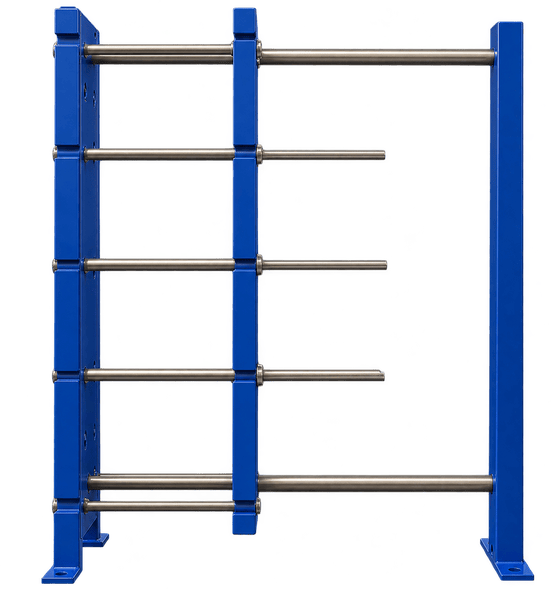
Frames & Hardware
The frame is the part nobody thinks about untill a tie bolt seizes or a carrying bar wears through, at which...
+ Learn More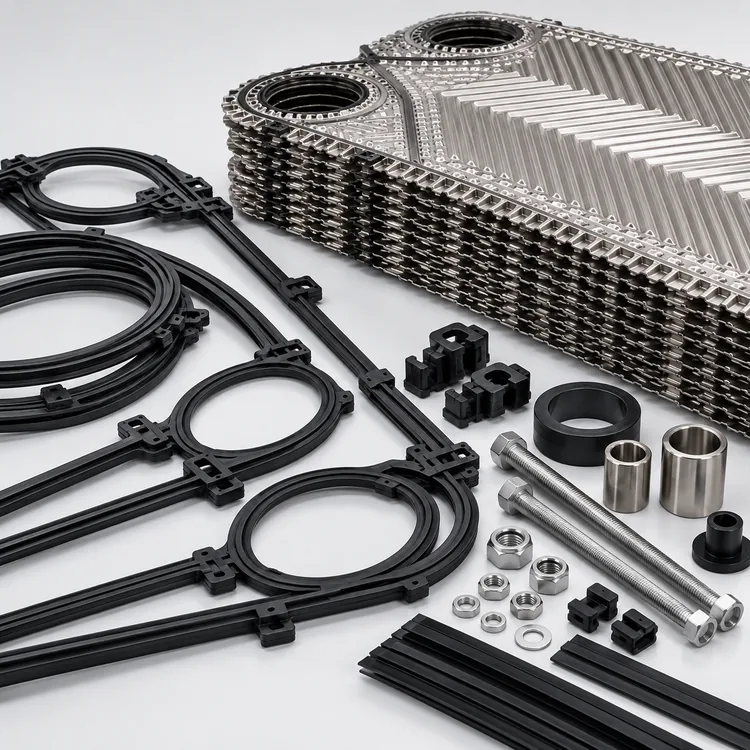
Parts & Gaskets
Genuine plates, gaskets, frames and hardware for the Mueller equipment we supply, identified from your unit rather than from a measurement.
+ Learn More