
1-805-484-2992
Quotes - Engineering - SalesMARKETS SERVED
Biofuels and Ethanol
A dry mill runs on heat it has already paid for once. The exchangers that cool mash, hold fermentation temperature and interchange beer against stillage decide how much steam the plant has to buy for the rest of the process.
Ethanol production is a sequence of controlled temperature changes, and almost every one of them is a heat exchanger duty. Cooked mash has to come down to fermentation temperature before yeast goes in. Fermentation makes its own heat and has to be held. The beer leaving fermentation has to be raised to distillation temperature, and the stillage leaving the beer column has to give that heat back. Downstream, thin stillage carries solids through the evaporators on its way to syrup.
The streams are not clean. Mash, whole stillage and thin stillage all carry suspended solids and fiber, and they foul. That is what separates a plate selection for a dry mill from one for a clean utility duty: the channel geometry has to pass the solids, and the unit has to open for inspection rather than be flushed and hoped over.
Regeneration is where the money is. The beer/stillage interchange is the single largest recoverable duty in the plant, and it runs every hour the plant runs. A close approach there shows up on the steam bill continuously, not seasonally.
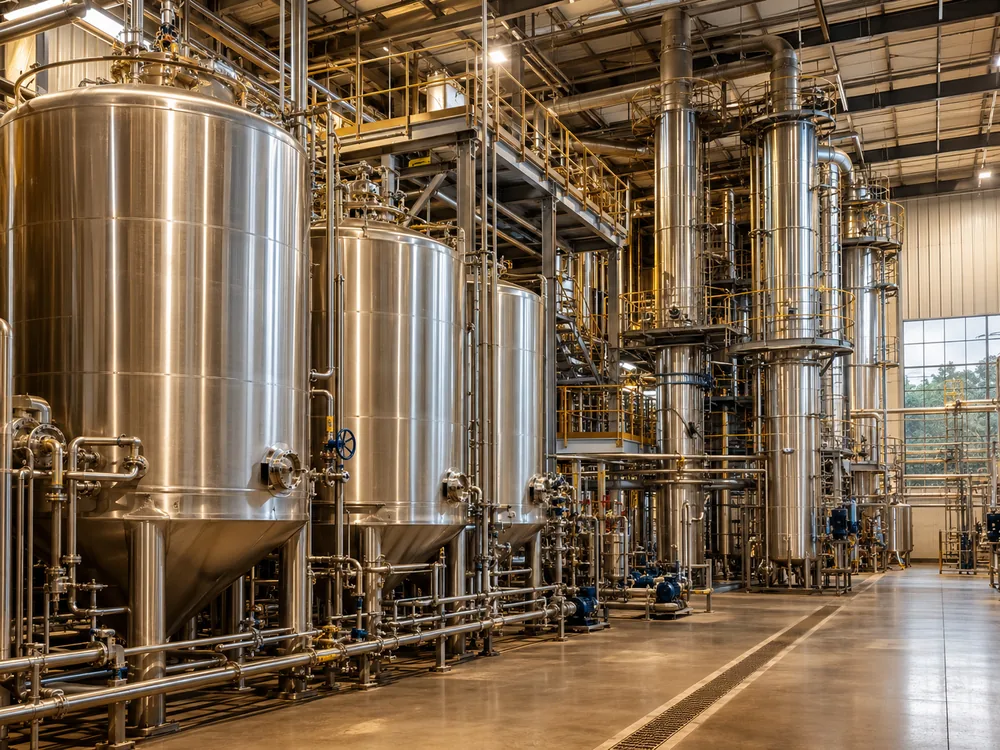
- Every duty is a temperature step. Mash cooling, fermenter cooling, beer preheat, stillage cooling and evaporator condensate all sit on the same process line.
- The streams carry solids. Mash, whole stillage and thin stillage all contain fiber and suspended solids, which is what drives the plate selection.
- Free-flow where it fouls. A wide unobstructed channel passes what a standard herringbone pack would bridge, and it opens for mechanical cleaning.
- Regeneration runs continuously. Beer against stillage recovers heat every hour the plant runs, so a close approach compounds across the year.
- Expandable pack. If the plant is debottlenecked later, plates are added to the existing frame rather than the unit being replaced.
- Built for CIP. Low retained volume and full access to the heat transfer surface make cleaning a scheduled task rather than a shutdown.
Biofuels and Ethanol
Why Plate Equipment Suits a Dry Mill
The duties in an ethanol plant are mostly liquid-to-liquid, both sides pumped, with a real premium on close approach temperatures. That is exactly the case a plate pack answers better than anything else: true counterflow, a very high transfer coefficient at modest velocity, and a fifth to a half of the floor space conventional equipment of the same duty would take.
It also matters that the unit opens. A dry mill fouls, and the difference between an exchanger you can inspect on a turnaround and one you can only flush is the difference between a predictable cleaning schedule and a surprise.
Selecting Against the Solids, Not the Average
The mistake worth avoiding is sizing a stillage duty on bulk properties. Thin stillage behaves very differently as it concentrates: viscosity climbs, the effective transfer coefficient falls and the fouling rate rises with it. A selection made at the dilute end will disappoint at the concentrated end.
Send the solids content and the temperature range across which the unit has to work, not a single design point. Where the stream carries fiber, free-flow plates are usually the right answer even though they cost surface area, because the alternative is a pack that blinds.
Which plate type belongs on a stillage duty?
Usually free-flow. Thin and whole stillage carry fiber and suspended solids that will bridge in the contact points of a standard herringbone pack. A free-flow plate gives a wide unobstructed channel that passes the solids and opens for mechanical cleaning.
How much heat can beer/stillage interchange actually recover?
Enough that it is normally the first duty a plant optimizes, because it runs continuously. How much depends on your flows, the temperature difference available and the approach you are willing to buy surface for. Send the stream data and we will work the trade-off rather than quote a percentage.
Can the pack be expanded if we debottleneck?
Yes, and it is one of the reasons plate equipment suits a plant that grows. Releasing the compression bolts, rolling back the movable end frame and adding plates changes the thermal duty without changing the frame, provided the frame was specified with room to grow. Say so at selection and it will be.
What do you need to size an ethanol duty?
Per side: how much flow, how hot in, how cold out. Then the head each side can give up, and what the streams actually are - including solids content where the stream carries any. For anything downstream of the beer column, the concentration range matters as much as the design point.
Do you handle the gasket selection?
Yes. Compound is chosen against the operating temperature and what is in the stream, and a dry mill has duties at very different temperatures on the same site. Tell us the service and we will specify per unit rather than standardizing on one compound across the plant.
Related
Ethanol Production
From slurry to beer, a dry mill is a sequence of temperature steps. Each one is an exchanger, and each one...
+ Learn More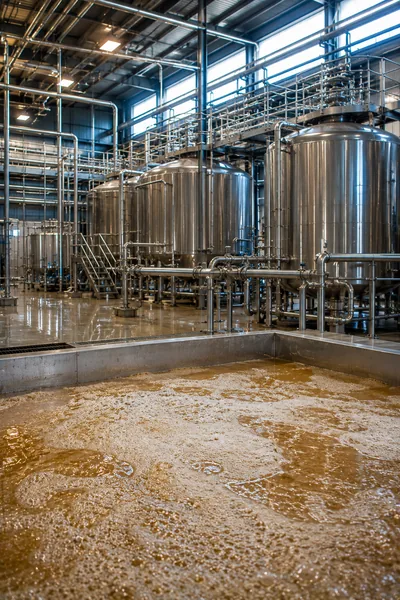
Beer & Stillage Interchange
The beer going to the column has to be heated. The stillage leaving it has to be cooled. Putting the two...
+ Learn More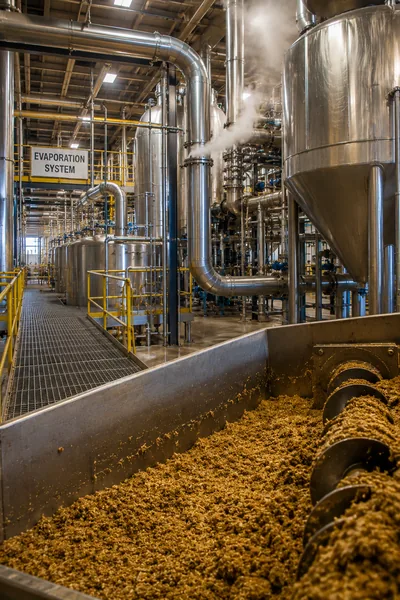
Distillers Grains & Evaporation
Thin stillage goes to the evaporators dilute and leaves as syrup. Everything about the exchanger selection...
+ Learn More