
1-805-484-2992
Quotes - Engineering - SalesFour Cooling Duties, Four Different Constraints
Cooling duty is where the fouling lives. The stream that removes heat is usually the dirtier of the two, and how you handle that decides the exchanger's real service life more than the thermal calculation does.
These are not variations on one problem. Tower isolation is about keeping dirty water away from clean equipment; free cooling is about how many hours a year the chillers can stop; oil cooling is a viscosity problem; product chilling is a quality problem. What they share is that the dirtier side, not the calculation, sets the design.
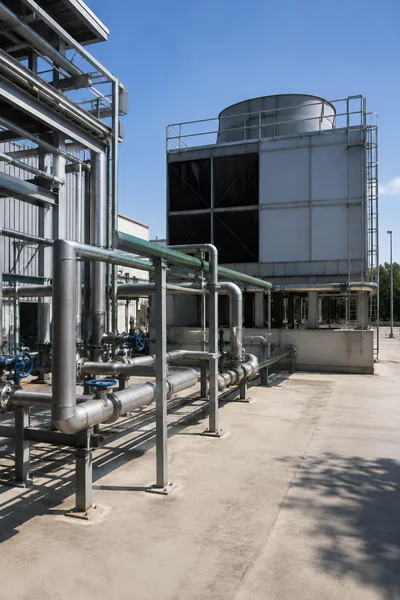
- Cooling tower isolation. Open tower water is dirty, biologically active and full of dissolved solids. Isolating it from a closed loop keeps the fouling on one side of a surface you can open.
- Free cooling. When the outside air is cold enough the tower alone can carry the load. The approach temperature decides how many hours a year the chillers stay off.
- Quench and hydraulic oil. Oil transfers heat poorly and its pressure drop climbs steeply, so the allowable drop belongs in the inquiry rather than being discovered at start-up.
- Product chilling and hydrocooling. Removing heat with water rather than air is what makes it fast. Plate packs and Temp-Plate banks both have a place, and they suit different products.
- The coolant sets the ceiling. Tower water supply temperature moves with the season, so a selection made against a summer figure and one made against a winter figure are two different exchangers.
- Cleaning is a design input. A gasketed pack opens completely, so the fouled side can be reached rather than chemically attacked in place — which means the access around the frame is specified with the duty.



What Decides the Selection
The coolant available and its supply temperature, which on tower water varies seasonally. Fouling on both sides based on real water quality rather than a table. Allowable pressure drop. And whether the process stream carries anything a narrow channel would block.
Why Mueller Suits Cooling Duty
A plate pack opens completely, so the fouling side can be reached and cleaned rather than only flushed. Where the stream is solids-bearing, the Free-Flow plate or a Temp-Plate bank handles what a conventional pack will not. Where near-freezing water is needed, a falling film chiller makes it directly.
Process Cooling
Cooling Tower Isolation
Open cooling tower water is dirty, biologically active and full of dissolved solids. Isolating it from a...
+ Learn More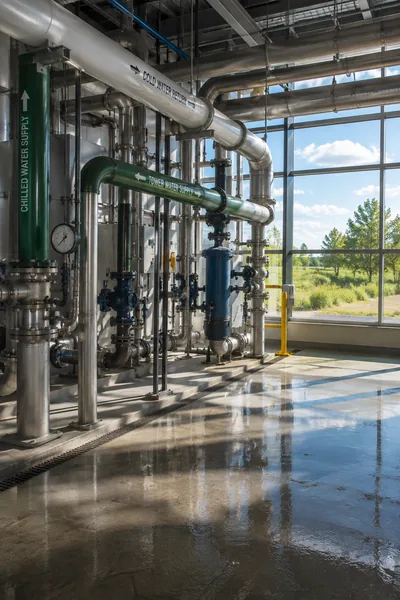
Free Cooling
When the outside air is cold enough, the cooling tower alone can meet the load and the chillers can stop. A...
+ Learn More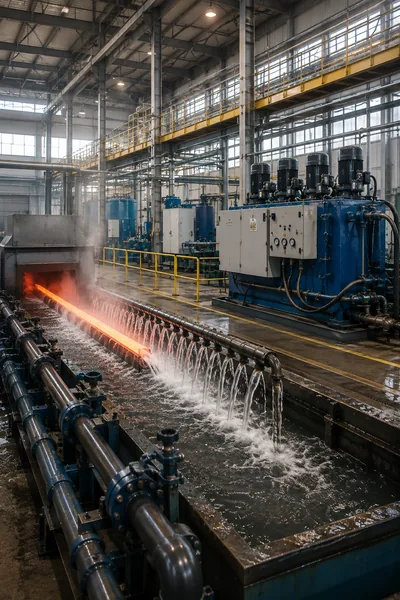
Quench & Hydraulic Oil
Oil is viscous, which makes it a poor heat transfer fluid, and hot oil is a maintenance problem waiting to...
+ Learn MoreProcess questions
Use the warmest supply you expect while the process is at full load, which is usually a humid summer afternoon. If the plant runs harder in winter, that combination may govern instead, so we want both the load profile and the tower curve. A selection checked at only one point tends to be oversized all year or short for a few critical weeks.
Leave enough to slide the movable cover back and lift plates out one at a time. Many coolers end up cleaned in place forever because a pipe rack or wall was built where the cover needed to travel. Mark the clearance on the layout drawing early and treat it as part of the equipment footprint, the same as the foundation.
No colder then the coolant entering it plus the approach the plate pack needs. With tower water that sets a seasonal floor, and with chilled water it ties you to the chiller setpoint. Where the product needs water close to freezing, a falling film chiller produces it directly and takes one approach out of the chain.