
1-805-484-2992
Quotes - Engineering - SalesImmersion Tank Heating
Heat Transfer Inside the Vessel
Some fluids cannot be pumped out to an exchanger. They are too viscous, too abrasive, too valuable, or the batch simply must not be disturbed. An immersion assembly puts the surface into the tank instead.
An immersion assembly is a rack of Temp-Plate panels hung inside the vessel, with the medium circulating through them. Double embossed panels are usual, since both faces then contribute surface.
Where it is the right answer. When the process fluid cannot be pumped through an external exchanger, when design pressures and temperatures are high, when the environment is highly corrosive and a fully welded assembly is the only thing that survives, and when the tank needs low surface disturbance.
Natural convection sets the size. Most immersion duty has no forced circulation on the tank side, so heat moves by natural convection and the coefficient is low. Assemblies therefore carry a lot of surface for a modest duty. Where agitation exists, say so, because the assembly gets smaller.
Removal for cleaning. On product duty the assembly should be designed to lift out. That has to be decided at design stage so connections, supports and lifting points suit it.
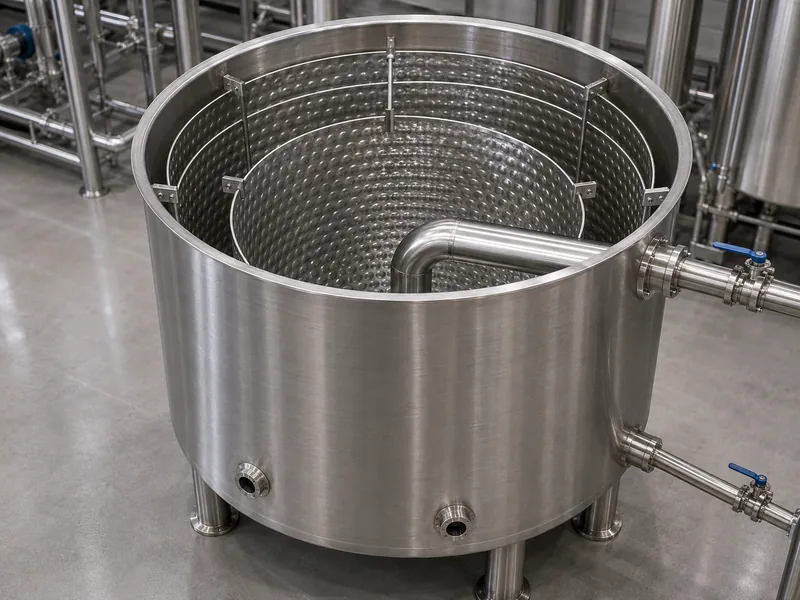
A rack of inflated plate panels hung inside a tank with heating or cooling medium flowing through them, so the surface reaches fluids that cannot be pumped to an external exchanger.
Questions on this duty
Close enough to fit, but far enough that liquid can circulate around them, since natural convection needs room to setup a flow loop. Panels jammed against a wall lose much of the face behind them. Send the tank drawing with nozzles and internals marked, and we lay out the assembly around them.
Vertical panels suit natural convection, because warmed liquid rises along the face and cooler liquid falls in behind it. Horizontal surfaces trap a layer of warm fluid above and stagnant fluid below. For heating, placing the panels low in the tank lets the warmed fluid rise through the whole volume.
Keep the panels clear of the sludge zone, because buried surface does very little and can bake deposits on when heating. Leave room below the assembly for settled solids and for cleaning them out. Tell us how deep the sludge gets between cleanouts and how it is removed.
Hot water, steam, chilled water and glycol all suit fully welded panels. Steam gives the most heat per panel but needs condensate to drain from the bottom of each panel. Hot water allows lower wall temperatures, which matters where the tank holds something that scorches or plates out on hot surfaces.
Related
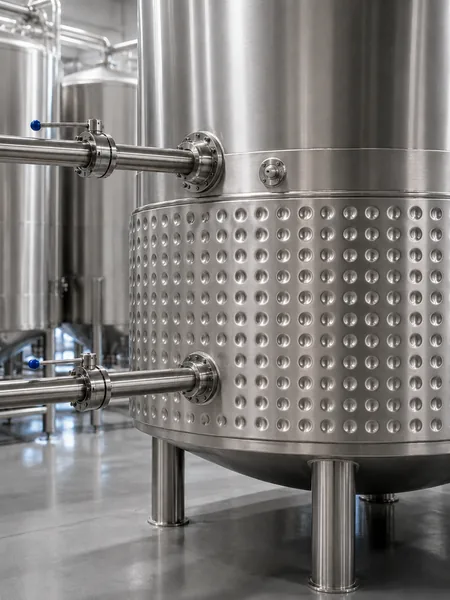
Tank Jacket Retrofit
A tank that needs heating or cooling it does not have usually presents two expensive options: replace it, or...
+ Learn More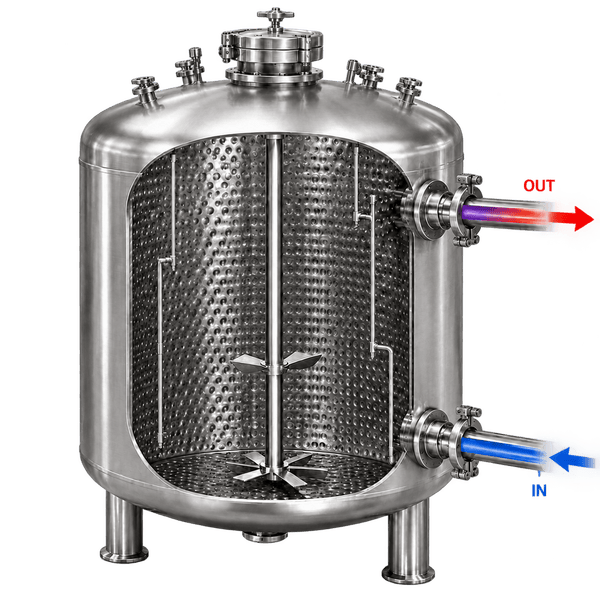
Vessel & Reactor Cooling
Reaction heat has to leave at the rate it is produced, and the consequence of it not leaving is rarely just a...
+ Learn More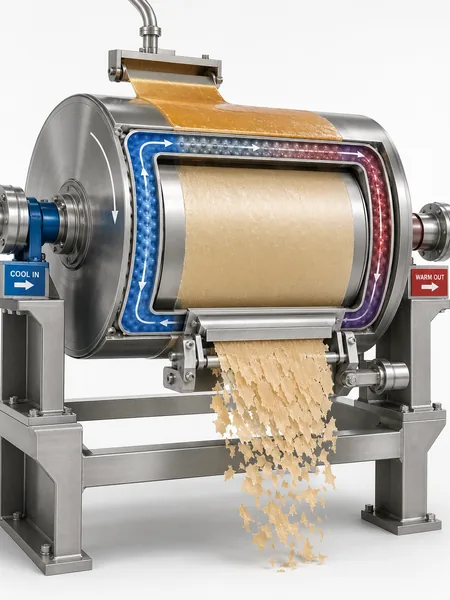
Drum & Roll Cooling
Chill rolls, flaker drums and drying drums all need one thing above everything else: a uniform surface...
+ Learn More