
1-805-484-2992
Quotes - Engineering - SalesFour Ways to Get Surface Into a Vessel
When the fluid is in a vessel rather than a pipe, an external exchanger means pumping the contents out and back. Sometimes that is fine. Often it is impossible, and the heat transfer surface has to come to the tank instead.
Which one applies is settled before any thermal calculation: whether the contents can be pumped at all, whether the vessel already exists, and what the jacket side has to be rated for. An existing tank that must not be cut into points one way; a vessel still on the drawing board points another.
- Tank jacket retrofit. A tank that needs heating it does not have usually presents two expensive options — replace it, or cut into it. A clamp-on panel is the third one.
- Immersion heating. For fluids too viscous, too abrasive or too valuable to pump out, and for batches that must not be disturbed, an immersion assembly puts the surface into the tank instead.
- Vessel and reactor cooling. Reaction heat has to leave at the rate it is produced. Jacket surface, medium temperature and control all belong to the same problem rather than to three separate ones.
- Drum and roll cooling. Chill rolls, flaker drums and drying drums need a uniform surface temperature across the working face above everything else, and that is what inflated wall construction delivers.
- Formed to the vessel. Inflated panels can be pressed to shape, welded into a component, hung inside a vessel or clamped to the outside of an existing one, which is what makes the retrofit possible at all.
- Rate the jacket, not just the duty. Design pressure and temperature on the jacket side, and whether the vessel carries a code stamp, belong in the inquiry alongside the heat load.




What Decides the Selection
Whether the contents can be pumped, whether the vessel already exists, the design pressure and temperature of the medium, and whether the surface can be inside the tank or has to stay outside it. Corrosive contents and product contact both push toward specific answers.
Why Temp-Plate Suits Tank Work
Inflated panels can be formed to shape, welded into a component, hung inside a vessel or bolted to the outside of one. They are fully welded with no gaskets, they need less circulating medium than traditional dimple jacketing, and a clamp-on retrofit never cuts the pressure boundary of a tank you already own.
Tank Heating & Cooling
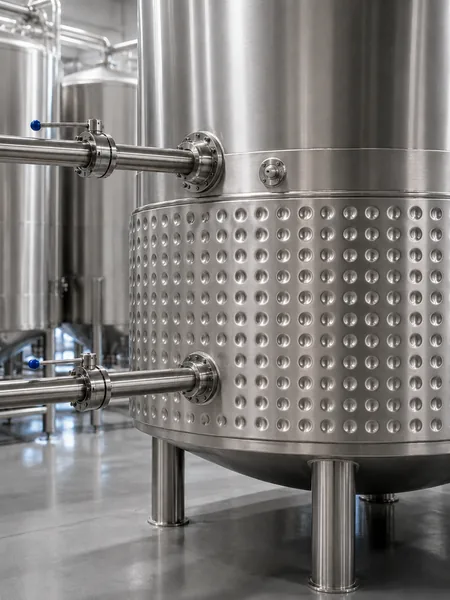
Tank Jacket Retrofit
A tank that needs heating or cooling it does not have usually presents two expensive options: replace it, or...
+ Learn More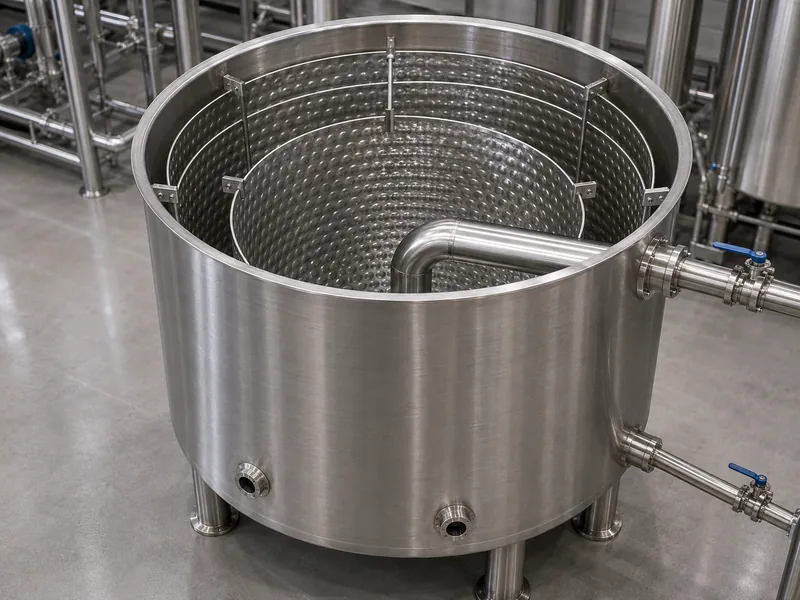
Immersion Tank Heating
Some fluids cannot be pumped out to an exchanger. They are too viscous, too abrasive, too valuable, or the...
+ Learn More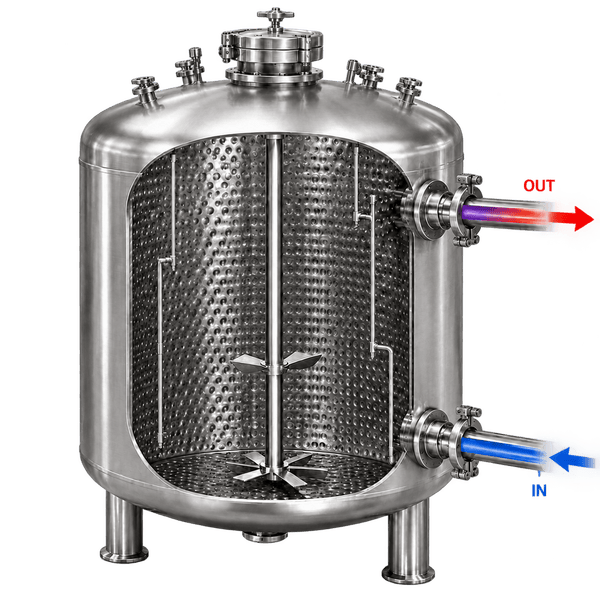
Vessel & Reactor Cooling
Reaction heat has to leave at the rate it is produced, and the consequence of it not leaving is rarely just a...
+ Learn MoreDesign questions
It shapes the method more than the outcome. Welding a full jacket to a stamped vessel changes the pressure boundary, which reopens its code documentation. A clamp-on panel needs only lugs on the outside of the shell, and that is a much smaller conversation with whoever holds the vessel records, so tell us the stamp and design conditions up front.
Specify the highest the medium can reach in an upset, not just the normal operating point. A jacket on a steam header sees full header pressure if a regulator fails, and a glycol jacket can see pump shutoff head. Rating the panels to the real worst case is cheap at the design stage and avoids an expensive surprise at inspection.
Start from the batch mass, its specific heat and the temperature rise, then divide by the time you can afford. That gives the average duty, but the rate falls as the contents approach the medium temperature, so the last few degrees take longest. Send the batch size, start and target temperatures and the wetted height, and we can show how the curve flattens.
It depends on wether the panel is clamped on or hung in the liquid. On a clamp-on jacket, double embossed is the usual pick: it costs less, and the pillows on the vessel side are bedded in heat transfer mastic. Single embossed, with one flat face, suits a panel welded into the wall or one forming a product contact surface, and panels in the liquid are double embossed so both faces work.
Panels above the liquid line stop doing useful work, and on heating they can overcook a film of product clinging to the wall. Where the level varies through a batch, the jacket can be split into zones fed separately so only wetted panels run. Tell us the minimum working level as well as the full one.