
1-805-484-2992
Quotes - Engineering - SalesPlate Pack Expansion
Adding Capacity Within the Frame
Adding plates to an existing frame is the cheapest capacity increase available, and it is only possible if someone left room when the unit was bought.
A plate exchanger's capacity is set by plate count. Where the frame has length available, adding plates increases surface area without replacing anything.
Check the frame first. Expansion requires physical room between the fixed and movable end frames and adequate tie bolt length. Both are set at manufacture, which is why specifying expansion space at purchase matters.
Hydraulic effects. More plates means more surface and lower velocity per channel for the same flow, which changes pressure drop and can change the fouling behavior. It is a rating exercise rather than an assumption.
Connections and ports. Port size limits flow regardless of plate count. Where the duty has grown substantially, the frame may be at its hydraulic limit even with room for more plates.
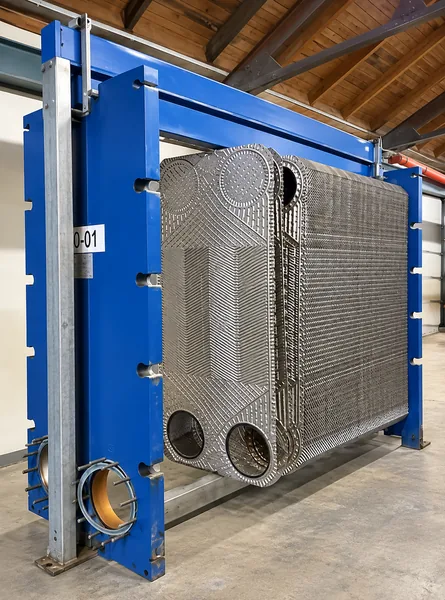
Typical Specification
- Requirement: Physical room in the frame and tie bolt length
- Effect: More surface area for the same footprint
- Hydraulics: Velocity per channel falls; pressure drop changes
- Rating: Re-rated rather than assumed
- Port limit: Port size may cap flow before plate count does
- Gaskets: New gaskets on added plates; full set recommended
- Tightening: New pack dimension calculated
- Alternative: New frame where the existing one is at its limit
- Planning: Expansion space specified at original purchase
- Identification: By unit serial number
Measure the frame
Check carrying bar space and tie bolt length available
Rate the new pack
Rate added plates for velocity, pressure drop and fouling
Order by serial
Match model, material, pattern and gaskets to the existing pack
Close and test
Tighten to the new pack dimension and pressure test
Before you add plates
Measure the clear length of carrying bar between the closed pack and the support column, and compare it with the space the extra plates would take up. The serial number lets us look up the maximum plate count the frame was built for. Send the current plate count with that measurement and we can tell you how far the pack can grow.
They will when ordered against the serial number, since that fixes the model, material, pattern and gasket attachment. What differs is gasket age. Where the existing gaskets have seen years of cycling and cleaning, an expansion is a sensible moment to regasket the whole pack, so every plate seals at the same compression.
Wherever the rating says they belong, which is not always the end of the pack. Mixed-pattern packs and multi-pass arrangements need new plates placed so the pass and pattern sequence stays correct. We give you the revised plate arrangement with the rating, listing position, pattern and orientation for each plate, plus the new tightening dimension that goes with it.
Often less than the plate count suggests. Adding plates lowers velocity in every channel, which reduces the heat transfer coefficient, so the gain in duty usually trails the gain in area. The rating shows the real figure along with the new pressure drop, which falls for the same flow and may let you raise the flow instead.
Only if the existing bolts are too short to close the longer pack with full thread engagement, or if they are galled or stretched. Bolt length is fixed when the frame is built, so a frame specified with expansion room normally came with bolts to suit. Measure the thread left past the nuts now and send it with the plate count.
When the ports, rather than the surface, are limiting the duty. Once port velocity is high, more plates add area but the flow cannot rise to use it, and pressure drop through the connections climbs. At that point a larger frame or a second unit in parallel is the better buy, and the existing unit can often move to a smaller duty elsewhere in the plant.
Related
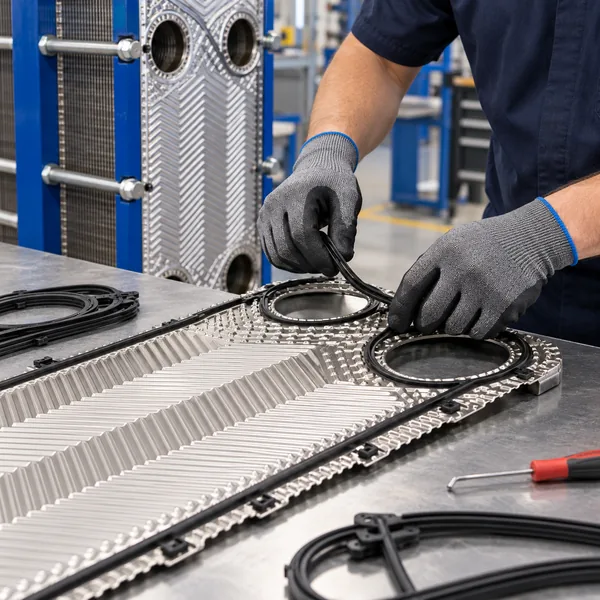
Regasketing
Gaskets are the shortest-lived component in a plate exchanger and the cheapest to renew. Doing it properly is...
+ Learn More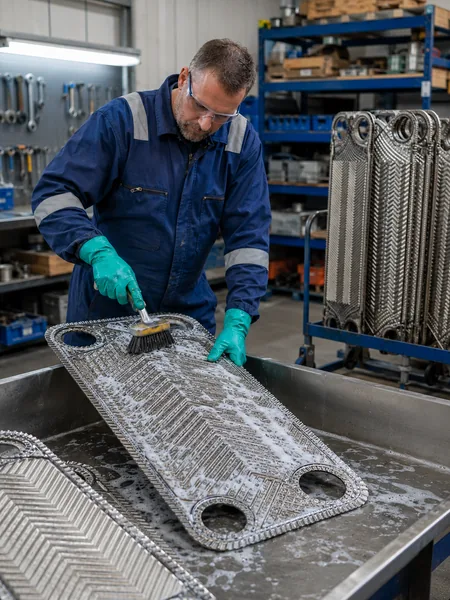
Plate Cleaning
Fouled plates lose duty gradually and quietly. Cleaning them restores it, and how you clean depends entirely...
+ Learn More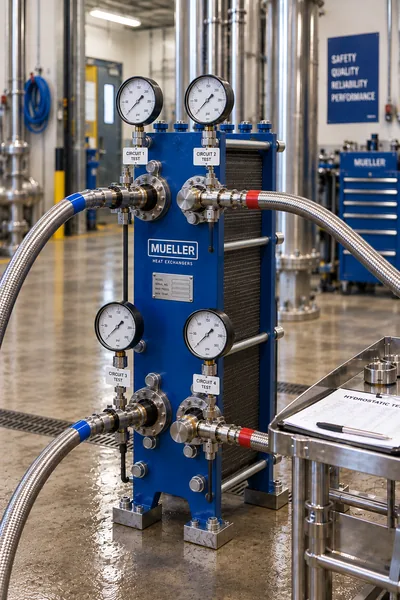
Leak Testing & Inspection
A pressure test after reassembly costs an hour. Finding a misplaced gasket by putting product through the...
+ Learn More