
1-805-484-2992
Quotes - Engineering - SalesQuench & Hydraulic Oil Cooling
Keeping Oil Temperature Under Control
Oil is viscous, which makes it a poor heat transfer fluid, and hot oil is a maintenance problem waiting to happen. A plate exchanger handles the viscosity better than most alternatives because it generates turbulence at low velocity.
Hydraulic oil, quench oil, lube oil and gear oil all need cooling, and all of them share the same difficulty: high viscosity gives a poor film coefficient, and viscosity rises further as the oil cools through the exchanger.
Turbulence at low velocity. The plate corrugation pattern induces turbulence at velocities where a tube would still be laminar. That is precisely the advantage on viscous fluids, and it is why plate exchangers are far smaller than tubular alternatives on oil duty.
Size against the cold end. Oil leaving the exchanger is at its most viscous and the temperature difference is at its smallest. The last few degrees cost disproportionate surface, and relaxing the outlet target slightly often shrinks the unit noticeably.
Quench duty is cyclic. A quench tank load arrives in bursts as parts are dropped, not steadily. Sizing on average load produces a system that runs hot during the shift and cool overnight.
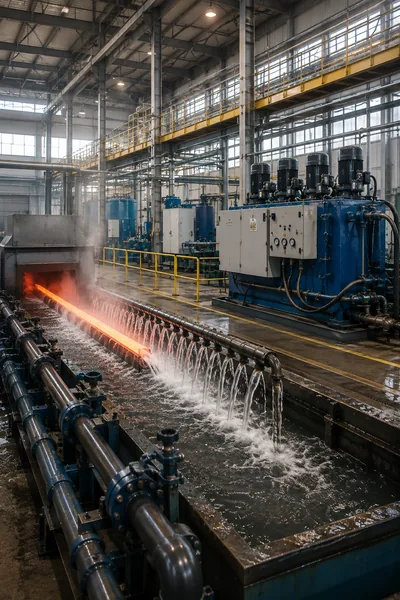
Removing heat from hydraulic, quench, lube or gear oil with water or glycol, where the oil's high viscosity, more than the heat load, usually sets the exchanger size and its pressure drop.
Duty questions
Send the oil grade or a viscosity at two temperatures, plus the flow, the inlet temperature and the outlet you need. Grade alone lets us estimate the curve, but the oil supplier's data sheet removes the guesswork. Also state the maximum pressure on the oil side and whether it can spike, since hydraulic return lines sometimes see surges.
Keep the oil side at a higher pressure than the water side, so any leak sends oil outward rather than water in. Water in hydraulic oil does far more damage than a small oil loss to the coolant. Where that pressure relationship cannot be guaranteed, double-wall plates add a vented gap so a leak shows outside the unit.
Fouling on the water side is the usual cause, especially when the coolant is open tower water. Deposit on the oil side from varnish or quench residue builds more slowly but is harder to remove. Log oil and water temperatures in and out from startup, and when the approach widens with steady flows, open the frame and look at the water side first.
It works when the oil outlet target sits well above the tower supply temperture on the hottest day. Tower water fouls the plates and its temperature rises in summer, so the cooler needs margin and a frame that opens. If the oil must run close to ambient, a closed glycol or chilled water loop gives steadier results.
Related
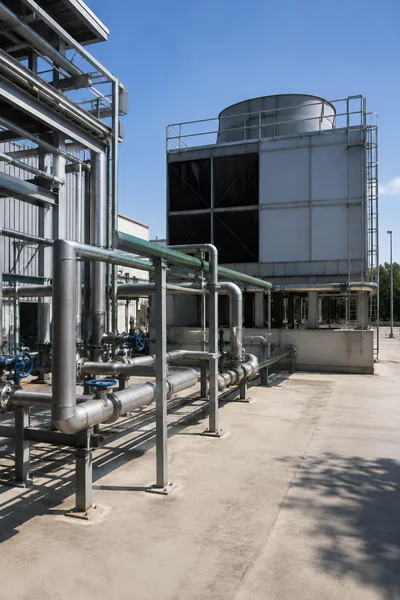
Cooling Tower Isolation
Open cooling tower water is dirty, biologically active and full of dissolved solids. Isolating it from a...
+ Learn More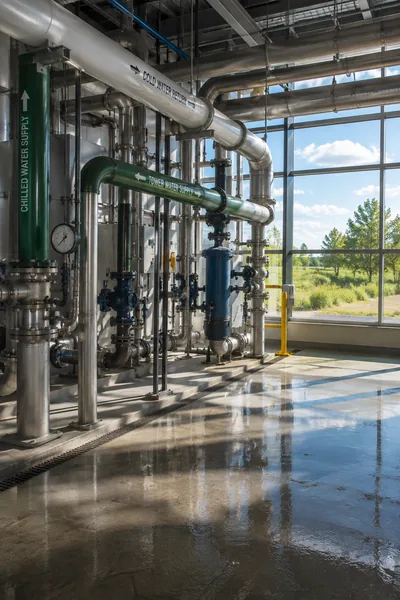
Free Cooling
When the outside air is cold enough, the cooling tower alone can meet the load and the chillers can stop. A...
+ Learn More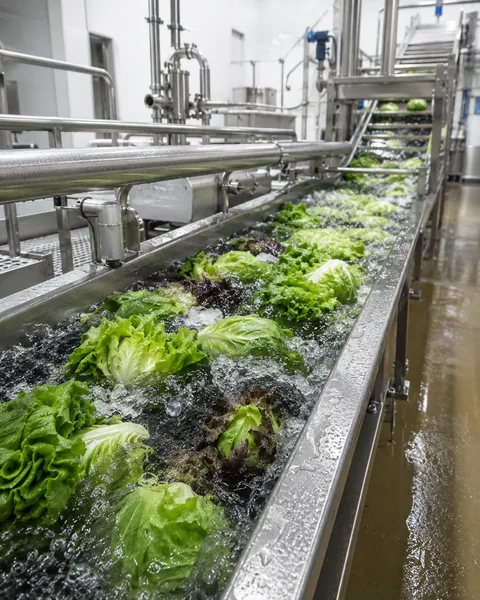
Product Chilling
Pulling heat out of product quickly is what preserves quality, and doing it with water rather than air is...
+ Learn More