
1-805-484-2992
Quotes - Engineering - SalesWaste Heat Recovery
Recovering From Streams Nobody Else Will
The largest untapped energy in most plants is in streams nobody wants to touch: warm effluent, dirty process water, condensate contaminated with product. Those streams need an exchanger that does not block.
Waste heat recovery projects tend to be limited not by the amount of heat available but by whether an exchanger can survive in the stream carrying it. Clean warm streams have usually been recovered already; the dirty ones have not.
Free-Flow and bank assemblies. A Free-Flow plate passes particles up to around 3/8 inch and handles fibrous material. A Temp-Plate bank handles heavier solids still, with removable plates for cleaning. Between them they cover most streams a conventional exchanger would reject.
Interchange against make-up. The classic project is warm effluent against incoming cold make-up water. Both flows already exist, both are continuous, and the exchanger sits between them doing nothing but saving money.
Fouling is expected, not a surprise. Design for cleaning frequency from the start. An exchanger that recovers plenty of heat and cannot be cleaned in a shift will be bypassed within a year.
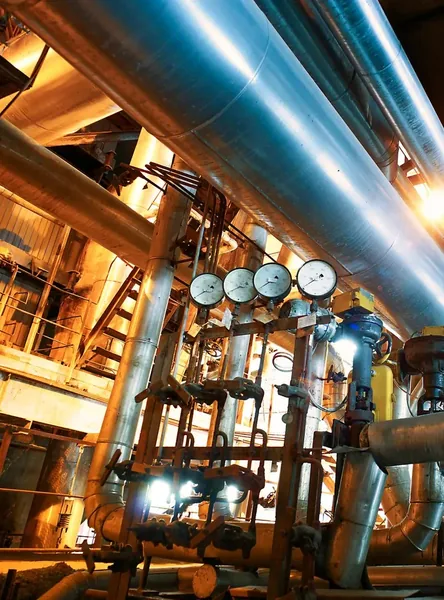
Taking usable heat from streams a plant would otherwise discharge, such as warm effluent or contaminated condensate, and transferring it to a stream that needs heating, usually incoming make-up or process water.
Design questions
Going straight into the user is cheapest and gives the best approach, but it puts the dirty stream one barrier away from the clean one. An intermediate clean water loop costs a second approach and a pump, and in return it keeps contamination risk away from product water and lets several sources feed one sink. The choice turns on what a leak would mean.
A description of the solids helps more than a laboratory number: whether they are fibrous, sandy, greasy or sticky, and whether they settle when the flow stops. Temperature swings and any chemical dumps during cleaning matter too, since they set the plate and gasket material. If you can, send a photo of a strainer or pipe section that has been in the stream.
Put isolation valves and a bypass on the dirty side so the plant keeps running while the exchanger is open. Add drain and flush connections on both sides, and leave room to pull the plates or lift a bank assembly. A recovery unit that forces a process shutdown to clean tends to get bypassed for good, and then it recovers nothing.
Related
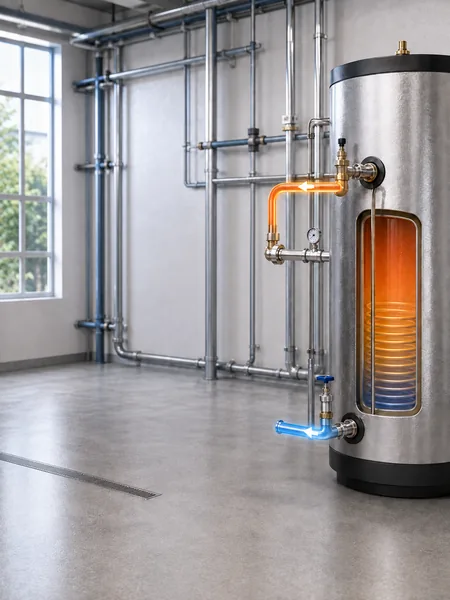
Condenser Heat Recovery
Every refrigeration system in the plant is rejecting heat to atmosphere continuously, and every hot water...
+ Learn More
Boiler Blowdown Recovery
Continuous blowdown carries heat out of the boiler by design, hour after hour, and on most sites it goes to...
+ Learn More
Regeneration & Interchange
Regeneration is heat recovery inside a single process: the hot stream leaving heats the cold stream entering...
+ Learn More