
1-805-484-2992
Quotes - Engineering - SalesIntegral Heat Transfer Assembly
Heat Transfer Built Into the Component
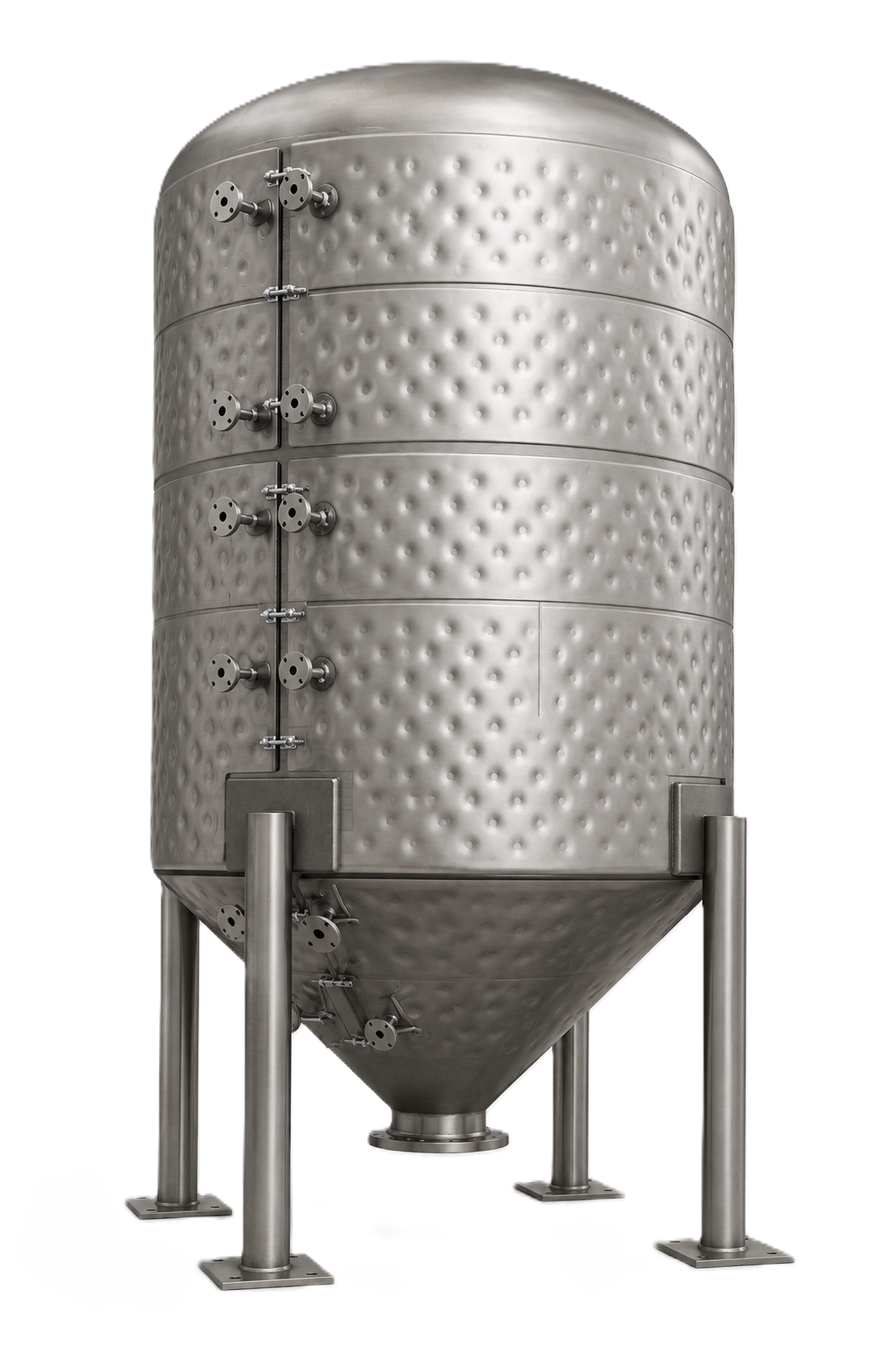
An integral assembly welds the heat transfer surface directly to the component it serves. It is available as single-embossed inflated panel, as traditional dimple jacket, or as half-pipe coil, and Mueller builds the finished assembly rather than supplying panels for someone else to fit.
Where it wins. A heated trough built from single-embossed Temp-Plate presents a smooth product-contact face while carrying the medium behind it. Traditionally that trough would be fabricated and then have a dimple jacket welded onto it. Building the heat transfer into the wall removes the second component, cuts material cost and cuts installation labour.
OEM work. A large share of this is supplied to equipment builders who need heat transfer inside their own product. Fryer banks, conveyor beds, hoppers, chutes and reactor walls are all built this way.
Half-pipe coil. Where design pressure on the media side is high, half-pipe welded to the outside of a vessel handles more than an inflated jacket will, at the cost of surface density and weight.
Typical Specification
- Formats: Single-embossed inflated, dimple jacket, half-pipe coil
- Supply: Assembled, tested and ready to integrate
- Product face: Smooth on single-embossed construction
- Typical components: Troughs, hoppers, chutes, conveyor beds, vessel walls
- Materials: 304 and 316 stainless, carbon steel, higher alloys
- High media pressure: Half-pipe coil arrangement
- Benefit: Removes a separate external exchanger from the system
- Cost effect: Lower material and installation labour than jacket-on-vessel
- Testing: Assemblies pressure tested before shipment
- OEM: Built to the equipment builder's drawings
| PRODUCT | CONSTRUCTION | MATERIALS | SUPPLY |
| Integral Heat Transfer Assembly | Mueller factory built | 304 / 316 stainless | Authorized representative |
Integral Heat Transfer Assembly
Designing It In Early
Integral heat transfer is dramatically cheaper when it is part of the original fabrication than when it is retrofitted. If a piece of equipment on your drawing board will need heating or cooling, the time to raise it is now.
Where the equipment already exists, the clamp-on assembly is usually the sensible retrofit route instead.
Common FAQs
Integral heat transfer is welded into the component and becomes part of it. Clamp-on bolts to the outside of existing equipment. Integral is cheaper and more effective when designed in from the start; clamp-on is the retrofit answer.
Yes, with single-embossed construction. One face stays flat while the other carries the inflated pattern, so product runs across a smooth wall with the medium circulating behind it.
When the design pressure on the media side is beyond what an inflated panel comfortably holds. Half-pipe handles more pressure at the cost of surface density and additional weight.
Yes. A large share of this work is supplied to equipment manufacturers who need heat transfer inside their own product, built and tested to their specification and ready to integrate.
Related
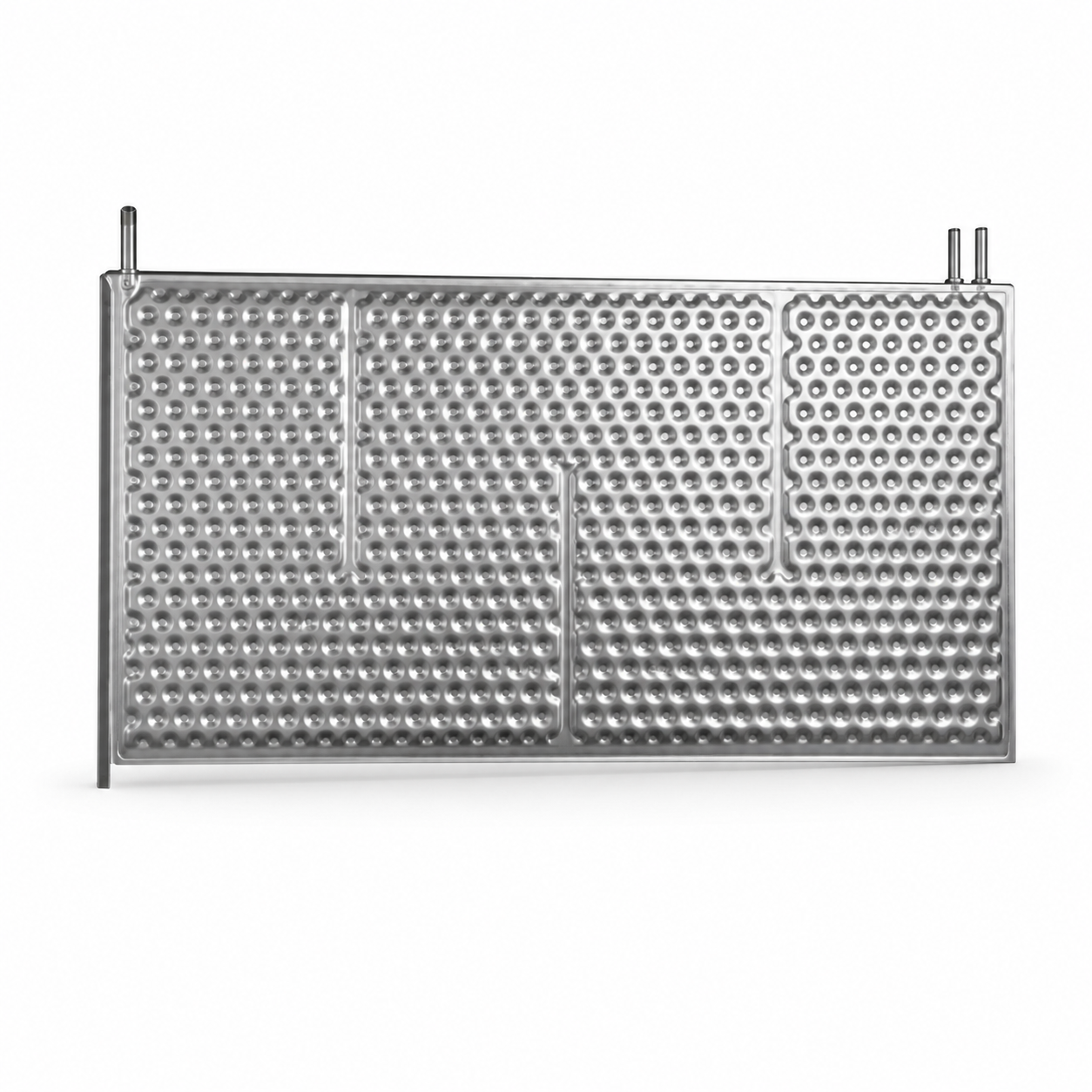
Immersion Assembly
Some fluids cannot be pumped out to an exchanger and back. They are too viscous, too valuable, too abrasive...
+ Learn More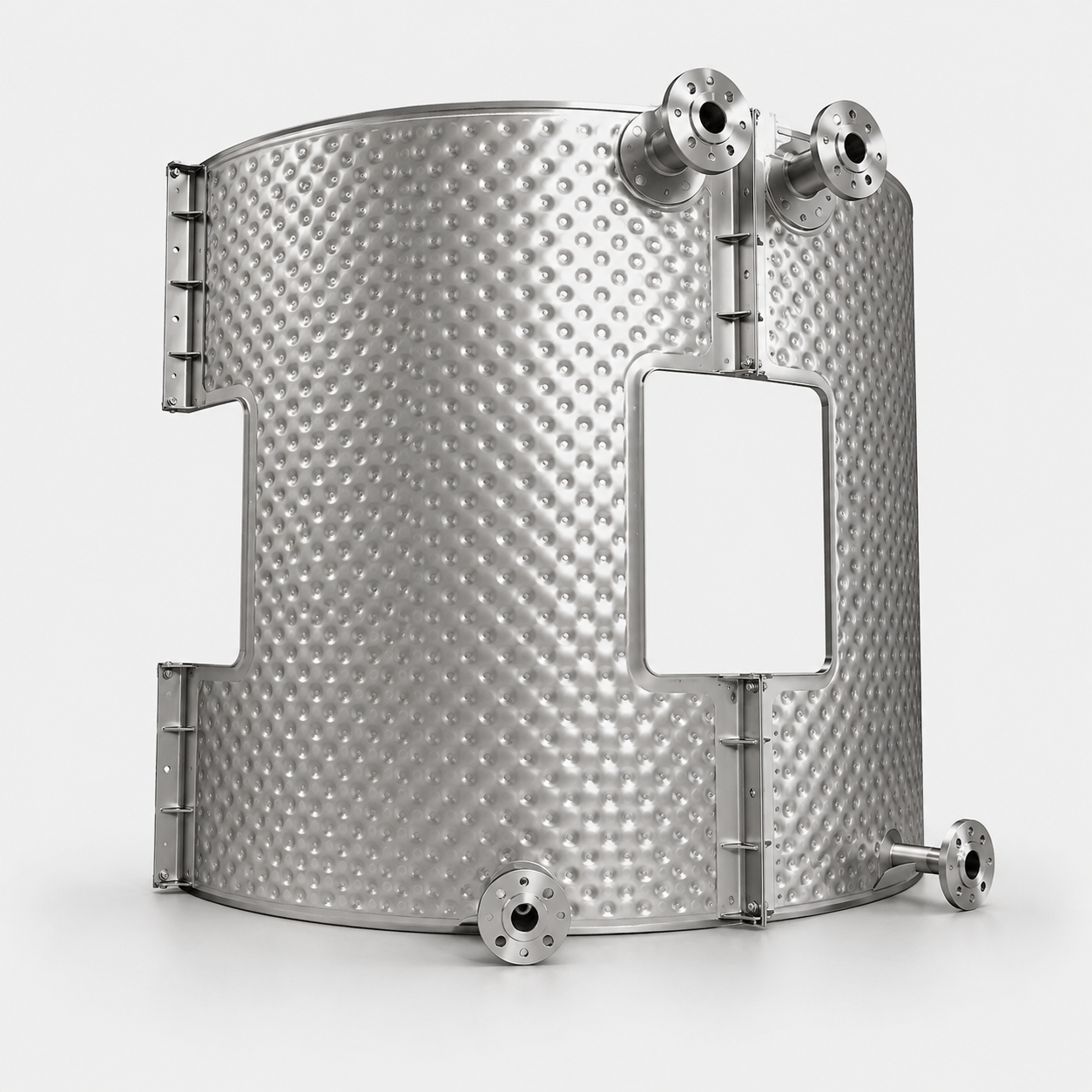
Clamp-On Assembly
If a tank you already own needs heating or cooling it does not have, the usual answer is expensive: replace...
+ Learn More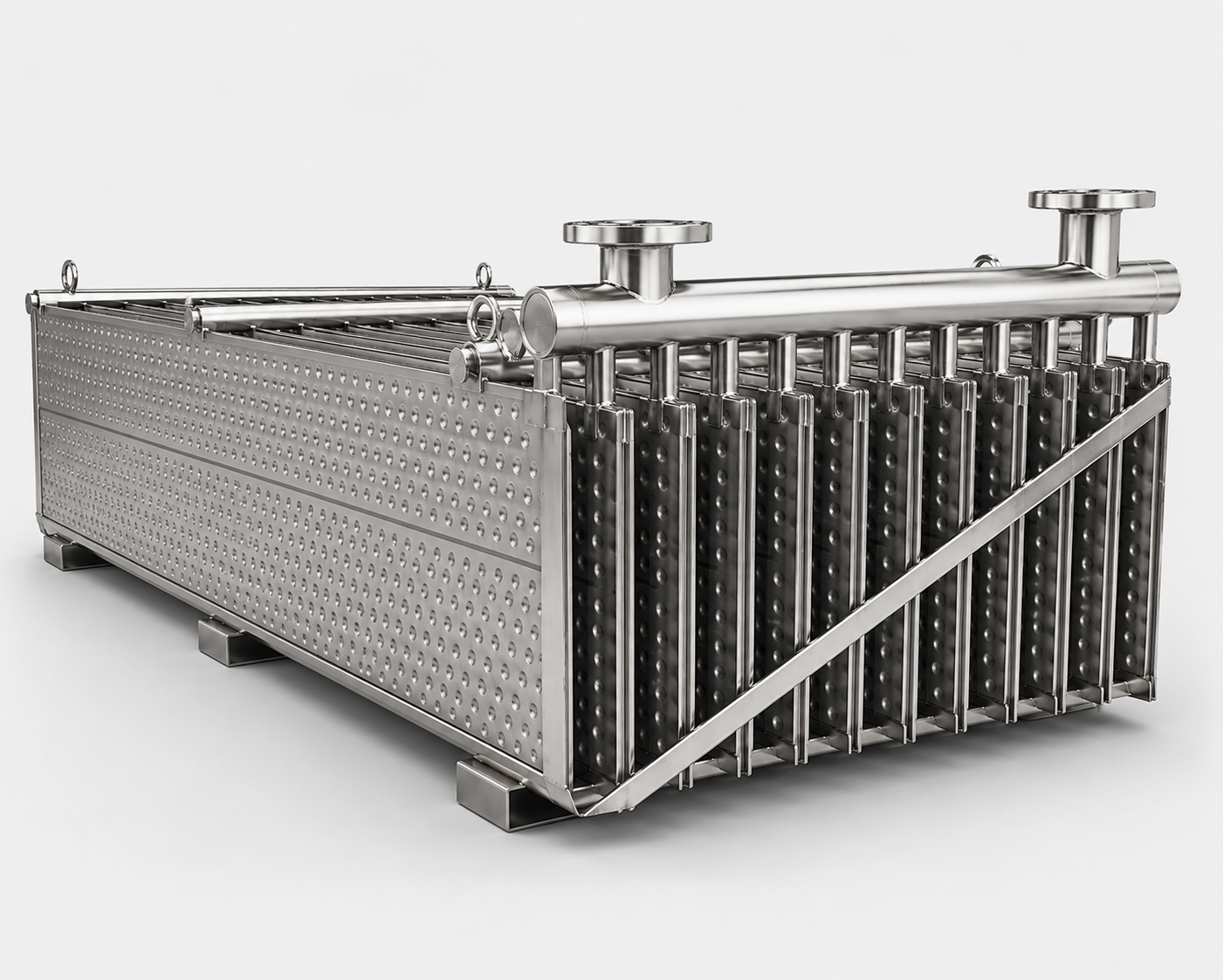
Bank Assembly
A bank is a set of inflated plates hung in parallel with product flowing between them. It gives you very fast...
+ Learn More