
1-805-484-2992
Quotes - Engineering - SalesMARKETS SERVED
Where Mueller Heat Transfer Equipment Works
Mueller equipment turns up in a remarkably wide range of plants, and the reason is that the two core technologies solve very different problems. These pages describe what each market actually asks for.
Mueller equipment turns up in a remarkably wide range of plants, and the reason is that the two core technologies solve very different problems. These pages describe what each market actually asks for.
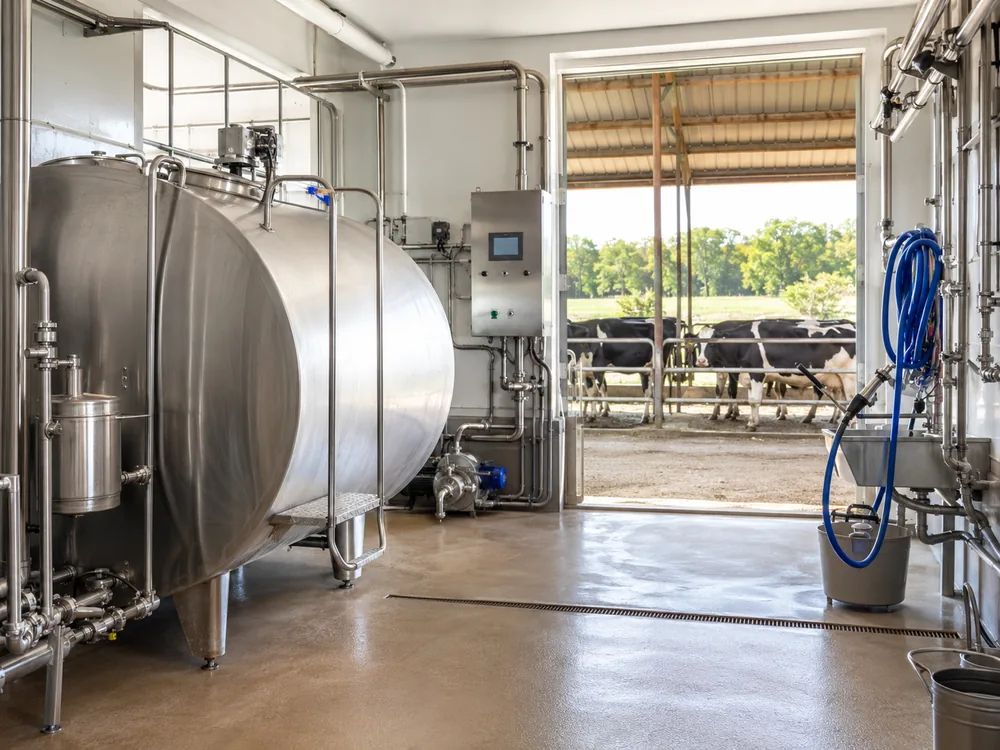
Food, Dairy & Beverage
Food, dairy, beverage and pharmaceutical duty, where cleaning has to be demonstrated not argued.
SELECT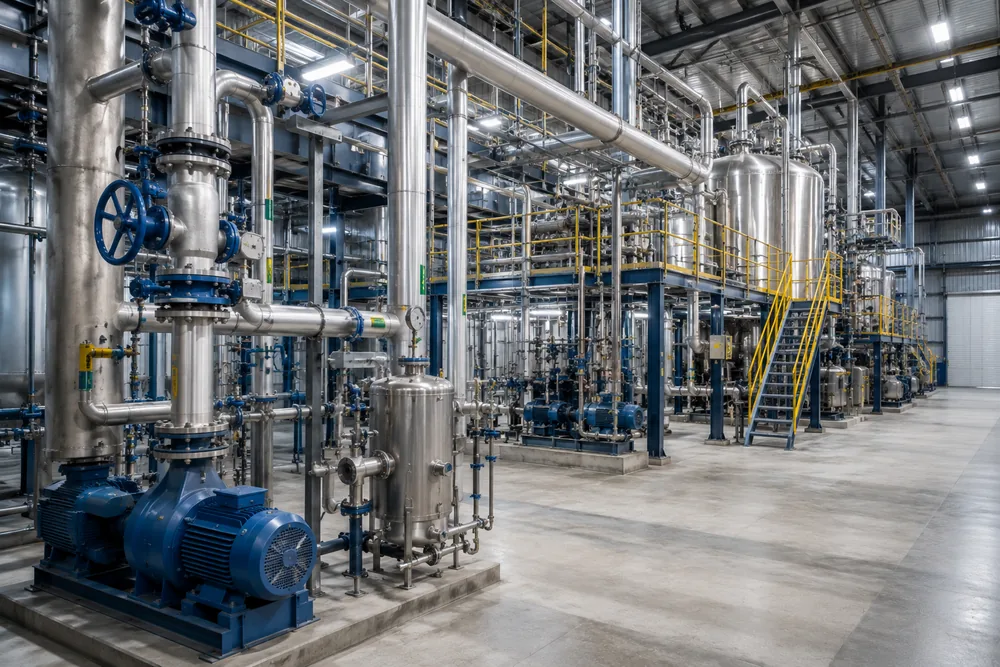
Industrial & Process
Chemical, metal finishing, pulp and paper, power and petroleum duty across the full product range.
SELECT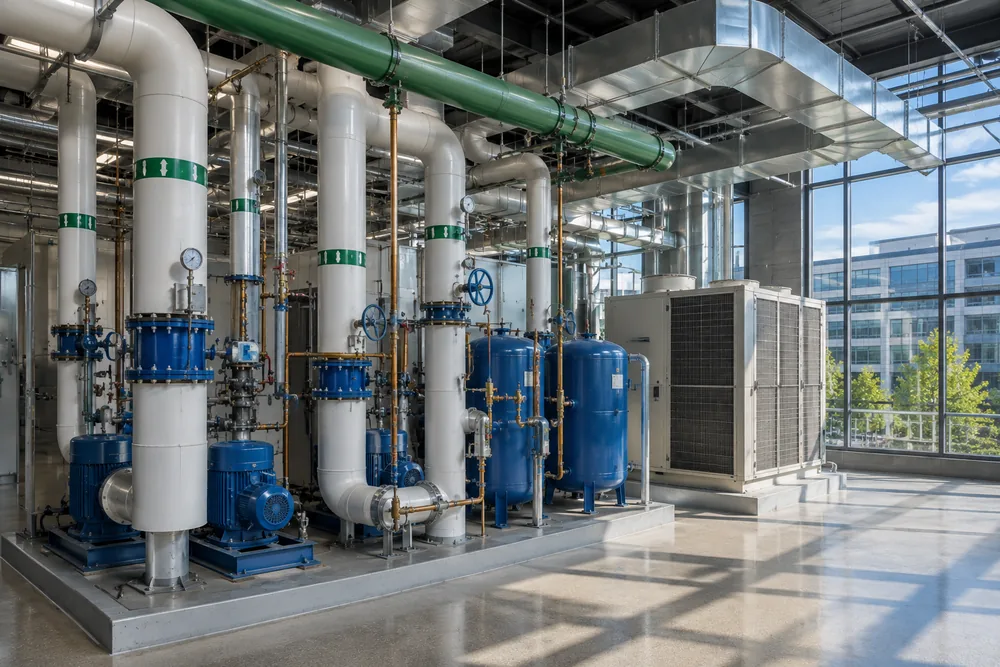
HVAC & Building Systems
District energy, free cooling, heat pump loops and domestic water, where approach buys hours.
SELECT
Biofuels & Ethanol
A dry mill runs on heat it has already paid for once. The exchangers that cool mash, hold fermentation temperature and...
SELECT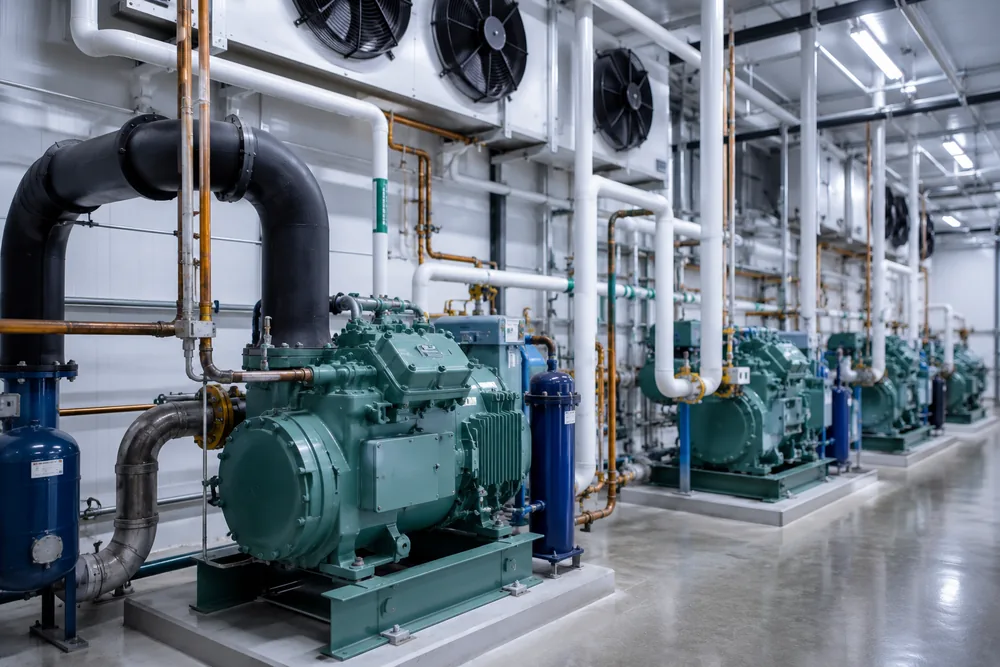
Refrigeration
Ammonia, glycol and secondary loop duty, where refrigerant compatibility drives the construction.
SELECTWhat Each Market Actually Asks For
Sanitary Markets Ask for Proof
Food, dairy, beverage and pharmaceutical plants need equipment that reaches temperature, cleans reliably and can be inspected on demand. Thermal duty is rarely the hard part; demonstrating cleanability is.
That is why a gasketed plate pack dominates these markets. Every surface is reachable, the cleaning cycle can be verified visually, and gaskets are a known consumable rather than an unknown risk.
Industrial Markets Ask About Chemistry and Fouling
Chemical, plating, pulp and paper, power and petroleum plants ask two questions above all others: what is attacking the metal, and what is fouling the surface. Material selection follows what concentrates at the surface rather than the bulk stream, and the cleaning chemistry is frequently more aggressive than the process.
Where the stream cannot go through an exchanger at all, Temp-Plate immersion and clamp-on assemblies put heat transfer into the tank instead.
HVAC and Farm Markets Ask About Approach and Energy
In a building, approach temperature converts directly into free cooling hours and heat pump performance. On a dairy farm, it converts into how much refrigeration energy pre-cooling avoids, and that is up to half of the cooling load on every load of milk.
Both markets buy the same underlying technology for very different reasons, and in both the number worth paying for is how close the exchanger gets.




Questions by industry
When the product cannot be pumped through a narrow channel, or the heat has to go into a tank rather than a pipeline. Plating baths, slurries, batch kettles and vessels that only need a jacket all fall in that group. Temp-Plate puts the surface inside the tank or on its wall, so nothing has to squeeze through a gap. Tell us the vessel size, what is in it and wether it is agitated.
Sanitary to industrial works, but you pay for polish, FDA compliant compounds and fittings that do nothing on a tower water loop. The reverse is the trap. An industrial frame and gasket set cannot be turned into a sanitary unit by swapping plates, and inspectors notice. Settle which market the unit serves before anyone works the thermal design.
Chlorides and acids collect where the wall runs hottest and under any deposit, so a stream that looks mild on paper can pit a plate at the hot end within months. Cleaning chemicals are often harsher than the process itself. Send the stream analysis, the wall temperature range and the cleaning recipe with the duty, and the alloy gets chosen against all three.
Markets that need near-freezing water as the working fluid rather than something cold behind a wall. Produce hydrocooling, bakery dough water, beverage carbonation water and dairy cold water are the usual cases. The chiller makes that water directly over its plates, so there is no secondary loop and no second approach to pay for. If the process can take water, it is usually the simpler plant.
In a building, the approach sets the outdoor condition at which a waterside economizer can still carry the load, so a tighter unit adds free cooling hours at both ends of the season. On a farm the saving lands at every milking, because each degree the pre-cooler removes is a degree the bulk tank compressor never sees. Both reward extra surface. The farm just collects it far more often.