
1-805-484-2992
Quotes - Engineering - SalesRenewing Gaskets
Renewing a Plate Pack's Gaskets
Gaskets are the shortest-lived component in a plate exchanger and the cheapest to renew. Doing it properly is mostly about preparation and patience.
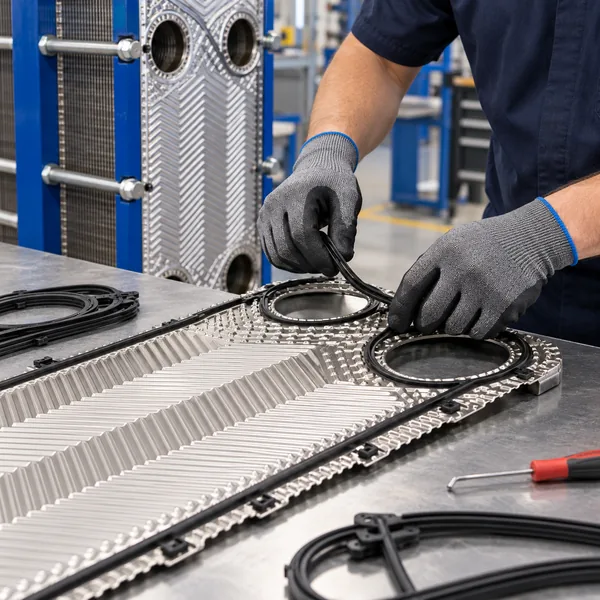
A regasket removes every plate, strips the old gasket, cleans the groove, fits the new gasket and reassembles the pack to its specified dimension.
Snap-in versus glued. Many Mueller models use snap-in gaskets, which removes the adhesive step entirely and shortens the job considerably. Glued gaskets need the groove cleaned back to bare metal and correct cure time before the pack is closed.
Order the right compound. Match it to the service temperature and chemistry, not to what was in there last. If the duty has changed since the unit was bought, the compound may need to change too.
Reassembly. Plates go back in their original sequence and orientation, and the pack is tightened evenly to the specified dimension. Over-tightening to stop a weep damages plates and makes the next service harder.
Typical Specification
- Scope: Strip, clean, re-gasket and reassemble
- Gasket types: Snap-in on many models; glued on others
- Compounds: Nitrile, EPDM, silicone, Viton/FKM, butyl
- Groove preparation: Cleaned back for glued gaskets
- Plate order: Original sequence and orientation retained
- Tightening: To the specified pack dimension
- Testing: Pressure test before return to service
- Frequency: Driven by condition, not calendar
- Identification: By unit serial number
- Spares: Full set recommended on site
Strip the plates
Lift each plate out in order and remove the old gasket
Prepare the grooves
Clean glued grooves back fully and inspect every plate
Fit the new set
Seat snap-in clips or bond glued gaskets and let them cure
Rebuild the pack
Rehang in sequence and close to the specified dimension before testing
What owners ask
Soften the adhesive first with gentle heat or a solvent that is safe for the plate, then lift the gasket with a plastic or wooden tool. Metal scrapers gouge the groove floor and leave a leak path under the new gasket. Keep working until the groove floor is clean and dry along its full length, so the new adhesive bonds everywhere.
Not on the same plates. Glue-in and Loc-In gaskets need different groove profiles, so the plate pressing decides which attachment the pack takes. Moving to snap-in means plates pressed for it, and the serial number tells us what your unit carries and whether that swap is worth pricing at the next major service.
A plate hung in the wrong orientation, a gasket rolled out of its groove at a corner, or one bolt pulled up well ahead of the others. Each shows up as a leak within the first few cycles. Close the pack in small steps across diagonal bolts, keep the end frames parallel, and sight along the edge for any gasket bulging out of line before the last turns.
Stack them flat on clean, padded supports in the order they came off, or stand them in a rack, with each one marked for position. A plate carried by one corner can bend and never seal properly again, and a dropped plate can dent the gasket groove. Use the time out of the frame to inspect each plate under good light.
Very little mechanically, because the groove and clips stay the same and only the elastomer differs. The care goes in to avoiding a mixed pack, since two compounds respond differently to cleaning chemicals and temperature. Change the whole set at once, and label the frame with the new compound so the next order matches it.
Regasketing in place suits snap-in gaskets and smaller packs, where the job is mostly handling. Glued gaskets on a large pack need cure time and floor space, so plants with long packs often hold a spare plate set, gasketed and ready, and refit the removed plates off line. The choice turns on how long you can be down.
Related
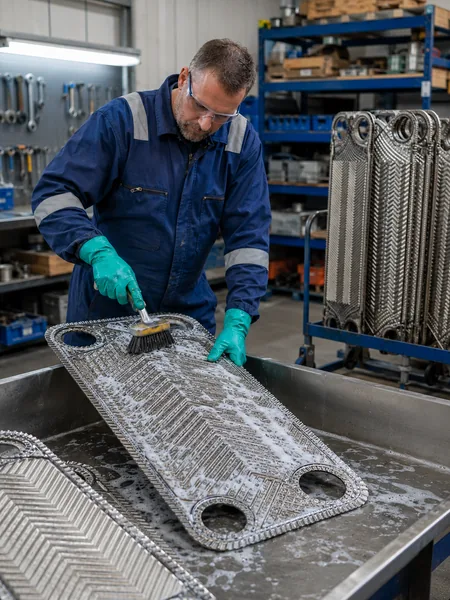
Plate Cleaning
Fouled plates lose duty gradually and quietly. Cleaning them restores it, and how you clean depends entirely...
+ Learn More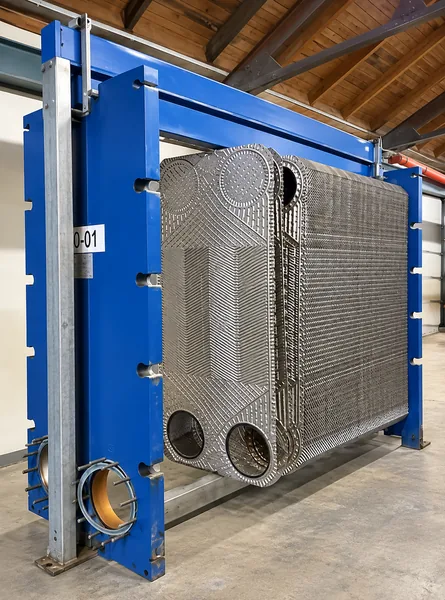
Plate Pack Expansion
Adding plates to an existing frame is the cheapest capacity increase available, and it is only possible if...
+ Learn More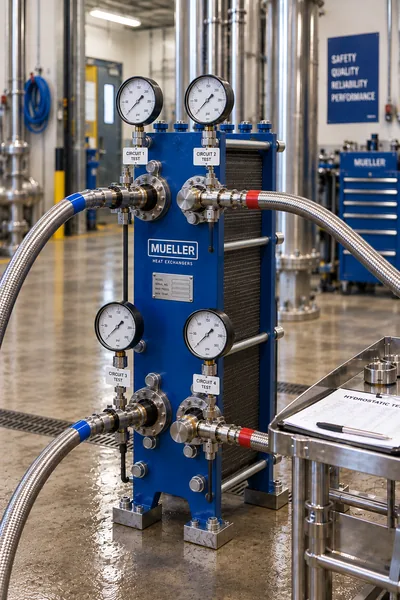
Leak Testing & Inspection
A pressure test after reassembly costs an hour. Finding a misplaced gasket by putting product through the...
+ Learn More