
1-805-484-2992
Quotes - Engineering - SalesAccu-Therm Replacement Gasket Part Numbers
Plate & Frame Part Numbers
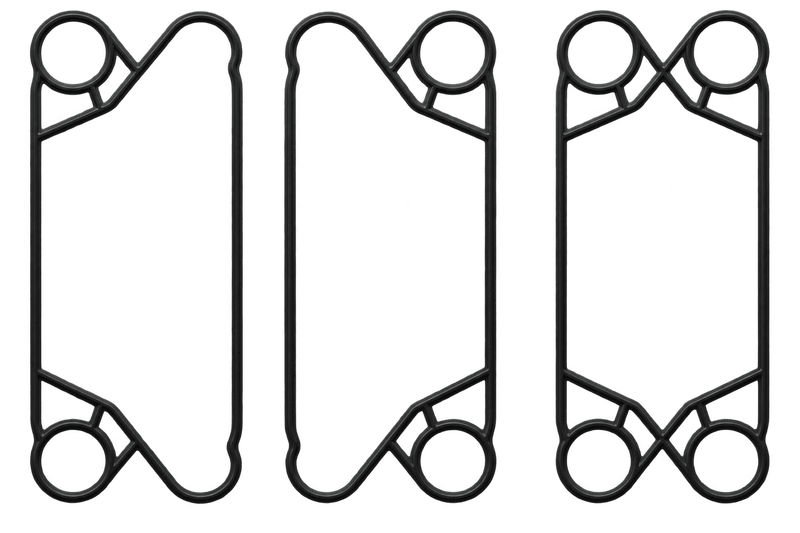
Mueller seven-digit gasket SKUs by plate model and compound. These are the highest-confidence numbers in the catalog.
These are real Mueller seven-digit SKUs, and they are the numbers to order against. A gasket is identified by three things: the plate model it fits, the compound, and how it attaches.
Compound. NBR for oils and general duty, EPDM for hot water and steam, EPDM-PW where the water is potable. The compound sets the temperature limit in the table, and it is the single most common cause of a gasket that fails early — the wrong compound does not fail on commissioning day, it fails a season later.
Attachment. Glue-in gaskets are cemented into the groove. Loc-In gaskets clip in without adhesive, which makes a regasket dramatically faster. They are not interchangeable — the groove is different.
Common to the Whole Series
Configuration
- Part Type: Replacement gasket
Manufacture
- Brand: Mueller
High-Temp EPDM limit, against 302°F for the standard EPDM and nitrile compounds listed in this table.
Accu-Therm Replacement Gasket Part Numbers
Do Not Re-Use a Gasket
Compression set is invisible. A gasket that looks untouched can have given up most of its spring, and it will seal on the first close and weep as soon as the unit starts cycling. Regasket the whole pack rather than the plates you think leaked.
Count Before You Order
The plate count on the nameplate is what shipped, not necessarily what is in the frame now. Packs get shortened, plates get pulled. Count them while the unit is open, and order to the count.
Part Numbers
| Mueller Part No. | Fits Frame | Plate Model | Compound | Attachment | Max Temp | Compliance | Also Written |
|---|---|---|---|---|---|---|---|
| 9809194 | AT-4 | 4P | EPDM | Glue-In | 302°F | FDA | — |
| 9400937 | AT-4 | 4P | NBR (Nitrile) | Glue-In | 302°F | FDA, 3-A | — |
| 9816416 | AT-4 | 4P | EPDM High-Temp | Glue-In | 329°F | High-Temp Industrial | — |
| 9808869 | AT-10 | 10 | EPDM | Glue-In | 302°F | FDA | — |
| 9400938 | AT-10 | 10 | NBR (Nitrile) | Glue-In | 302°F | FDA, 3-A | — |
| 9816417 | AT-10 | 10 | EPDM High-Temp | Glue-In | 329°F | High-Temp Industrial | — |
| 9830018 | AT-20 | 20P | EPDM | Loc-In | 302°F | FDA | — |
| 9824486 | AT-20 | 20P | NBR (Nitrile) | Loc-In | 302°F | FDA | — |
| 9817760 | AT-20 | 20P | EPDM High-Temp | Loc-In | 329°F | High-Temp Industrial | — |
| 9830014 | AT-40 | 40MP | EPDM | Loc-In | 302°F | FDA | — |
| 9400939 | AT-40 | 40MP | NBR (Nitrile) | Loc-In | 302°F | FDA | — |
| 9817758 | AT-40 | 40MP | EPDM High-Temp | Loc-In | 329°F | High-Temp Industrial | — |
| 9830897 | AT-60 | 60M | NBR (Nitrile) | Glue-In | 302°F | FDA | — |
| 9830898 | AT-60 | 60M | EPDM High-Temp | Glue-In | 320°F | High-Temp Industrial | — |
| 9860122 | AT-75 | 75X | NBR (Nitrile) | Clip-In | 275°F | Industrial | — |
| 9861200 | AT-75 | 75P | NBR (Nitrile) | Clip-In | 275°F | Industrial | — |
| 9861999 | AT-75 | 75X | EPDM High-Temp | Clip-In | 305°F | High-Temp Industrial | — |
| 9861203 | AT-75 | 75P | EPDM High-Temp | Clip-In | 305°F | High-Temp Industrial | — |
| 9401481 | AT-80 | 80M | EPDM | Loc-In | 302°F | FDA | — |
| 9818367 | AT-80 | 80M | NBR (Nitrile) | Loc-In | 302°F | FDA | — |
| 9818368 | AT-80 | 80M | EPDM High-Temp | Loc-In | 329°F | High-Temp Industrial | — |
| 9830899 | AT-120 | 120M | NBR (Nitrile) | Glue-In | 302°F | FDA | — |
| 9830900 | AT-120 | 120M | EPDM High-Temp | Glue-In | 329°F | High-Temp Industrial | — |
| 9403681 | AT-156 | 156X | NBR (Nitrile) | Clip-In | 284°F | Industrial | — |
| 9403682 | AT-156 | 156X | EPDM High-Temp | Clip-In | 302°F | High-Temp Industrial | — |
| 9402257 | AT-405 | 405M | EPDM | Glue-In | 302°F | FDA | — |
| 9830635 | AT-405 | 405M | NBR (Nitrile) | Glue-In | 302°F | FDA | — |
| 9830636 | AT-405 | 405M | EPDM High-Temp | Glue-In | 329°F | High-Temp Industrial | — |
| 9830689 | AT-805 | 805M | NBR (Nitrile) | Glue-In | 302°F | FDA | — |
| 9830690 | AT-805 | 805M | EPDM High-Temp | Glue-In | 329°F | High-Temp Industrial | — |
30 part numbers.
Before you order
Pick by the hottest temperature the gasket will see, which on many units is the CIP or sterilizing cycle rather than production. Standard EPDM in this table is rated to 302°F and High-Temp EPDM to 329°F. The High-Temp versions are listed for industrial duty without the FDA marking, so a food plant running hot cleaning cycles should give us its peak temperature before choosing between them.
The two attachments need different groove profiles, so a Loc-In gasket will not seat properly in a plate pressed for adhesive. Forcing one in produces a seal that may look right on the bench and then roll out of the groove when the pack is compressed. Check the plate model code against the table, because that code is what tells you which groove you actually have.
On many plate exchangers they do not, because the first and last plates seal against the frame heads and are gasketed differently from the plates in the middle. Divider plates in a multi-pass or multi-section pack can differ again. Note the position of any odd plate while the unit is open, and list those separately on the order so the set arrives complete.
Fat and oil content usually tips it. Nitrile tolerates oils, fats and many hydrocarbons that make EPDM swell and soften, while EPDM stands up to hot water, steam and caustic cleaning far better than nitrile. A cream, butter or edible oil line that also runs hot caustic CIP sits between the two, so send both the product and the cleaning chemistry before choosing.
Most early leaks come from the closing, not the part. Grooves that still hold old cement or debris, a gasket that lifted at a corner, or compression bolts pulled down unevenly will all show up within the first few cycles. Tighten in a cross pattern to the pack dimension rather than to torque alone, because a cocked movable frame crushes one side while leaving the other loose.
Related
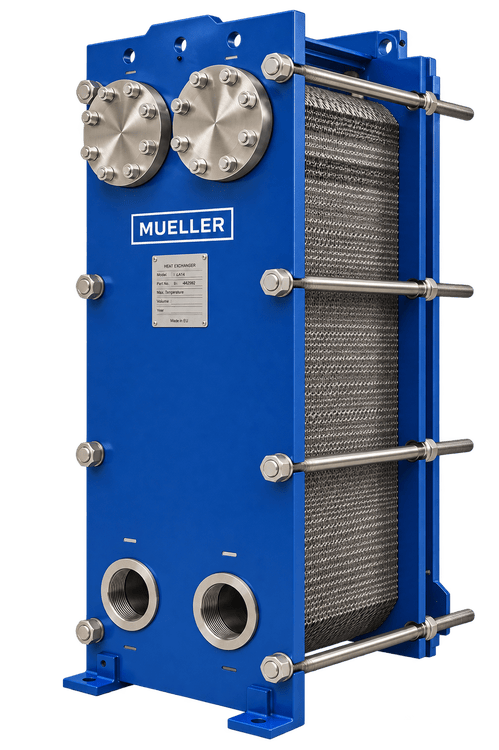
Accu-Therm Plate Exchangers
The original Accu-Therm, and the unit most of this line is built from. It handles simple fluids, viscous...
+ Learn More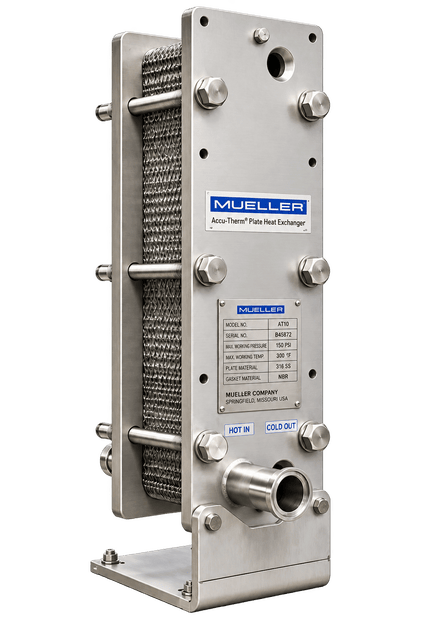
Sanitary Plate Exchangers
Sanitary duty asks two things at once: hit the thermal number, and prove afterward that the equipment can be...
+ Learn More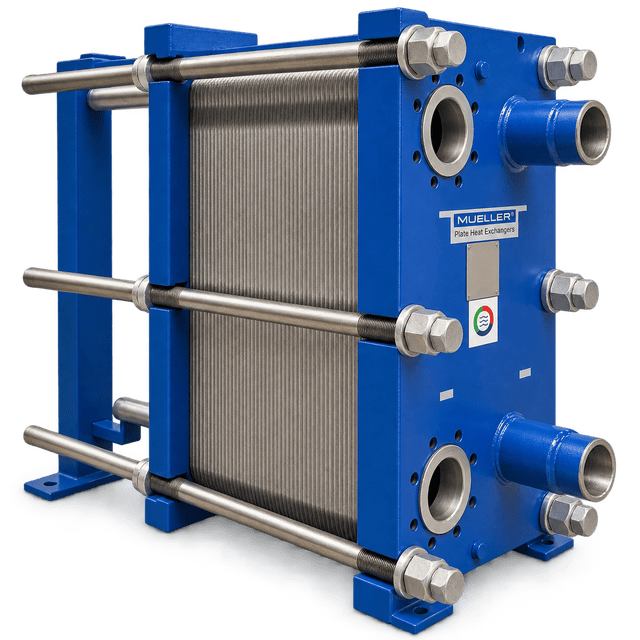
Semi-Welded Plate
Some fluids attack gaskets. Welding pairs of plates into cassettes puts those fluids inside a welded boundary...
+ Learn More