
1-805-484-2992
Quotes - Engineering - SalesL-Line Brazed Plate Part Numbers
Brazed Plate Part Numbers
The whole L-Line, from the LA14 up to the LF700, with connection sizes, plate count range and working pressure.
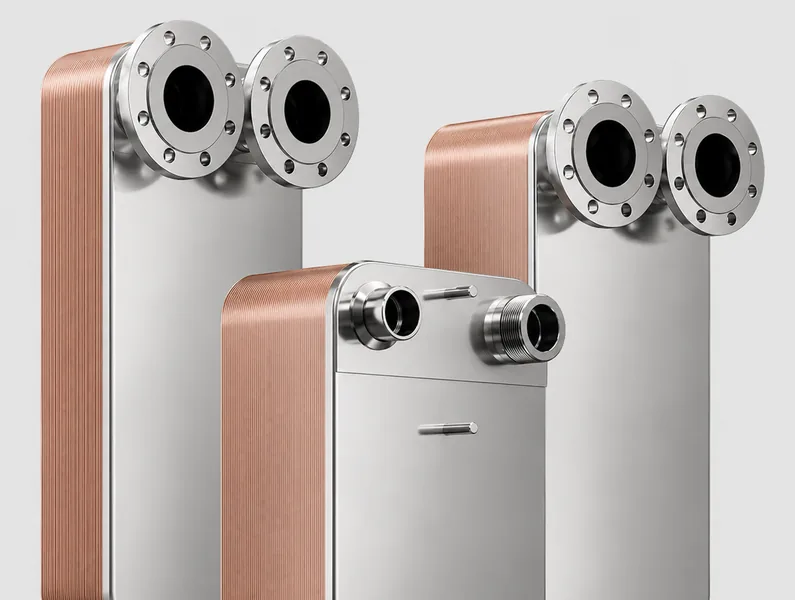
The L-Line runs from the LA14, which fits in one hand, to the LF700. Two things separate the frames: the plate size, which sets the connection and the flow the unit will pass, and the maximum plate count, which sets how much surface you can put behind it.
Bare frames and plate-count strings. LA14 names the frame. LA14-50 names that frame with fifty plates in it. Mueller publishes the model table rather than purchasable SKUs, so the frame-plus-count strings are the designations that actually circulate.
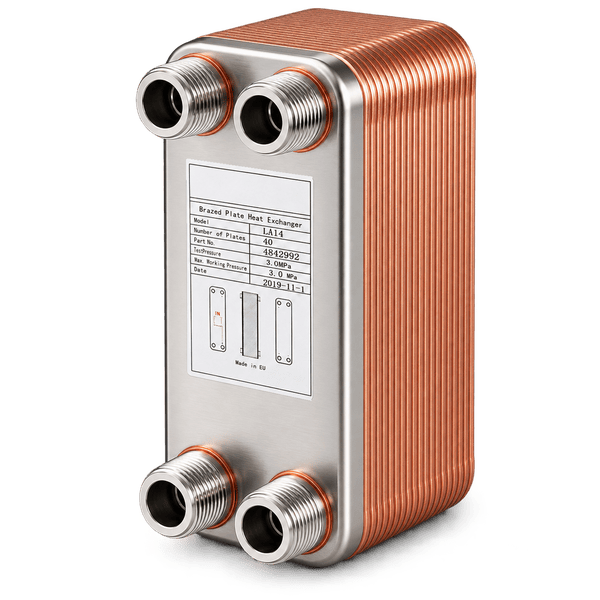
Copper or nickel. Copper brazing is standard and suits water, glycol and most refrigerants. Nickel is for ammonia and for media that attack copper — see the nickel brazed plate page.
Common to the Whole Series
Configuration
- Plate Pattern: Herringbone (chevron) embossed
- Wall Construction: Brazed, single wall
Materials
- Connections: Stainless - MPT, FPT, solder, Victaulic, or flanged
- Braze Material: Copper standard; nickel or stainless braze available
- Plate Material: 316L stainless steel
Ratings
- Maximum Operating Temperature: 446°F copper braze; 392°F stainless braze
- Minimum Operating Temperature: -320°F (-150°F in US literature)
- Test Pressure: 1.3 x MAWP
Performance
- Performance Rating: Capacity scales with plate count; consult a rated selection
- Performance Rating (Basis): Estimate. Duty depends on plate count, flow rates, and approach temperature; verify with a selection program.
Certification
- Codes and Compliance: ASME UM available, CRN, PED
Manufacture
- Brand: Mueller
maximum working pressure on the LA and LB frames, with the larger frames in the table rated at 362 PSI.
L-Line Brazed Plate Part Numbers
No Gaskets Means No Opening
A brazed unit is one sealed assembly. That is what makes it compact and what makes it cheap, and it is also why it cannot be cleaned mechanically or expanded later.
The consequences are practical. Put a strainer upstream. Keep the water clean rather than planning to clean the unit. And size the frame for where the duty is going, because adding plates later is not an option the way it is on a gasketed frame.
Where a Brazed Unit Beats a Gasketed One
Small, clean, high-pressure duty. Domestic hot water, boiler isolation, heat pump loops, oil cooling on a hydraulic pack, refrigerant condensers and evaporators. Anywhere the duty is settled and the fluids are clean, a brazed unit does the job in a fraction of the space and cost.
Where the fluid fouls, where the duty may grow, or where an inspection regime requires the unit to open, a gasketed frame is the right answer instead.
Part Numbers
| Model | Plate Range | Port | Max Flow | Max Working Pressure | Height | Width | Ship Weight |
|---|---|---|---|---|---|---|---|
| LA14 | 10 - 60 | 3/4" | 30 GPM | 435 PSI | 8.0" | 3.2" | 14.0 lbs |
| LA22 | 10 - 60 | 3/4" | 30 GPM | 435 PSI | 11.8" | 3.2" | 14.0 lbs |
| LA34 | 10 - 60 | 3/4" | 30 GPM | 435 PSI | 18.5" | 3.2" | 14.0 lbs |
| LB31 | 10 - 150 | 1" | 50 GPM | 435 PSI | 11.3" | 4.8" | 32.0 lbs |
| LB47 | 10 - 150 | 1" | 50 GPM | 435 PSI | 16.4" | 4.8" | 32.0 lbs |
| LB60 | 10 - 150 | 1" | 50 GPM | 435 PSI | 21.2" | 4.8" | 32.0 lbs |
| LM110 | 10 - 200 | 2" | 200 GPM | 362 PSI | 24.4" | 7.5" | 42.0 lbs |
| LC110 | 10 - 200 | 2-1/2" | 300 GPM | 362 PSI | 18.4" | 10.2" | 42.0 lbs |
| LC170 | 10 - 200 | 2-1/2" | 300 GPM | 362 PSI | 27.1" | 10.2" | 42.0 lbs |
| LD235 | 10 - 280 | 3" | 450 GPM | 362 PSI | 31.0" | 12.2" | 58.0 lbs |
| LE400 | 10 - 400 | 4" | 800 GPM | 362 PSI | 39.7" | 15.2" | 82.0 lbs |
| LF700 | 10 - 400 | 6" | 1800 GPM | 232 PSI | 52.24" | 21.73" | 82.0 lbs |
| LA14-20 | 20 | 3/4" | 30 GPM | 435 PSI | 8.0" | 3.2" | 6.0 lbs |
| LA14-50 | 50 | 3/4" | 30 GPM | 435 PSI | 8.0" | 3.2" | 12.0 lbs |
| LB31-10 | 10 | 1" | 50 GPM | 435 PSI | 11.3" | 4.8" | 4.0 lbs |
| LB31-30 | 30 | 1" | 50 GPM | 435 PSI | 11.3" | 4.8" | 8.0 lbs |
| LB31-50 | 50 | 1" | 50 GPM | 435 PSI | 11.3" | 4.8" | 12.0 lbs |
| LB31-110 | 110 | 1" | 50 GPM | 435 PSI | 11.3" | 4.8" | 24.0 lbs |
| LC110-30 | 30 | 2-1/2" | 300 GPM | 362 PSI | 18.4" | 10.2" | 8.0 lbs |
| LC110-40 | 40 | 2-1/2" | 300 GPM | 362 PSI | 18.4" | 10.2" | 10.0 lbs |
| LC110-130 | 130 | 2-1/2" | 300 GPM | 362 PSI | 18.4" | 10.2" | 28.0 lbs |
21 part numbers.
Ship Weight: est., base plus per-plate mass
Ordering questions
The part before the dash names the frame, and the number after it is the plate count, so LA14-50 is an LA14 frame carrying fifty plates. The frame number is a size code, not a capacity or a port size. When you order, give the full string, or give the duty and let the plate count come out of the selection.
By port size first, because that sets the flow the unit will pass. The LA frames top out at 30 GPM through a 3/4 inch port, while the LC frames reach 300 GPM on 2-1/2 inch. Once the frame is fixed by flow, plate count within that frame sets the surface and the pressure drop.
Stainless male and female pipe thread, solder, Victaulic grooved and flanged connections are all offered, depending on frame size. Match the connection to the piping you are tying into rather than adapting afterward, since every adapter adds a joint and a potential leak point. Solder connections suit refrigerant circuits, while threaded and grooved ends are common on water loops.
ASME UM stamping, Canadian CRN registration and European PED compliance are available across the series. Each approval adds documentation and sometimes affects the frame you can use, so call it out on the order rather than after the unit is built. Give us the jurisdiction where the unit will be installed and the approval is matched to it.
Related
Copper Brazed Plate
Copper brazing is the default, and for the great majority of duties it is also the right answer. It is...
+ Learn More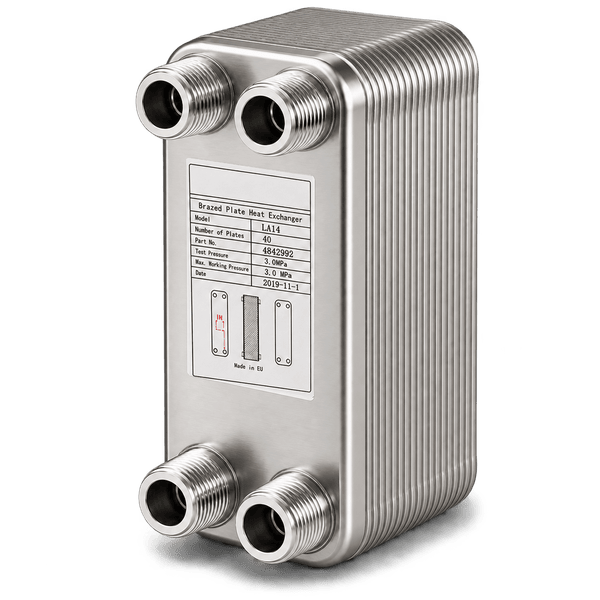
Nickel Brazed Plate
Nickel brazing exists for one main reason: ammonia destroys copper. Where the fluid rules out a copper brazed...
+ Learn More
Sizing & Selection
Brazed plate units are cheap enough that people buy them from a table. That works until it does not, and when...
+ Learn More